What Is the Function of a Press Brake?
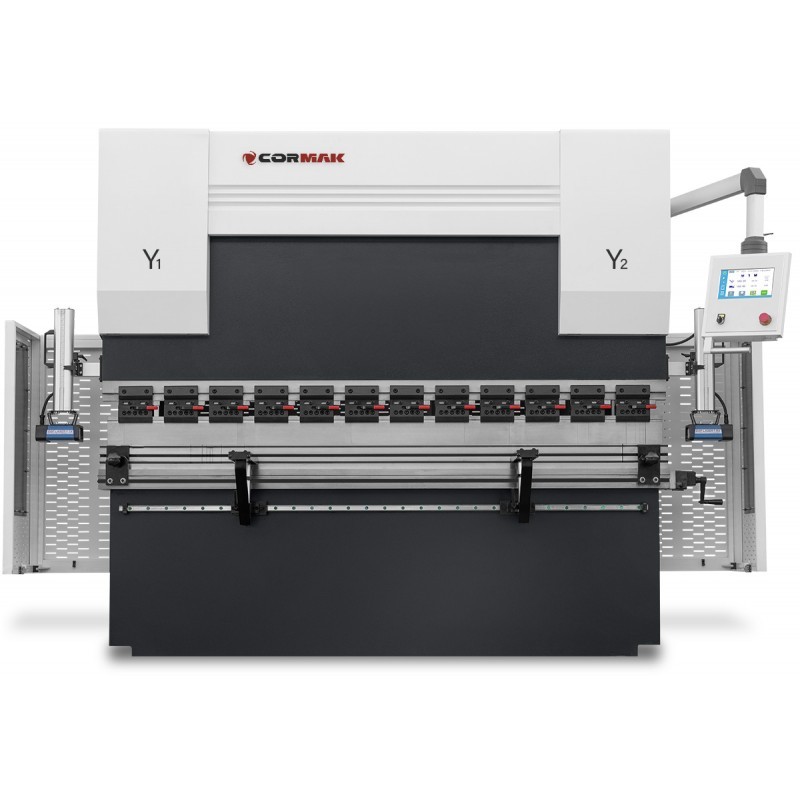
Table of contents:
- What is a press brake?
- Basic functions of a press brake
- Operations performed by a press brake
- Applications of press brakes
- Advantages of using a press brake
- Summary
What is a press brake?
A press brake is a machine used to bend sheet metal to a specified angle by applying pressure between a die and a punch. It is used in production plants, metal workshops, and structural industry.
Basic functions of a press brake
The main functions of a press brake include:
-
Bending sheet metal – giving precise angles to metal parts.
-
Trimming edges – cutting excess material with appropriate tooling.
-
Forming profiles – creating curves, arcs or special shapes.
-
Edge rounding / roll-off – producing gentle curves or embossing the edge.
Operations performed by a press brake
The press brake can perform many operations: bending, creasing, lancing, chamfering, and more. Depending on the die and machine configuration, you can perform various bending types, e.g. V-bend, U-bend, etc.
Applications of press brakes
Press brakes are used in production of enclosures, panels, frames, car parts, appliance bodies, steel structures, HVAC components, among others.
Advantages of using a press brake
-
High bending precision
-
Repeatability of parts
-
Production efficiency
-
Possibility of automation (CNC press brakes)
Summary
The press brake plays a crucial role in sheet metal fabrication, enabling precise bending, forming, and trimming. This makes it indispensable in modern industrial production — from small workshops to large factories. Cormak offers press brakes suited for various needs, ensuring productivity and precision.
Latest blog postsAll articles →