Stump grinder – what is it used for and when is it worth choosing?
Stump grinder – what is it used for and when is it worth choosing?
After a tree has been cut down, a stump and part of the root system remain in the ground. They can make lawn mowing, new planting, fence installation or site preparation more difficult. One of the most effective ways to remove such remains is a stump grinder.
The machine grinds the stump without the need for a large excavation. This makes it useful in gardens, parks, private plots, municipal areas and professional landscaping work.
How does a stump grinder work?
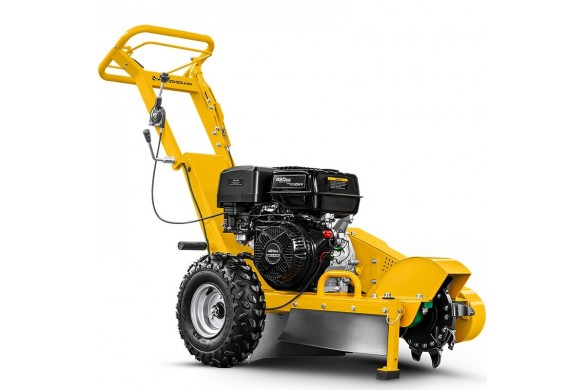
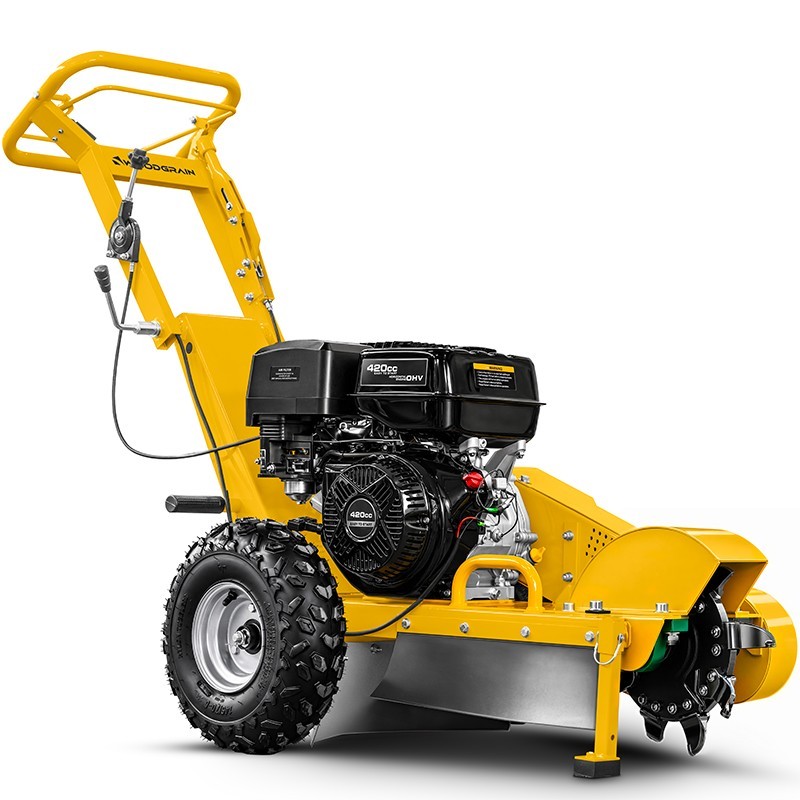
The main working element is a rotating cutting wheel equipped with durable teeth. The operator moves the cutting head over the stump, and each pass gradually chips the wood into small fragments.
The process can also be continued below ground level. This allows the visible part of the stump and the nearby roots to be removed. The resulting wood chips can be used as mulch, removed from the site or covered with soil.
What is a stump grinder used for?
A stump grinder is used wherever unwanted tree stumps remain after felling. It is suitable for landscaping, maintenance, municipal and service work.
Typical applications include:
- clearing gardens and plots after tree removal,
- preparing ground for a lawn or new planting,
- removing stumps before fences, paths or driveways are built,
- maintenance of parks and green areas,
- municipal work after removing damaged trees,
- preparing land for further groundworks,
- removing stumps in places where access is limited.
The machine is especially useful where using an excavator would be difficult, costly or too invasive for the surrounding area.
Stump grinder or excavator?
A stump can also be removed with an excavator, but this usually means pulling out the stump with part of the root system. In practice, it creates a larger hole, more soil to move and additional levelling work afterwards.
With a large tree, the excavation can be significant. There is also a risk of damaging the lawn, paved surfaces, irrigation lines or nearby plants. A stump grinder works more locally. It grinds the wood without pulling out the entire root system, so interference with the ground is usually much smaller.
An excavator may be better if roots must be removed completely, for example before foundation work, deep excavation or major landscaping changes. For typical garden, park or plot maintenance, grinding is often faster, cleaner and more convenient.
How deep can a stump be ground?
The working depth depends on the machine model and the cutting head design. In most applications, removing the stump several or a dozen centimetres below ground level is sufficient. This makes it possible to fill the place with soil, level the surface, sow grass or prepare the area for new planting.
If construction work is planned after tree removal, the requirements may be higher. In that case, it is necessary to consider the maximum grinding depth, the root spread, the type of soil and the future load on the area. A stump grinder mainly removes the stump and the nearest roots; it does not always replace full root extraction.
What should you check before choosing a stump grinder?
When selecting a machine, it is worth checking the engine power, the cutting wheel design and the quality of the grinding teeth. These elements directly affect work speed, machine durability and the ability to grind harder wood.
Important parameters include:
- maximum grinding depth,
- working range of the cutting head,
- overall machine width,
- weight and stability of the construction,
- manoeuvrability in gardens,
- access to teeth and wear parts,
- drive type and ease of operation.
For private gardens, the ability to pass through narrow gates, paths and spaces between plants can be important. For professional service work, productivity, tooth durability and quick handling of multiple jobs during one day matter more.
Working conditions and tooth wear
Grinding teeth are wear parts. They gradually wear out when they come into contact with wood, soil, sand and stones. Before work starts, the area around the stump should be cleared of loose stones, metal, fence remains and other objects that could damage the cutting wheel.
The working speed also depends on the wood species, moisture, stump diameter and access to the site. Hard, old or wide stumps require more passes. In such conditions, adequate machine power and regular inspection of the teeth are important.
When is buying a stump grinder worthwhile?
Purchasing a machine makes the most sense for landscaping, municipal, forestry and tree-care companies. If external stump removal services are needed after every felling job, having an in-house stump grinder can shorten completion time and allow the same team to finish the whole service.
For a private user, buying a stump grinder is usually justified when there are many stumps to remove or the machine will be used regularly. For a single stump, renting a machine or ordering a service may be more economical.
Summary
A stump grinder is used to quickly grind tree remains after felling. It removes stumps without large excavations and without excessive disturbance of the surrounding ground.
It is suitable for gardens, parks, municipal work and professional stump removal. When choosing a machine, it is worth considering power, working depth, cutting wheel design, tooth quality, machine width and site conditions. A properly selected stump grinder can speed up ground clearing and reduce the amount of earthwork required after tree removal.
Latest blog postsAll articles →