Strapping or stretch film – how to secure a pallet?
Strapping or stretch film – how to secure a pallet?
Proper load securing has a direct impact on transport, storage and handling safety. Goods should remain stable during loading, braking, forklift operation, transshipment and movement over uneven surfaces. If a pallet is not secured correctly, the risk of load movement, damaged packaging, material losses and operator hazards increases.
The two most common methods are pallet strapping and wrapping with stretch film. Strapping mechanically stabilizes the load and presses it firmly to the pallet. Stretch film binds individual packages together, reduces shifting and additionally protects goods against dust, dirt and partial moisture exposure. For heavy, tall or valuable loads, the best results often come from combining both methods.
What is pallet strapping?
Strapping involves wrapping the load with a dedicated strap, tensioning it and sealing it securely. The strapping process may use PP, PET or, in specialist applications, steel strapping. The choice should depend on load weight, packaging type, transport conditions and the required clamping force.
PP strapping is mainly used for light and medium-weight products, cartons and parcels. It is economical and practical for everyday packing. PET strapping is stronger and is suitable for heavier pallets, building materials, industrial components, wooden products and machine parts. Properly tensioned strapping limits load movement and helps keep the goods attached to the pallet.
Strapping is suitable for securing:
- parcels and cartons,
- building materials,
- metal components,
- wooden products,
- heavy palletized loads,
- machine parts and industrial components.
How does stretch film work?
Stretch film is elastic and extensible. Its successive layers create tension that binds the goods placed on the pallet. During a correct packing process, the film should wrap both the load and the lower part of the pallet. This makes cartons and packages form a more stable transport unit.
Stretch film also protects against dust, dirt and, to a limited extent, moisture. It is especially practical for large numbers of cartons of similar dimensions, light and medium-weight goods and pallets that must stay compact during internal transport or distribution.
The effectiveness of film depends on its quality, thickness, stretchability and wrapping method. Film applied too loosely will not stabilize the goods. Excessive tension, on the other hand, may deform light cartons or damage delicate packaging.
Strapping or stretch film for heavy loads?
For heavy products, strapping usually provides stronger stabilization. PET strapping can press the load firmly to the pallet base and limit its movement. This is particularly important for metal parts, building materials, machines, technical components and heavy cartons.
Stretch film alone may be insufficient if the load is very heavy or has a limited contact area with the pallet. During sudden braking or handling, heavy items may shift despite several layers of film. In this case, strapping provides mechanical stabilization, while the film adds a binding and protective layer.
When is stretch film enough?
Stretch film is a good choice for light and medium-weight goods that are stacked stably on the pallet. A typical example is a set of cartons with similar dimensions arranged in regular layers. If the weight is evenly distributed, proper wrapping may provide sufficient stability for standard warehouse transport.
One of the key elements is correct film tension. It is also important to apply enough wraps at the base of the pallet, because this is where the load should be connected to the carrier. The top of the pallet may require additional reinforcement, especially with tall stacks of cartons.
Why use protective corners?
Protective corners are particularly important when strapping. They are placed between the strap and the edge of the carton, package or product. They distribute the pressure of the strap over a larger surface.
This reduces the risk of denting cartons, cutting packaging or damaging the strap on a sharp edge. For heavy, hard or valuable products, protective corners can significantly improve the safety of the entire shipment. They are also useful when the load has an irregular shape or is vulnerable to point pressure damage.
The best protection: strapping and stretch film
For demanding transport conditions, there is no need to rely on only one method. Combining strapping and stretch film provides very effective pallet protection. Straps press the load to the base, while film binds individual packages together and protects the whole unit against contamination.
This solution is worth using especially for tall pallets, long transport routes, frequent transshipment, high-value products and irregularly shaped loads. Strapping stabilizes the structure, while stretch film reduces the movement of individual packages.
How to improve the packing process?
For a small number of pallets, strapping and wrapping can be performed manually. As shipment volume increases, speed, ergonomics and repeatability become more important. The strapping process can be supported with manual tensioners, battery-powered strapping tools and semi-automatic or automatic machines.
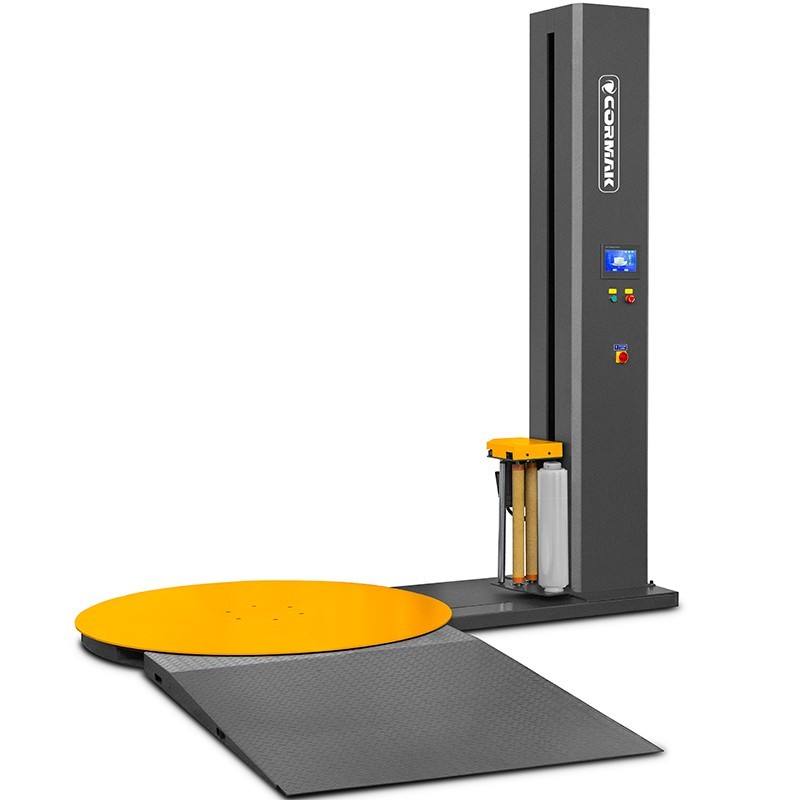
For stretch film, pallet wrapping machines are an effective solution. They help maintain repeatable film tension, reduce excessive material use and speed up pallet preparation. Automation is particularly beneficial in warehouses and production plants where many pallets are prepared every day.
How to choose the right method?
The right choice should depend mainly on the load weight, shape, value and transport method. For light cartons, properly applied stretch film is often sufficient. For heavy goods, strapping is recommended. For demanding shipments, the best solution is to combine strapping with stretch film.
The way the goods are stacked also matters. Heavy elements should be placed at the bottom and lighter ones above. The load should not extend excessively beyond the pallet outline. The taller and heavier the pallet, the more important mechanical stabilization and even pressure distribution become.
Summary
Strapping and stretch film perform different functions in load securing. Strapping provides strong mechanical clamping and is especially effective for heavy products. Stretch film binds cartons together, stabilizes the stack and protects the load surface from contamination.
For the most demanding shipments, it is worth combining both technologies and using protective corners. If a company regularly prepares many pallets, a strapping tool and a pallet wrapper can increase speed, repeatability and the overall safety of the packing process.
Latest blog postsAll articles →