Screw Compressor for a Fiber Laser – How to Choose the Right Capacity?
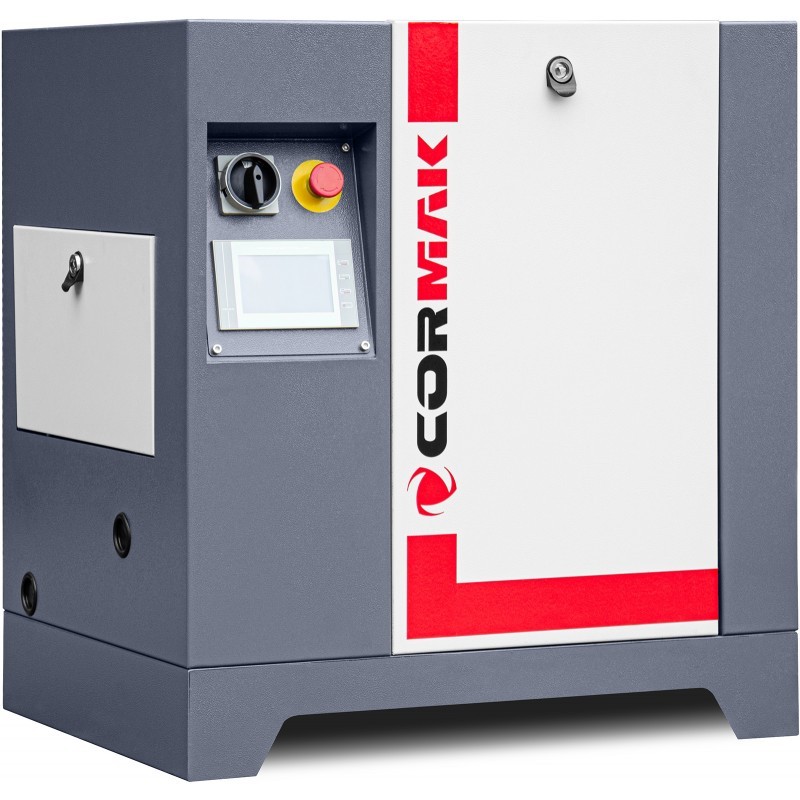
Screw Compressor for a Fiber Laser – How to Choose the Right Capacity?
Choosing the right screw compressor for a fiber laser directly affects cutting stability, edge quality and the operating costs of the entire system. In many facilities, compressed air is used not only for pneumatic functions, but also as an assist gas during cutting. That is why a properly selected compressed air system is a key part of laser cutting equipment.
Modern fiber lasers enable fast and precise cutting of sheet metal and profiles, but they require a stable air source with the right pressure, flow rate and air quality. An undersized compressor can cause pressure drops, poor edge quality, more dross and production downtime. An oversized compressor, on the other hand, may increase energy consumption if it is not matched to the real workload of the plant.
Why does a fiber laser need compressed air?
In laser cutting machines, compressed air may perform several functions. It can supply pneumatic components, support air purging, help protect the cutting head and serve as an assist gas during the cutting process. The highest demand usually appears when air is used directly for cutting.
During operation, the air stream removes molten material from the kerf, cools the working zone and influences the final edge appearance. If pressure or flow rate is too low, the laser will not operate consistently. Burn marks, uneven surfaces, piercing problems and lower production efficiency may occur.
How to select compressor capacity for a fiber laser
The first reference should always be the laser machine manufacturer’s documentation. It should specify the required pressure, air flow and air quality recommendations. A compact fiber laser for thin sheet metal will have different needs than a higher-power machine running continuously.
In practice, compressor capacity should exceed the maximum air demand of the laser and any other consumers in the workshop. A reserve of around 20–30% is usually sensible, unless the machine manufacturer recommends otherwise. This prevents the compressor from constantly working at its limit and helps maintain stable pressure and longer service life.
For example, if a fiber laser uses 2.5 m³/min of air and other workshop equipment requires 0.5 m³/min, the total demand is 3.0 m³/min. After adding a safety reserve, it is worth considering a compressor with a capacity of about 3.6–4.0 m³/min at the required working pressure. The final selection should always be confirmed against the requirements of the specific laser and compressed air installation.
Pressure, air quality and filtration
Flow rate alone is not enough. With fiber lasers, compressed air quality is extremely important. Moisture, oil or dust can negatively affect the cutting head, lenses, valves and final cutting result. The installation should therefore include not only a compressor, but also an air receiver, dryer, fine filters and, when required, an activated carbon filter.
Proper air preparation makes fiber laser operation more stable and safer. Correct pressure and clean air help maintain high cutting quality, reduce downtime and lower the risk of damage to expensive components.
Air demand may also change depending on the material type, sheet thickness and machine settings. Thin mild steel, aluminium and stainless steel may require different cutting conditions. Before purchasing a compressor, it is worth analysing typical jobs, expected laser operating time and possible future production expansion so that the screw compressor does not limit the machine’s capabilities.
Fixed-speed or inverter screw compressor?
For a fiber laser, an inverter screw compressor is often worth considering. This type of compressor adjusts output to current air demand, which can reduce energy consumption. This matters especially when the laser does not operate at the same load all day or when the compressor also supplies other air consumers.
A fixed-speed compressor can be a good choice when air demand is stable and predictable. For variable workloads, variable-speed models usually match the compressed air system more efficiently than classic load/unload or on/off compressors.
Use of screw compressors with fiber lasers
Screw compressors are commonly used with fiber lasers because they provide stable operation, high capacity and the ability to work continuously. A properly selected unit delivers consistent pressure, smooth operation and low vibration, which is important for companies using laser cutting technology every day.
As laser power increases, air demand also grows, especially when cutting thicker materials. For this reason, the compressor should not be selected with no margin. Too little reserve capacity may restrict the machine and reduce production efficiency.
Common selection mistakes
One of the most common mistakes is choosing a compressor based only on motor power. For a fiber laser, the actual air delivery at the required pressure is far more important. Another mistake is omitting reserve capacity, forcing the compressor to operate constantly at its limit.
Air treatment is also sometimes underestimated. The compressor alone is not enough if the system lacks a dryer, filters and proper condensate drainage. Incorrect pipe diameters, long air lines and an undersized receiver can also cause pressure drops and unstable cutting conditions.
Summary
When selecting a screw compressor for a fiber laser, consider the required pressure, real air consumption, machine workload, filtration quality and additional air consumers in the facility. The safest choice is a system with adequate capacity reserve, an air dryer, suitable filters and a properly sized air receiver.
A well-matched compressed air system supports stable laser operation, better edge quality and lower operating costs. In intensive screw compressor applications, motor power alone is not enough. What matters most is effective air delivery at the right pressure and the cleanliness of the supplied air.
Latest blog postsAll articles →