Screw Compressor and Energy Efficiency
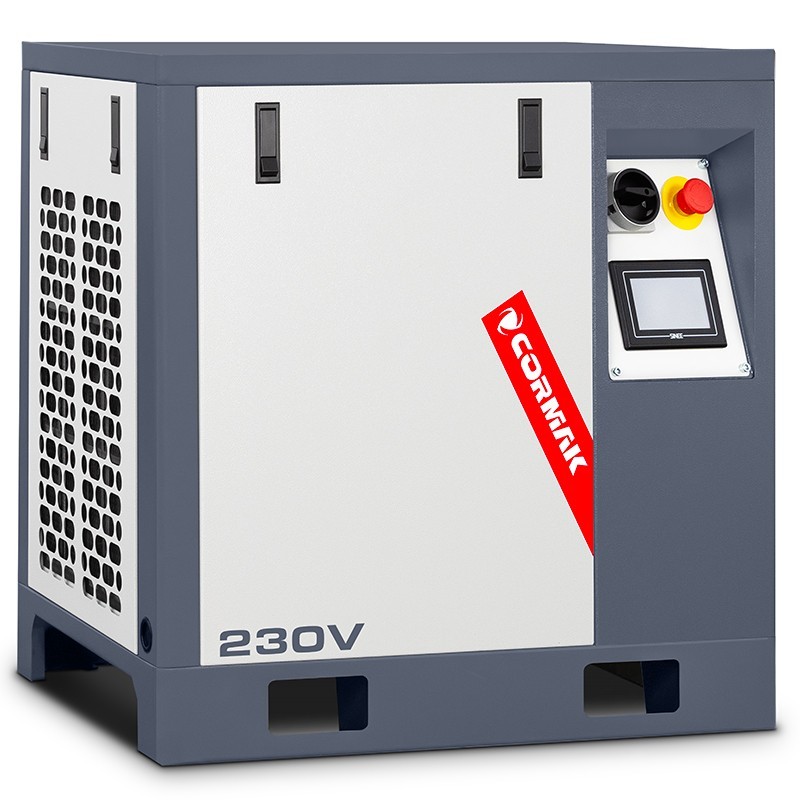
Screw Compressor and Energy Efficiency – How to Choose the Right Model?
Introduction
Screw compressors are efficient devices used to generate compressed air, valued mainly for their ability to operate continuously, high efficiency and long service life under intensive use. They are designed for operation even in 24/7 mode, which makes them a very good choice for companies where compressed air is essential for maintaining process continuity.
Their major advantages include stable operating parameters and a design that supports reliable use in workshops, paint shops and production plants. In this segment, an important position is held by the Polish company CORMAK, which offers equipment for industry, services and production. The current product category can be viewed here: CORMAK screw compressors.
Types of Screw Compressors in the CORMAK Range
The CORMAK range includes screw compressors designed for various applications — from smaller workshops and service companies to production plants operating continuously. Individual models differ not only in power, performance and scope of application, but also in the way the device is controlled.
From the user’s perspective, the most important division includes standard screw compressors and screw compressors with an inverter. This division makes it easier to match the device to the company’s working conditions, compressed air demand and expectations related to energy efficiency and operating stability.
Standard Screw Compressors
Standard screw compressors are solutions intended mainly for operating conditions where compressed air demand is relatively predictable and repetitive. This type of equipment works well wherever the installation operates according to a fixed rhythm and air consumption remains at a similar level for most of the day.
Their advantage is a simple and proven operating concept, which makes them a frequent choice for companies looking for a reliable source of compressed air for everyday workshop, production and service applications.
In this group, it is worth paying attention to the LUFT series, which fits well with the needs of smaller and medium-sized applications, as well as the THEOR series, intended for more demanding installations. Example models include LUFT 700 and LUFT 1000, while for higher demand, models from the THEOR series are also worth considering.
Screw Compressors with Inverter
Screw compressors with an inverter are devices designed to adjust operation more flexibly to the current demand for compressed air. In practice, this solution is particularly important wherever the load on the installation is not constant but changes depending on the production stage, the number of operating workstations or the nature of the tasks being performed.
As a result, a screw compressor with an inverter can respond better to changing operating conditions and becomes an important point of reference when analysing the energy efficiency of the entire system.
CORMAK also offers screw compressors with an inverter, intended for companies that want to better adapt the operation of the device to their actual compressed air demand. This solution works particularly well where the load on the installation changes during the day and where smooth operation, stability and control over operating costs are important.
Example models include LUFT 1000 with inverter, LUFT 1000 VSD+PM and THEOR 20 with inverter.
What to Consider When Choosing a Screw Compressor
The choice of a screw compressor should be based not only on the price of the device itself, but above all on how intensively it will operate, what airflow the installation requires and whether the company’s demand is constant or variable.
In the case of CORMAK devices, the key factors are primarily performance, power, working pressure, control method and whether a basic model, an inverter version or a COMPACT set with a dryer is required. In practice, a different solution will be suitable for a smaller workshop and a different one for a production plant operating in multiple shifts.
Performance and Power of the Device
One of the first parameters worth comparing is the performance of the screw compressor, because it shows whether the device will actually cope with the demand of workstations.
For smaller applications, models from the LUFT series are a good reference point, for example the LUFT 1000 with inverter, offering 7.5 kW and approximately 950–990 l/min. For higher demand, it is worth looking at the THEOR series, for example the THEOR 20 with inverter, which operates with a capacity of up to approximately 2000–2100 l/min, or even larger models from this series.
Constant or Variable Compressed Air Demand
If the company operates in a fairly regular rhythm and air consumption is predictable, a standard screw compressor will often be a sufficient choice. However, if the load on the installation changes during the day, it is worth considering an inverter model, which better adjusts the operation of the device to the current demand.
This is why the LUFT and THEOR series are available in both standard and inverter versions, giving greater flexibility when selecting equipment for a specific working profile.
Is a Dryer Needed?
When choosing a compressor, it is also worth checking whether the company needs only the compressor itself or a more integrated solution from the start. CORMAK also offers COMPACT versions with a dryer, which may be a good direction wherever simplifying the installation and preparing compressed air directly at the device level are important.
How to Match the Model to the Scale of Work
In practical terms, it can be approached as follows:
- for smaller workshops and lighter applications, it is worth analysing the LUFT series, especially models in the range of approximately 650–950 l/min, such as LUFT 700 or LUFT 1000;
- for more demanding production and higher air consumption, devices from the THEOR series are a better direction, for example THEOR 20 with inverter;
- where variable load and greater control over the device operation are important, it is worth considering an inverter version;
- where a more complete solution is needed, COMPACT models with a dryer can be considered.
The selection of a CORMAK screw compressor should begin by answering three key questions: what is the actual compressed air demand, is the consumption constant or variable, and is the compressor alone sufficient or will a solution with a dryer also be required?
Only then can specific models and their parameters be compared consciously. To make this process easier, CORMAK advisors help select the right device and complete solution so that it is adapted to the work specifics and needs of a given plant.
It is also worth remembering that at the stage of selection, commissioning and later operation, CORMAK’s technical and service advisors remain available to support customers in adapting the solution to real working conditions and the requirements of the pneumatic installation.
Energy Efficiency of Screw Compressors
In the case of screw compressors, energy efficiency is very important because devices of this type often operate for many hours a day and have a real impact on the maintenance costs of the entire compressed air installation.
From the user’s point of view, it is therefore not only the performance itself that matters, but also whether the device can adjust its operation to the actual demand of the plant. This is why inverter models, available in the CORMAK range in both the LUFT and THEOR series, are such an important group in this category.
The biggest difference is that a screw compressor with an inverter can smoothly regulate the motor speed and thus better adjust performance to current compressed air consumption. In practice, this helps reduce idle operation, decrease the number of start/stop cycles and limit energy losses resulting from producing more air than the installation actually needs.
CORMAK product cards also highlight such advantages as stable pressure, ease of use, low noise levels in selected models and adaptation to continuous operation.
This is precisely why energy efficiency is especially important wherever compressed air demand is not constant throughout the day. If one workstation operates at one moment and several machines operate simultaneously shortly afterwards, a device without regulation will be more difficult to adapt to such a working rhythm.
In inverter models, the compressor can react more flexibly, which helps maintain operating stability, better control of running costs and greater predictability of the entire process.
In practice, smaller companies and workshops may consider models such as LUFT 1000 with inverter or LUFT 1000 VSD+PM, while for higher air consumption it is worth analysing solutions from the THEOR series, for example THEOR 20 with inverter.
This cross-section of the offer shows that CORMAK develops energy-saving devices both for smaller applications and for more demanding industrial installations.
An additional advantage from the user’s perspective is that, for selected models, CORMAK also emphasises Polish-language instructions, service support and a 12/24-month warranty, which strengthens purchase security and later equipment operation.
Summary
Choosing the right screw compressor should primarily result from the real needs of the company, the nature of work and the demand for compressed air.
The CORMAK range includes both standard screw compressors and screw compressors with an inverter, making it easier to adapt the solution to the scale of business activity and operating conditions.
In practice, particularly important factors include performance, installation operating method, parameter stability and energy efficiency, which in intensive use may have a direct impact on the operating costs of the plant.
Therefore, before choosing a specific model, it is worth analysing the company’s needs and, in case of doubt, using the support of CORMAK advisors, who help select the right product and solution for a specific application.
Latest blog postsAll articles →