Pallet Truck or Stacker for a Warehouse?
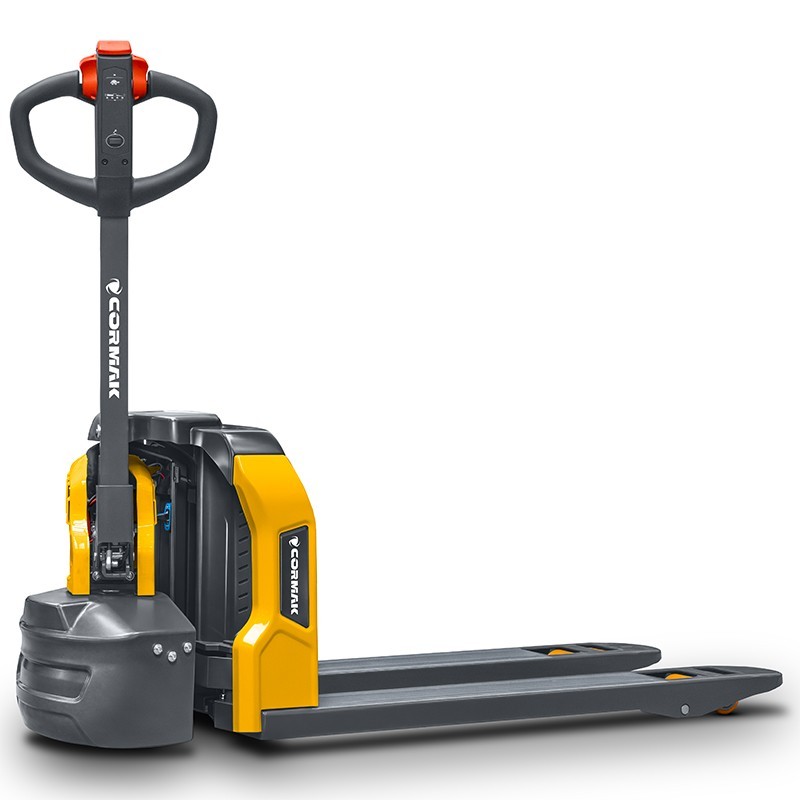
Pallet Truck or Stacker for a Warehouse?
Choosing the right warehouse handling equipment affects work speed, goods handling costs and operator safety. Pallet trucks and stackers are both used for handling pallets, but they are designed for different tasks. An electric pallet truck is best for fast horizontal transport, while a stacker is the better solution when a pallet has to be lifted and placed on a rack.
The choice should not be based only on the purchase price. Before buying, it is worth analysing warehouse height, the weight of the heaviest pallets, aisle width, the number of daily handling cycles, floor condition and the organisation of goods receiving and dispatch. Only then can you decide whether a pallet truck or a stacker will be the better fit.
Electric pallet truck – fast transport around the warehouse
An electric pallet truck is designed mainly for horizontal transport. It allows loads to be moved conveniently between goods receiving, production, storage, picking and dispatch areas. It works best where pallets are placed on the floor, on a ramp, near workstations or in buffer zones.
Compared with a manual pallet truck, an electric model reduces operator effort. This matters when heavy pallets are handled regularly, transport routes are longer and many repeated trips are made during one shift. Thanks to the drive system, the operator does not have to manually pull or push the load, which improves ergonomics and can speed up daily work.
An electric pallet truck is a good choice when:
- pallets are transported mainly on a level, hardened surface,
- there is no need to place goods on high racking,
- fast horizontal transport is the priority,
- the warehouse has limited manoeuvring space,
- the company handles repeat deliveries, picking and dispatch,
- the operator moves many heavy pallets every day.
A standard pallet truck lifts the forks only enough to raise the pallet above the floor and make transport possible. It will not replace equipment intended for high storage. If the warehouse uses multi-level racking, a mast-type lifting device will be required.
Stacker – for working with racking
A stacker is designed to lift pallets to greater heights. It is the right choice for companies that store goods on racks and want to use warehouse volume more effectively. It enables pallets to be placed on higher levels and removed from racking.
The key parameter is lifting height. However, it is important to remember that the actual lifting capacity may change as the lift height increases. A stacker may handle a certain load at lower lift heights, but at maximum height the permitted load may be lower. For this reason, equipment should not be selected only by the value shown in the model name.
A stacker will work well when:
- the warehouse uses multi-level pallet racking,
- high storage is required,
- goods must be regularly placed on or removed from racks,
- the company wants to increase storage capacity without extending the building,
- heavier or larger load units are handled,
- lifting height is more important than horizontal transport speed.
In small warehouses, a manual stacker may also be sufficient. It is suitable for occasional lifting of lighter pallets or low-intensity work. For frequent stacking, a larger number of cycles and heavier loads, an electric model will be the better choice.
Horizontal transport or high storage?
The simplest distinction is this: a pallet truck is mainly for moving pallets, while a stacker is for lifting them. If most work involves moving goods from a vehicle to the warehouse, from storage to production or from picking to dispatch, an electric pallet truck will be very practical.
If pallets are stored on racks, lifting height, capacity at that height and load stability must be considered. In that case, a pallet truck will not be enough because it is not designed for racking operations.
In many warehouses, both machines complement each other. The stacker handles racks and storage zones, while the electric pallet truck is responsible for fast horizontal movement over longer distances. This division improves goods flow and prevents one machine from being used inefficiently for every task.
How to match the truck to working conditions
Before buying, check the weight of the heaviest pallet, the maximum storage height and aisle width. A stacker needs more manoeuvring space than a classic pallet truck, so narrow aisles may make work difficult or require a more compact model.
The floor is also important. Electric driven trucks work best on level, hardened surfaces. Thresholds, ramps, uneven areas, drainage grates and level differences should be considered when selecting wheels, ground clearance and drive type.
The number of daily cycles also matters. For occasional moving or lifting of pallets, simpler equipment may be enough. For multi-shift operation, frequent trips and regular loading, it is worth choosing electric equipment with adequate battery capacity, convenient controls and a robust structure.
Key parameters to compare
When comparing pallet trucks and stackers, lifting capacity is not the only factor. Fork dimensions, turning radius, lift height, machine weight, power supply and operating ergonomics are equally important.
- Load capacity – should match the heaviest loads, with a practical safety margin.
- Lifting height – essential for racking and multi-level storage.
- Aisle width – determines whether the machine can manoeuvre safely.
- Fork length – should match the pallets and load carriers used.
- Floor condition – affects wheel choice, stability and driving comfort.
- Work intensity – helps determine whether an electric drive is worthwhile.
Common mistakes when buying
A common mistake is choosing a pallet truck when the warehouse also requires pallet placement on racks. A pallet truck is fast and manoeuvrable, but it will not solve high storage tasks.
Another mistake is selecting a stacker without checking aisle width and working height. The machine may have the right capacity, but if it cannot manoeuvre freely inside the warehouse, work will become slower and less safe.
It is also worth avoiding equipment selected with no reserve. A load capacity margin, suitable lifting height and properly sized battery help handle changing tasks and future warehouse expansion more safely.
Summary
An electric pallet truck is best for everyday pallet transport inside the warehouse, especially over longer routes and during repeated movements. A stacker should be chosen when goods need to be lifted, placed on racks or removed from higher storage levels.
The right choice should take into account load capacity, lifting height, aisle width, floor type, work intensity and the actual flow of goods. This way, the equipment can not only speed up pallet handling but also improve safety and reduce the risk of load damage.
Latest blog postsAll articles →