Loading ramp – how to choose the right length and load capacity?
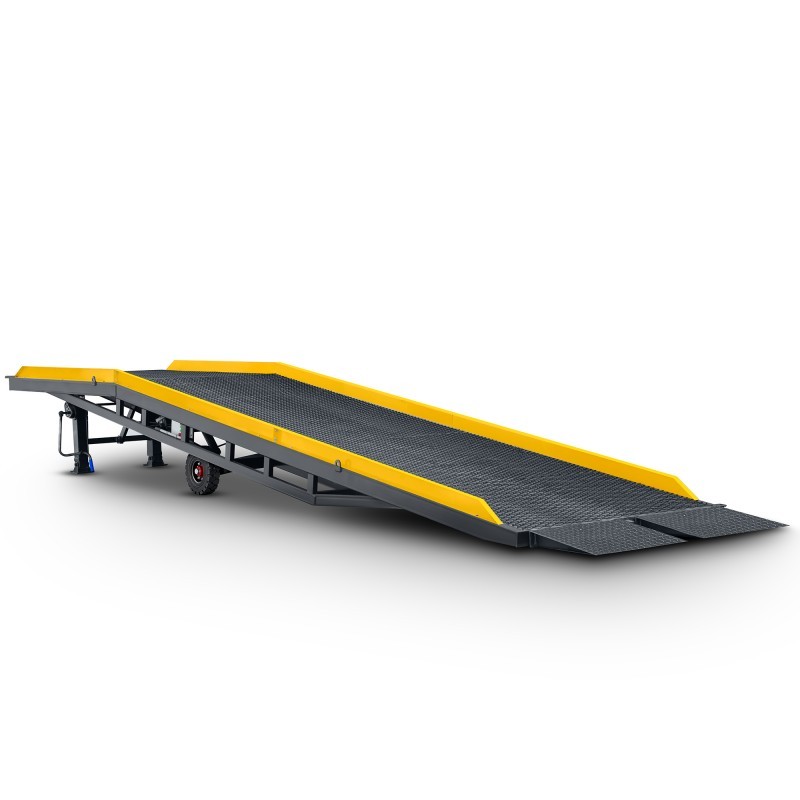
Loading ramp – how to choose the right length and load capacity?
A loading ramp makes it easier to move pallets, machines and other loads between yard level and the loading area of a truck or trailer. It is used in warehouses, production plants, logistics centres and companies that do not have a fixed loading dock.
The choice of ramp should not be based only on price or declared maximum capacity. Loading height, ramp length, usable width, type of truck, load weight and available manoeuvring space are just as important. A ramp that is too short will have a steep incline, while a model with insufficient capacity may create a risk for the operator, load and handling equipment.
How to choose the length of a loading ramp?
The length of the ramp should match the height difference between the ground and the surface the truck has to reach. The greater the loading height, the longer the ramp should be. A longer ramp reduces the incline, makes access easier and improves control of the handling vehicle.
A short ramp set at a steep angle can cause traction problems, underbody contact, mast impact or difficult descent with a load. The risk increases when the forklift carries a heavy pallet, has low ground clearance or works on an uneven yard.
Before purchase, it is necessary to measure the available space in front of the truck, trailer, warehouse or loading point. A longer ramp may be safer in terms of slope, but it requires enough manoeuvring space.
It is worth checking:
- the minimum and maximum working height of the ramp,
- the available length of the manoeuvring area,
- the permitted incline for the truck being used,
- the machine ground clearance and wheelbase,
- the way the truck enters and leaves the ramp,
- yard conditions, including surface condition and space in front of the vehicle.
If the company handles vehicles of different heights, a mobile loading ramp with height adjustment can be a good option. It allows the platform position to be matched to a trailer, container or warehouse level.
How to calculate the required load capacity?
The ramp capacity must include the combined weight of the forklift, operator and transported load. Checking only the pallet weight is not enough. The ramp is loaded by the full set that drives onto its working surface.
For example, if a forklift weighs 3,500 kg and the load weighs 2,000 kg, the actual load is at least 5,500 kg. A safety margin should be added to this value because dynamic loads occur during travel.
A ramp should not operate constantly at the limit of its maximum capacity. Braking, acceleration, uneven weight distribution, axle loads and uneven ground may temporarily increase the stress on the structure. For this reason, capacity should be selected with a reserve in relation to the heaviest set used in the facility.
When selecting a ramp, consider:
- the empty weight of the forklift,
- the maximum transported load,
- the operator and any additional attachments,
- axle and wheel loads,
- the number of crossings per shift,
- the way the weight is distributed on the ramp,
- future production growth and possible use of heavier equipment.
If the company plans to use a heavier forklift or handle larger pallets in the future, this should be taken into account at the purchase stage. Too little capacity reserve may quickly limit the usefulness of the loading station.
Working width and type of handling equipment
The ramp should be wider than the handling vehicle. The operator needs enough space to guide the machine safely, also when a small correction of the driving line is required. A ramp that is too narrow limits manoeuvrability and increases the risk of hitting the edge.
For forklifts, the total machine width, turning radius, tyre type, ground clearance and load position are important. Electric pallet trucks and trucks with polyurethane wheels require an even and stable running surface. Heavy diesel or LPG forklifts need a durable, anti-slip working surface.
It is also important to check whether the ramp is suitable for the specific wheel type. Small wheels may have difficulty on a steep or uneven approach, while excessive gaps, steps or damaged surfaces may cause jerking during travel.
Mobile or stationary loading ramp?
A stationary ramp is suitable where loading always takes place in the same location. It can be permanently connected to a loading point and provide quick access to vehicles. This is a good solution for companies with a repetitive process and fixed transport organisation.
A mobile ramp is more flexible. It can be moved between different loading points, trailers and warehouses. It works well for companies that handle deliveries in several areas of the yard, rent a facility without a fixed dock or need a temporary loading station.
With a mobile model, pay attention to transport wheels, lifting system, supports, locks and the system connecting the ramp to the vehicle. The structure must be stable before driving starts and its position should prevent movement during operation.
Safe use of a loading ramp
Before each use, check the condition of the surface, supports, guardrails, safety chains, adjustment system and elements connecting the ramp to the vehicle. The ramp must not move during entry or rest on unstable ground.
The operator should drive at low speed, avoid sudden turns and keep the load as low as possible. Rain, ice, oil contamination, mud and loose objects on the surface require particular caution.
The vehicle position is also important. The truck or trailer should be secured against movement, and the contact area between the ramp and the loading floor must be stable. When necessary, wheel chocks, locking devices and internal safety procedures should be used.
How to choose a ramp for daily work?
The best starting point is the real working environment. Identify the vehicles being handled, the height of their loading areas, the handling equipment used and the loads that appear most often. Only then can the ramp length, capacity, width and adjustment system be selected correctly.
For occasional loading of light pallets, a simpler solution with a suitable safety margin may be sufficient. For intensive work with forklifts, machines and heavy pallets, a stronger structure is required, selected for dynamic loads and the frequency of crossings.
Summary
The length of a loading ramp should match the loading height and the permitted incline for the truck used. Load capacity should include the combined weight of the machine, operator and load, with an appropriate safety margin.
Working width, surface type, adjustment method, truck type and available manoeuvring space are also important. A properly selected loading ramp improves logistics, shortens handling time and increases safety in everyday work.
Latest blog postsAll articles →