Is a PM Motor in a Compressor Worth It?
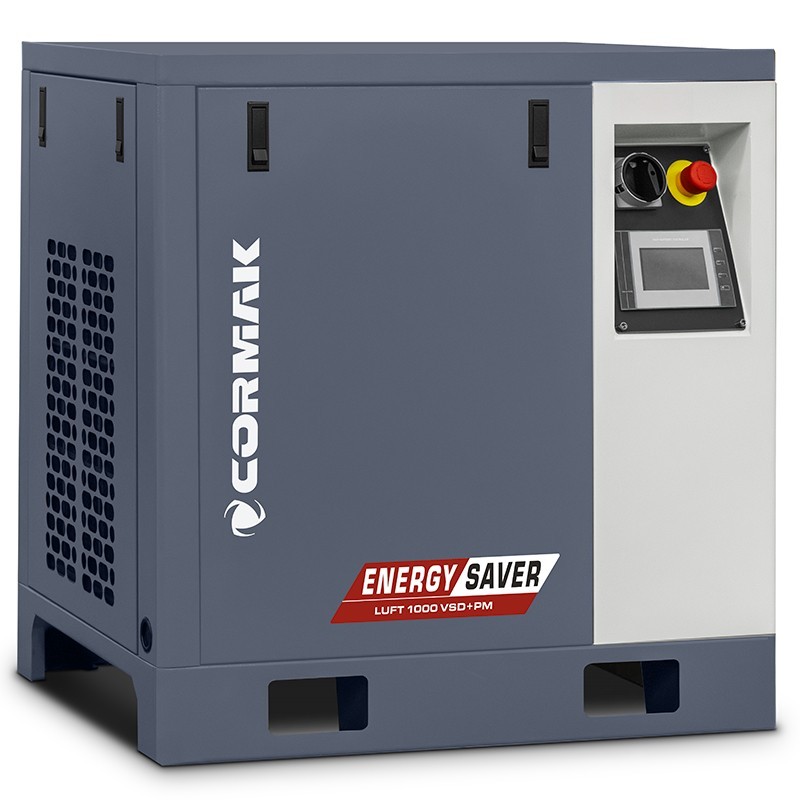
Is a PM Motor in a Compressor Worth It?
A PM motor in a rotary screw compressor is a solution for companies that want to reduce energy costs, improve pressure stability and match compressor output more closely to real compressed-air demand. In production plants, workshops, paint shops and service facilities, compressors often run for many hours every day, so the purchase price should not be the only selection criterion.
The key factor is total cost of ownership. This includes electricity, service, equipment efficiency, noise level, operating stability and reliability of the entire compressed-air system. This is where a compressor with a PM motor can bring the greatest benefits.
What Is a PM Motor in a Compressor?
A PM motor, or permanent magnet motor, uses permanent magnets to create the magnetic field in the rotor. In practice, this can reduce energy losses compared with many conventional drive systems and support high efficiency over a wide range of loads.
In rotary screw compressors, a PM motor usually works together with a variable-frequency drive. The drive adjusts motor speed, allowing the compressor to adapt output to current air demand. When the system needs less air, speed is reduced. When demand increases, the compressor raises its output.
This is especially important because compressed-air demand in many plants is not constant. Consumption changes with the number of active stations, machines in operation, production cycles and current operator tasks.
Why Is Energy the Main Cost?
The purchase price of a compressor is a one-time expense. Electricity is a recurring cost that appears every day the machine operates. The longer a screw compressor runs, the more important its efficiency becomes.
In many companies, energy can represent the largest part of compressed-air operating costs. This is particularly true where compressors supply production lines, assembly stations, packaging systems, paint shops, service areas or multiple pneumatic tools at the same time.
Therefore, it is worth analysing not only motor power and purchase price, but also annual operating hours, air-demand profile, required working pressure and the condition of the entire installation.
How Does a PM Compressor Work?
A PM compressor operates more flexibly than a fixed-speed unit. The control system monitors system demand and adjusts motor speed to maintain the required pressure while working as efficiently as possible.
If air consumption is low, the compressor does not need to operate at full power. If production speeds up and demand rises, the unit increases output. This helps reduce idle operation, limit pressure fluctuations and avoid unnecessary energy use.
The difference is most visible in plants where load varies throughout the day. A few stations may run in the morning, more machines may start in the middle of the shift and demand may fall again later. Under such conditions, a regulated PM compressor can better match real production needs.
Key Benefits of a PM Screw Compressor
Lower operating costs
The main benefit is the potential to reduce energy consumption, especially where air demand varies. The compressor does not run continuously at full power but adjusts speed to the current load.
Stable working pressure
A PM compressor can respond more precisely to changes in air consumption. Stable pressure matters for pneumatic tools, production machines, feeding systems, blow-off applications and painting.
Quieter, smoother operation
Smooth speed control reduces abrupt starts and can improve machine operating culture. This is useful in workshops and plants where the compressor operates close to workstations.
Better system matching
A PM motor combined with a variable-frequency drive can operate more efficiently in systems with variable air demand, making day-to-day operation more predictable.
Where Does a PM Screw Compressor Make Sense?
PM screw compressors are suitable wherever compressed air is used regularly and for many hours. Typical applications include:
- manufacturing plants;
- automotive and mechanical workshops;
- paint shops;
- technical service facilities;
- metalworking and woodworking companies;
- warehouses and packaging lines;
- maintenance departments.
In a workshop, the compressor can supply impact wrenches, spray guns, grinders, blow guns and tyre-inflation equipment. In production, it can support machines running continuously or several stations at once.
Is an Oil-Free Compressor an Alternative?
Oil-free compressors are selected where exceptionally clean compressed air is required, for example in the food, pharmaceutical, electronics or medical sectors. This does not mean they are always the best choice for every facility.
In many industrial applications, the priorities are output, stable pressure, energy cost, service availability and reliability. In such cases, a rotary screw compressor with a PM motor can be a very practical option. The right choice depends on air-quality requirements and the actual operating profile of the system.
How to Select the Right Compressor
Compressor selection should start with an analysis of system demand. Choosing only by motor power or catalogue price is not enough. The entire compressed-air system matters.
Before purchase, determine:
- required effective air delivery;
- working pressure required by end users;
- number of stations operating simultaneously;
- daily and annual operating hours;
- whether air demand is stable or variable;
- acceptable noise level in the workplace;
- service and maintenance requirements.
An undersized compressor will operate under heavy load and may struggle to maintain pressure. An oversized compressor can generate unnecessary purchase and energy costs. The best choice is a unit matched to the company's real demand.
When Does a PM Motor Pay Off the Most?
A PM motor pays off most where the compressor runs regularly, for many hours and under variable air demand. The longer the operating time, the more drive efficiency and capacity control affect cost.
The greatest benefits appear where air consumption rises and falls during the day. A PM compressor helps avoid situations where the machine runs at high power despite low system demand.
However, paying extra for this technology is not always necessary. If a compressor is used only occasionally, for short periods and under light load, a conventional unit may be sufficient. Payback depends on operating hours, energy price, air-consumption profile and purchase-price difference.
How to Estimate Payback
A simple estimate can be made in a few steps. First, calculate annual energy cost:
Annual energy cost = compressor power × operating hours × electricity price per kWh
Then estimate annual savings:
Annual savings = annual energy cost × expected savings percentage
Finally, estimate payback:
Payback period = purchase-price difference / annual savings
Example: a 15 kW compressor runs 2,080 hours per year and electricity costs 1 per kWh. The annual energy cost is 31,200. A 20% saving gives about 6,240 per year, while a 30% saving gives about 9,360 per year. These are indicative values and should be adjusted to real operating conditions.
What Else Affects Operating Cost?
The PM motor is important, but it is not the only factor affecting costs. The condition of the compressed-air system also matters.
- Leaks waste energy and force the compressor to run more often.
- Excessive working pressure increases energy consumption without real process benefit.
- Poorly selected pipes and couplings can cause pressure drops.
- Lack of regular service reduces efficiency and increases failure risk.
- Worn filters, oil and separators affect output and operating stability.
Even an energy-efficient compressor will not reach its full potential if the system is leaky, incorrectly set or poorly maintained. The best results come from combining an efficient unit with proper sizing and regular inspection of the entire system.
Summary
A PM motor in a rotary screw compressor is most worthwhile where compressed air is used regularly and demand varies throughout the day. The combination of a permanent magnet motor and variable-speed control helps the compressor match its operation to current system needs.
The main benefits are lower energy consumption, more stable working pressure, quieter operation and more predictable costs. For occasional use, a conventional compressor may still be sufficient, so total cost of ownership should be calculated before purchase.
When selecting a screw compressor, look beyond purchase price. Output, pressure, operating hours, service, system condition and the ability to match operation to real demand are what determine long-term value.
Latest blog postsAll articles →