Hydraulic or mechanical guillotine shear – which one should you choose?
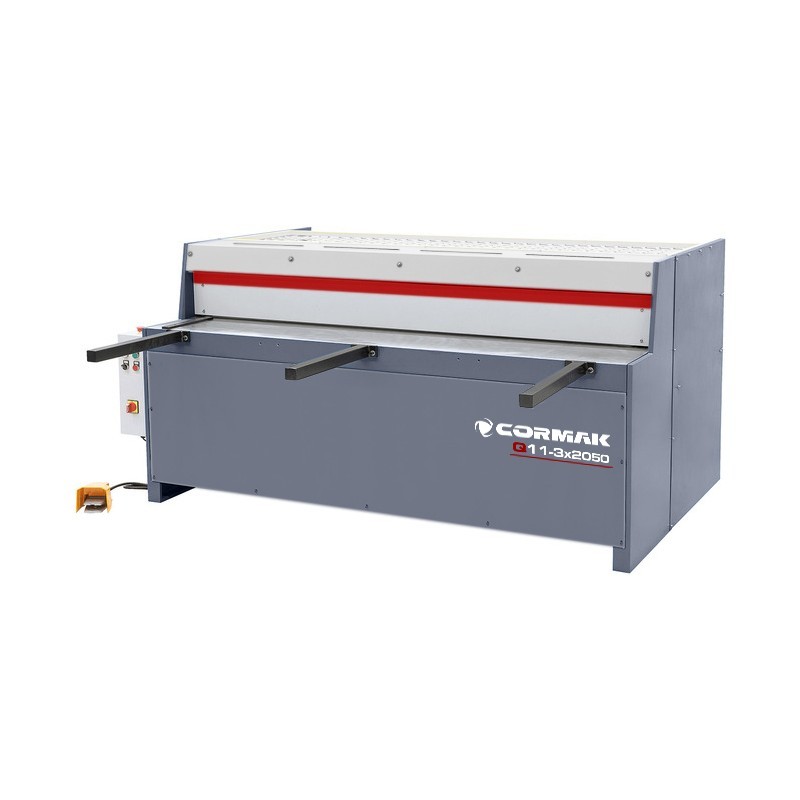
Hydraulic or mechanical guillotine shear – which one should you choose?
A sheet metal guillotine shear is one of the basic machines used in metalworking shops, production plants and fabrication companies. It allows fast and repeatable cutting of mild steel, stainless steel, aluminium and galvanized sheets. The choice between a hydraulic and a mechanical shear affects work speed, edge quality, ease of adjustment and the possibility of expanding the cutting process.
Both solutions perform the same basic task, but they are designed for different production needs. A mechanical guillotine shear is well suited to simple and repeatable jobs. A hydraulic guillotine shear offers greater control over the cutting process and is more convenient when material types, thicknesses and formats change frequently.
How does a mechanical guillotine shear work?
A mechanical guillotine shear uses a motor, flywheel and crank or eccentric mechanism. Energy is stored in the flywheel and then transferred to the cutting beam. Once the cycle is started, the upper blade moves quickly through the sheet.
This type of construction is relatively simple and works well with similar sheets cut repeatedly. If a company cuts material of similar thickness and size every day, a mechanical model can provide good productivity without complex adjustments.
The limitation is lower flexibility when parameters change often. Different sheet thicknesses, material grades and part lengths may require more preparation time and more frequent quality checks.
How does a hydraulic guillotine shear work?
A hydraulic guillotine shear uses hydraulic cylinders to control the cutting beam. This drive system allows better control of the blade movement and makes it easier to adjust the machine to the material being processed.
Depending on the model, the operator may be able to adjust the blade gap, cutting angle, stroke length and backgauge position. These functions are useful when the shop works with mild steel, stainless steel, aluminium or galvanized sheets of different thicknesses.
A modern hydraulic shear can also be equipped with CNC control. A programmable backgauge supports repeatable cutting to a set dimension and reduces the need for manual measurements. This is important for short batches and orders that require frequent format changes.
Cut quality and blade adjustment
Cut quality is not determined only by the drive type. Blade condition, correct blade gap, stable sheet support and proper clamping pressure are just as important. A blade gap that is too wide can increase burr formation, while a gap that is too narrow can overload the material and tools.
A hydraulic guillotine shear usually gives the operator more adjustment options, which makes it better suited to varied materials. A mechanical shear can also produce a clean edge, provided that it works in well-defined and repeatable conditions.
In both cases, blade inspection is essential. Dull or damaged blades can cause uneven cutting, excessive deformation and higher cutting force.
Productivity and costs
For a large number of similar cuts, a mechanical guillotine shear can be an efficient and economical choice. Its design is simpler, and in a stable production process it does not require frequent parameter changes.
A hydraulic guillotine shear usually requires a higher initial investment, but it offers greater versatility. It supports work with different materials and may reduce setup time. In variable production, this can mean fewer errors, less scrap and better workplace organization.
Hydraulic machines require regular checks of oil condition, hose tightness and hydraulic system operation. In every type of shear, blade maintenance, table cleanliness and hold-down inspection are important.
How to choose the right model?
Before purchasing, define the maximum sheet thickness and cutting length, as well as the material grade. It is also important to consider the number of cuts per shift, the required repeatability and the space available in the workshop.
A mechanical shear is suitable when production is stable and material parameters rarely change. A hydraulic shear is a better choice for companies handling varied orders, different sheet types and frequent dimensional changes.
It is also worth checking whether a CNC backgauge, cutting angle adjustment and program memory are needed. These features can significantly speed up serial work, short part cutting and repeated format changes.
Key selection criteria
- Material type – mild steel, stainless steel, aluminium and galvanized sheet may require different settings.
- Thickness and cutting length – the machine should have capacity margin for typical tasks.
- Repeatability – serial production benefits from a precise backgauge and easy dimension setting.
- Adjustment range – blade gap, cutting angle and programming help with variable materials.
- Service and operation – access to blades, spare parts and technical support affects uptime.
Summary
A mechanical guillotine shear is a good choice for simple, repeatable tasks and stable production. A hydraulic guillotine shear offers greater control, flexibility and convenience when working with changing materials and formats.
The decision should be based on the real needs of the workshop, not only on purchase price. A properly selected sheet metal shear helps improve productivity, reduce waste and prepare parts for further bending, welding or assembly.
Latest blog postsAll articles →