How to Choose a Refrigerated Air Dryer for a Compressor
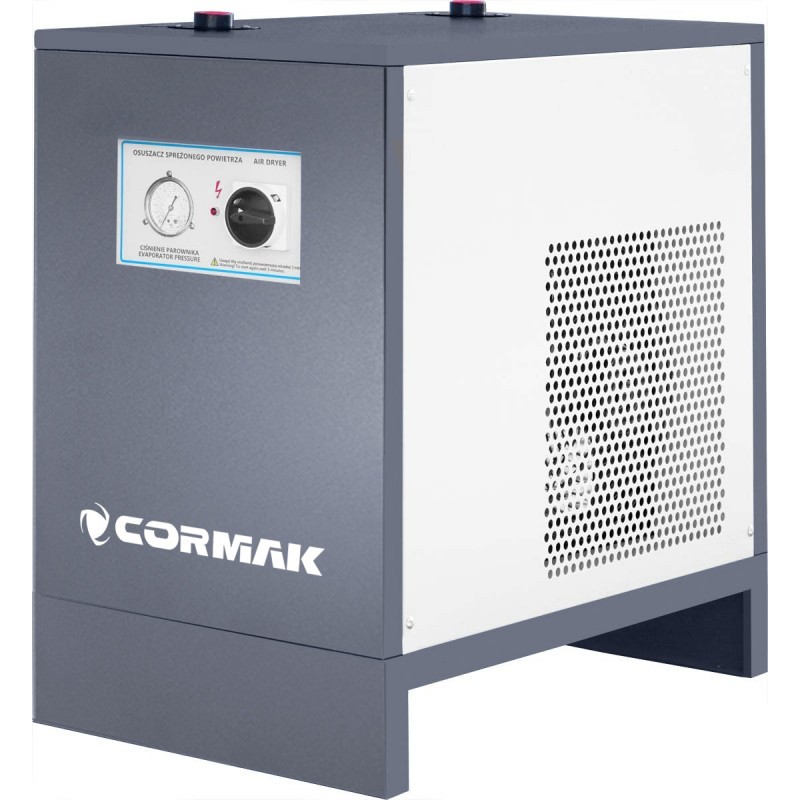
How to Choose a Refrigerated Air Dryer for a Compressor
Compressed air is one of the basic working media in workshops, paint shops, production plants and service facilities. It powers pneumatic tools, cylinders, valves, sandblasters and many automation systems. For these systems to operate reliably, the installation needs not only the right pressure, but also the right compressed air quality.
The main problem is moisture. Air drawn in by the compressor contains water vapour, which turns into condensate after compression and cooling. Water can collect in the receiver, pipes, filters and air consumers, causing corrosion, reduced performance and unstable tool operation.
This is why a refrigerated air dryer for a compressor is an important part of the air treatment system. A properly selected dryer reduces moisture in the installation, protects machines and helps maintain repeatable production conditions. When choosing a dryer, it is worth comparing several parameters instead of focusing only on purchase price.
Why is moisture in compressed air a problem?
Atmospheric air always contains a certain amount of water vapour. When the compressor increases its pressure, the temperature of the compressed air rises. After leaving the compressor, the air gradually cools down and excess moisture starts to condense.
Condensate is not always stopped in the receiver. It may travel with the airflow and collect in the coldest points of the compressed air system. Long pipe runs, incorrect slopes and large temperature differences increase the risk of this effect.
Water in a pneumatic installation accelerates corrosion of metal parts. It can also wash lubricants out of tools, seals and cylinders. Over time, this may cause sticking valves, uneven actuator movement and more frequent repairs.
Moisture is particularly dangerous in paint shops. Even a small amount of water can cause bubbles, dull coatings or weaker paint adhesion. In sandblasting, moist air can disturb abrasive flow and make the process less stable.
When is an air dryer necessary?
An air dryer should be considered when the compressor works every day or supplies several workstations at the same time. The higher the compressed air consumption, the more moisture enters the system. In such conditions, a receiver, drain and simple filter are often not enough.
A dryer is especially recommended for spray painting, CNC machining, sandblasting, packaging and automation. It is also useful in automotive workshops and companies that regularly use grinders, impact wrenches, pneumatic lifts or assembly stations.
A warning sign is a large amount of water drained from the compressor receiver. It is also worth reacting when condensate appears on filters, tools begin to rust or operators notice unstable machine operation. These symptoms usually indicate that the system needs better air treatment.
Refrigerated air dryers are the most common choice for standard industrial applications. They provide a suitable drying level in heated halls and workshops without the need for a more expensive desiccant technology.
How does a refrigerated air dryer work?
A refrigerated air dryer cools compressed air in order to separate moisture from it. Inside the unit, air flows through a heat exchanger. Its temperature drops and water vapour turns into condensate.
The resulting water is separated and discharged from the system. Cooling is provided by a refrigerant operating in a closed circuit. The dried air is then sent further into the pneumatic installation.
In simple terms, the dryer cools the air, condenses water and removes condensate. Under typical conditions, a refrigerated dryer can achieve a pressure dew point of about +3°C. This means moisture should not condense again as long as the installation temperature does not fall below this value.
This drying level is sufficient for most workshops and many production processes. A refrigerated dryer, however, is not intended for extremely dry air. More demanding applications require desiccant dryers.
Refrigerated dryer or desiccant dryer?
The choice depends mainly on the installation location and required dew point. A refrigerated air dryer is usually the best solution for systems operating indoors, where the temperature remains above freezing. It is efficient, simple to maintain and well suited to typical workshop and industrial needs.
A desiccant dryer uses a moisture-absorbing material. This allows it to reach much lower dew points, for example -20°C or -40°C. This is important for installations working outdoors, in cold rooms or in industries requiring very dry compressed air.
Examples include selected processes in pharmaceutical, electronics or food production. In a typical workshop, a desiccant dryer is usually not necessary. It may generate higher energy and service costs without a clear benefit for the process.
How to size the dryer capacity
The most important parameter is the dryer capacity. It should be compared with the effective output of the compressor, meaning the actual amount of air delivered to the installation. Motor power alone is not enough, because two compressors with similar power can have different real airflow values.
The dryer capacity should be at least equal to the compressor output. In many cases, it is better to choose a unit with a reserve, especially if the company plans to expand the system or periodically works under high load. An undersized dryer may not remove moisture effectively when several air consumers operate at the same time.
Working pressure, inlet air temperature and ambient temperature must also be considered. Manufacturers often state capacity for specific conditions, for example 25°C or 40°C. At higher temperatures, the unit has a more difficult task and its actual capacity may be lower.
The maximum air demand of connected machines is also important. It is worth adding up the air consumption of all consumers that may work simultaneously. Current needs and planned future expansion should both be taken into account.
Where should the dryer be installed?
The dryer should be installed after the compressor and compressed air receiver. A good practice is to use an aftercooler, condensate separator and pre-filter before the dryer. This protects the unit against excess water, oil and larger particles.
An additional fine filter can be installed after the dryer. In a paint shop or at workstations requiring higher precision, the filter should be selected according to the type of contamination. The dryer removes moisture, but it does not replace oil and dust filtration.
Proper condensate drainage is essential. The drain and filter condition should be checked regularly. A blocked drain can reduce the performance of the entire system, even if the dryer itself has been correctly selected.
Common mistakes when choosing a dryer
A frequent mistake is choosing a dryer with no capacity reserve. The problem appears later, when the company connects another machine or increases the number of shifts. Another mistake is ignoring compressed air temperature and ambient conditions.
It is also not advisable to install a dryer without pre-filters. Oil and solid particles can affect its operation and shorten the service life of the system. Adequate ventilation is also important, because the unit must be able to dissipate heat.
A dryer should not be treated as a replacement for the entire air treatment system. In practice, a good installation should include a properly selected compressor, receiver, condensate drainage, filtration, dryer and regular maintenance.
Summary
A refrigerated air dryer for a compressor helps maintain proper compressed air quality and reduces the risk of corrosion, failures and production defects. It works best in heated workshops and plants where reliable drying is required, but very low dew points are not necessary.
Before purchase, compare the compressor’s effective output, working pressure, operating temperature and the requirements of connected air consumers. A properly selected refrigerated dryer, combined with filters and efficient condensate drainage, protects the compressed air system and helps reduce costly downtime in the future.
Latest blog postsAll articles →