How Does a Handheld Laser Welder Work?
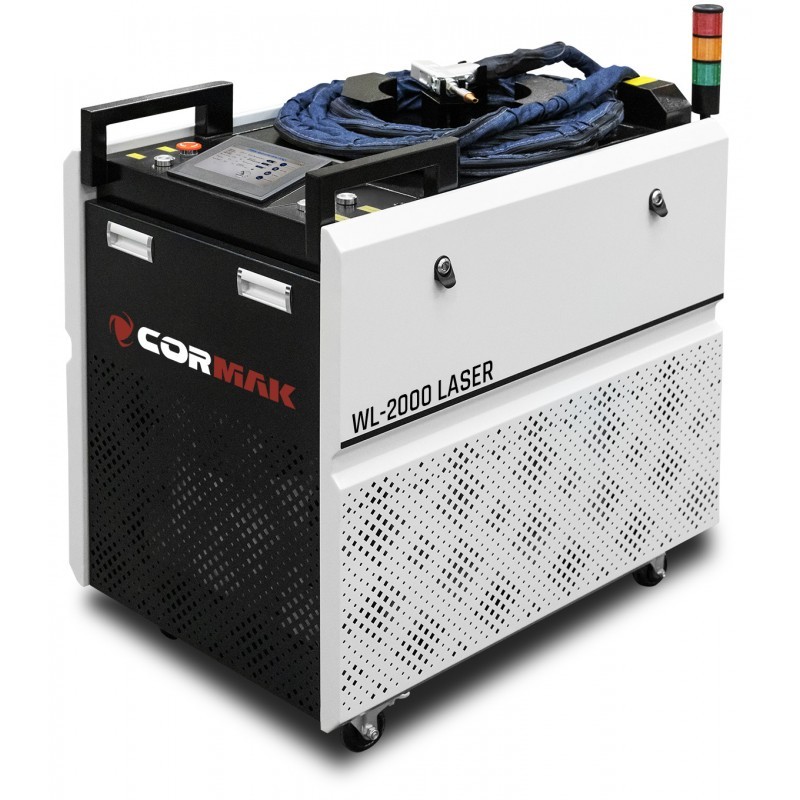
How Does a Handheld Laser Welder Work? Full Explanation
A handheld laser welder is a modern device used for precise joining of metal materials. In recent years, it has become increasingly popular in industry and workshops. Thanks to laser technology, it is possible to achieve very good results while maintaining high efficiency, aesthetics and process repeatability.
Compared to traditional welding methods such as MIG, MAG or TIG, this technology offers completely new possibilities in terms of quality and process control.
What is the operating principle of a laser welder?
The basic operating principle of a handheld laser welder is based on the use of energy carried by a laser beam. The device generates a concentrated beam of light which, when directed onto the surface of the material, causes local melting. As a result of this process, a permanent joint is created between metal elements.
The key aspect here is focusing the beam in a very small area. This means that energy is delivered exactly where it is needed, which helps limit heating of the entire element. As a result, a very narrow heat-affected zone is formed, which translates into less deformation and better weld quality.
This mechanism clearly shows how a laser welder works — precisely controlled energy makes it possible to achieve repeatable, high-quality results.
Construction of a Handheld Laser Welder
A modern handheld welder consists of several basic components that together ensure the proper course of the process:
- laser source — generates energy in the form of a beam, most often fiber-based;
- welding head — allows the operator to guide the process;
- cooling system — maintains a stable operating temperature;
- control system — allows adjustment of parameters such as power and welding speed;
- optional automatic wire feeder — used when welding with filler material.
Each of these elements has a direct impact on the final high quality of the process and the stable operation of the device.
How Does a Handheld Laser Welder Work Step by Step?
The laser welding process can be divided into several stages:
1. Material preparation
The metal surface must be properly cleaned. Removing dirt, grease or rust is important for achieving a good-quality weld.
2. Setting operating parameters
The operator selects parameters such as laser power and welding speed. Correct settings make it possible to optimise the process and reduce material losses.
3. Generating the laser beam
The device activates the laser source, which emits energy in the form of a laser beam.
4. Focusing energy on the material
The beam is precisely focused, which leads to rapid melting of the metal at the welding point.
5. Creating the weld
The operator guides the welding head, while the laser beam joins the elements, creating a durable and aesthetic weld.
6. Cooling and stabilisation
After the process is complete, the material cools down and the weld achieves the required mechanical strength.
Advantages of Laser Welding
The most important advantages of laser welding make this technology increasingly widely used:
- high precision — possibility of working on very thin elements;
- very good weld quality — smooth and aesthetic joints;
- limited heat-affected zone — less material deformation;
- high efficiency and fast welding speed;
- low noise level compared to other methods;
- reduced need for final processing;
- possibility of process automation.
Thanks to these features, laser welders are increasingly chosen in environments requiring high-quality workmanship.
Applications of Handheld Laser Welders
A handheld laser welder is used in many industrial and service sectors. It performs particularly well in processes requiring precision and aesthetic finish.
The most common applications include:
- production of steel structures;
- welding stainless steel;
- automotive industry;
- production of decorative and precision components;
- repair and service workshops.
This technology is especially useful for thin materials, where other methods may cause overheating or deformation.
Laser Welder vs Traditional Welding Methods
Compared to traditional welding methods, a handheld laser welder offers greater control over the process and higher workmanship quality. By limiting the heating of the material, it is possible to obtain more aesthetic and durable joints.
In addition, the laser welding process is faster, which translates into higher efficiency in serial production. In many cases, it also eliminates the need for additional weld processing.
Efficiency and Importance in Modern Production
Modern industrial laser welders are designed for intensive use. Maintaining stable operating parameters makes it possible to preserve repeatability and high weld quality even in large production batches.
In practice, this means:
- shorter project completion time;
- increased production efficiency;
- reduced number of errors;
- lower material losses.
What to Consider When Choosing a Laser Welder?
When choosing the right handheld welder, it is worth considering several important factors:
- power and adjustment range of the device;
- quality of component workmanship;
- cooling system efficiency;
- work ergonomics;
- availability of service and spare parts.
Choosing the right model has a direct impact on the efficiency and durability of the device.
Summary
A handheld laser welder is a modern solution that enables precise and efficient joining of metal materials. Thanks to laser technology, it is possible to obtain very high weld quality while reducing deformation and energy losses.
The combination of features such as high precision, stable operation and the use of advanced technologies makes laser welders a standard in modern production. In many cases, they successfully replace traditional methods, offering better results and greater control over the process.
Latest blog postsAll articles →