Abrasive blasting – what does it involve?
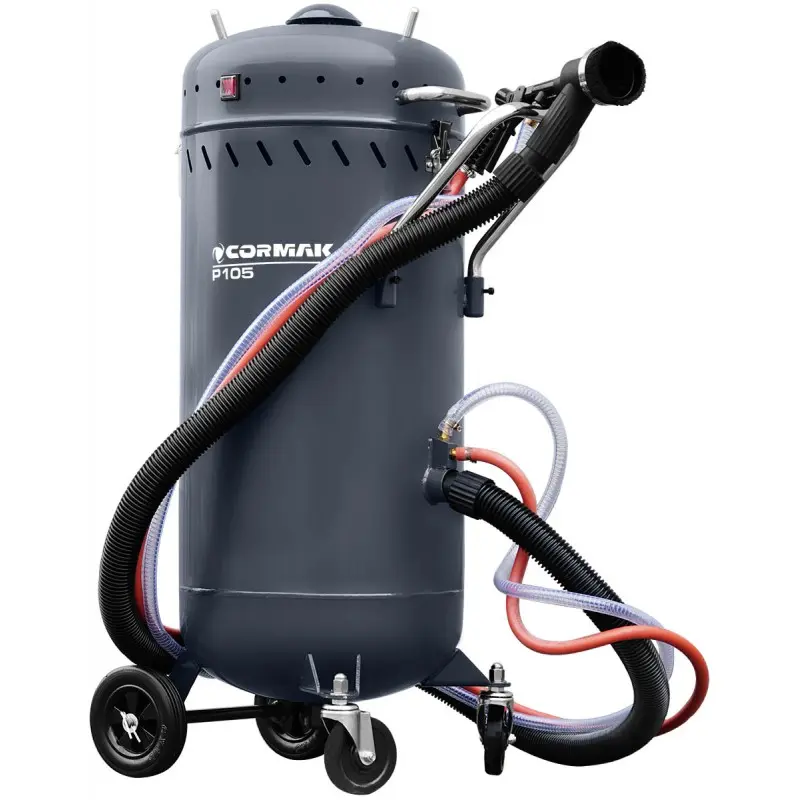
Abrasive blasting is a technology that has played an important role in modern industrial processes for years, especially where effective surface preparation for further processing is essential. This method is used both in mass production and in renovation work, enabling precise removal of contaminants, coatings and material irregularities. In this article, we explain what abrasive blasting involves, what its basic operating principles are, and why properly selected equipment and process parameters are crucial for the quality and repeatability of results.
- What is abrasive blasting?
- Abrasive blasting – what does the process involve?
- The abrasive blasting method and types of abrasives
- Equipment for abrasive blasting – overview of solutions
- Abrasive blasting with machines in industrial practice
- Applications of abrasive blasting in various industries
- Why is machine quality crucial? Summary
What is abrasive blasting?
Abrasive blasting is one of the most commonly used methods of surface preparation and cleaning in industry. This process involves the action of a stream of compressed air or liquid that carries an abrasive material onto the workpiece. This makes it possible to effectively remove rust, scale, old paint coatings and various types of technological contaminants. Abrasive blasting is used both in mass production and in renovation work, as well as in preparing surfaces for subsequent processing stages.
Abrasive blasting – what does the process involve?
To fully explain what abrasive blasting is, what it involves and where it is used on a daily basis, it is necessary to pay attention to several key elements of the process. Abrasives such as corundum, steel shot or glass are accelerated to high speed and directed at the surface of the material. The kinetic energy of the grains causes mechanical removal of the unwanted layer, while at the same time giving the surface the appropriate roughness. Abrasive blasting enables precise control of process intensity through the selection of pressure, abrasive type and machine operating parameters.
The abrasive blasting method and types of abrasives
The abrasive blasting method allows for a wide selection of working materials, which affects the final machining result. Depending on the application, mineral, metallic or synthetic abrasives are used. Proper selection of abrasive fraction and hardness determines the effectiveness of the process and the safety of the machined surface. As a result, abrasive blasting is suitable both for delicate components and for heavy steel structures.
Equipment for abrasive blasting – overview of solutions
Modern abrasive blasting equipment is designed with high efficiency and process repeatability in mind. In industrial practice, closed cabinets, pressure systems and siphon solutions are used, among others. An experienced industrial machinery manufacturer Cormak offers specialised sandblasting and cleaning equipment that makes it possible to adapt the technology to specific production requirements.
Abrasive blasting with machines in industrial practice
Professional abrasive blasting with machines is based on the use of appropriately selected working systems. cabinet sandblasters are very popular, as they ensure full process control and operator safety. For simpler applications, siphon sandblasters are used, while in cases where washing and degreasing of components is essential, cabinet washers are applied. This approach means that abrasive blasting machines can be effectively used in various industrial segments.
Applications of abrasive blasting in various industries
Abrasive blasting is used, among others, in the metalworking, automotive and shipbuilding industries, as well as in the production of steel structures. The process prepares surfaces for powder coating, galvanising or technical bonding. Thanks to its versatility, abrasive blasting is an important technological stage wherever durability and quality of surface joints are essential.
Why is machine quality crucial? Summary
The effectiveness of the process largely depends on the quality offered by abrasive blasting machines. Robust construction, stable operating parameters and ergonomic operation translate into repeatable results and safe use. Properly selected abrasive blasting equipment allows production processes to be optimised and the efficiency of the entire technological line to be increased, which has a direct impact on a company’s competitiveness.
Latest blog postsAll articles →