Spindle Bore in a Lathe – Why Is It So Important?
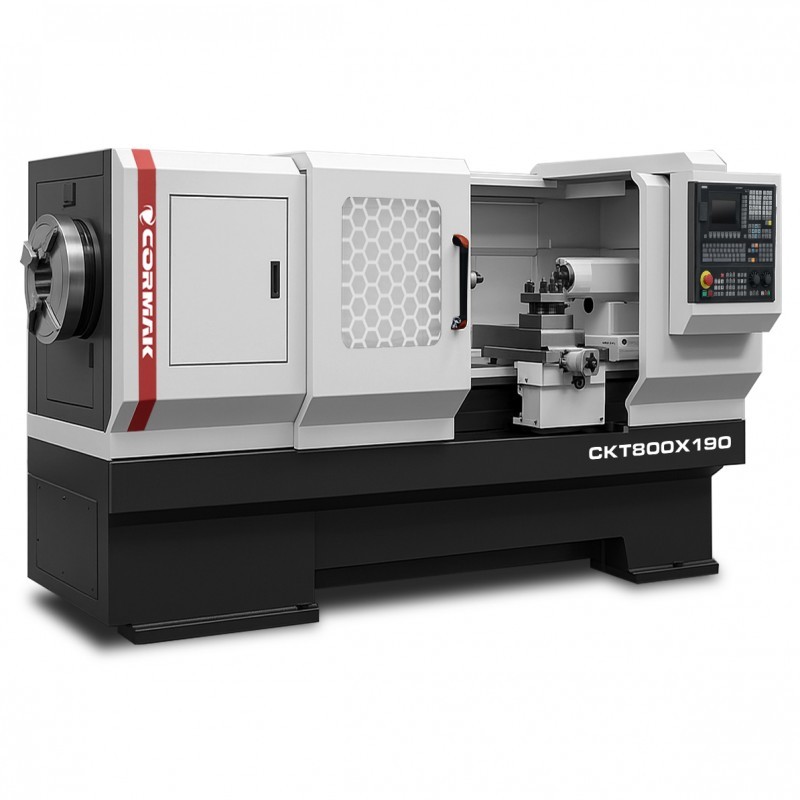
Spindle Bore in a Lathe – Why Is It So Important?
When choosing a lathe, buyers often focus on motor power, turning length, swing over bed and spindle speed range. However, the lathe spindle bore is just as important. It determines what diameter of bar, tube or workpiece can pass through the spindle.
This matters in serial production, when machining parts from long bars, and when manufacturing sleeves, shafts, pins, threaded parts or bushings. A spindle bore that is too small can limit the machine, even if its other parameters appear suitable.
What is a lathe spindle bore?
The spindle bore is the diameter of the hole inside the spindle. It allows the material to pass through the headstock and protrude from the chuck only as much as needed for the current operation.
If the spindle bore is, for example, 52 mm, this does not mean that every 52 mm bar can be used freely. In practice, a small clearance should be left. The chuck, collet, bar feeder or another clamping component may also reduce the practical maximum diameter.
That is why spindle diameter, spindle bore and the selected clamping system should be analysed together. Only then can the user realistically assess what material diameters the machine can handle comfortably.
Why is a larger spindle bore useful?
A larger bore allows long bars to be machined without first cutting them into short blanks. The material is fed through the spindle, clamped in the chuck and extended only to the required length.
After one part is completed, it can be cut off, the bar can be advanced and the next cycle can begin. This is especially useful when producing:
- sleeves and rings,
- shafts and axles,
- pins,
- pipe connectors and fittings,
- threaded components,
- serial parts made from bar stock.
For larger batches, a suitable spindle bore can reduce material preparation time, the number of clamping operations and the amount of auxiliary work. The operator does not have to load a separate blank for every part, which improves workflow organisation.
Spindle bore vs turning diameter
Spindle bore and turning diameter are not the same parameter. The spindle bore defines the maximum diameter of material that can pass through the spindle. The swing over bed tells you how large a workpiece can rotate over the machine bed.
For example, a lathe may have a swing over bed of 520 mm, while its spindle bore may be only 80 mm. This means that the machine can turn a large workpiece mounted in the chuck, but it cannot feed a bar larger than the spindle bore through the spindle.
A large turning diameter therefore does not automatically mean a large spindle bore. When working with shafts, pipes and bar stock, this parameter should always be checked separately.
Spindle bore and serial production
In bar-fed production, spindle bore has a direct impact on efficiency. If the material fits through the spindle, the operator can work from a longer bar and produce consecutive parts without preparing individual blanks.
In CNC lathes, this parameter becomes even more important. The machine can work with a bar feeder that automatically advances the material for the next cycle. This reduces downtime and helps use the machine more effectively.
However, the entire feeding path must be checked. The limitation may not be the spindle alone, but also the chuck, collet, guide tube, bar feeder type or the way the bar is clamped.
Spindle bore when machining tubes and sleeves
A larger spindle bore is useful not only for solid bars. It also matters when machining tubes, sleeves and long workpieces with a larger outside diameter. The material can be inserted deeper into the machine, so the unsupported length outside the chuck is shorter.
This can reduce vibration, runout and axial deviation. It also makes facing, external turning, boring, chamfering and preparation for threading or assembly easier.
Is a larger spindle bore always better?
A lathe should not be selected only by spindle bore. Motor power, machine rigidity, turning length, swing over bed, spindle speed range in rpm and available equipment are also important.
Nevertheless, a larger spindle bore gives more flexibility. It is also a parameter that is practically impossible to increase after buying the machine. If a workshop currently machines bars of 40–50 mm diameter, it is worth considering a lathe with some reserve instead of a machine selected exactly for current needs.
A good approach is to analyse typical jobs as well as parts that may appear in the future. Too small a spindle bore can quickly become a limitation, especially if the company plans to develop bar-fed production or handle larger material diameters.
What should be checked before purchase?
Before choosing a lathe, it is worth checking not only the catalogue spindle bore, but also the practical restrictions created by the tooling. Important factors include:
- the real material diameter that can pass through the chuck,
- the type of chuck or collet system,
- compatibility with a bar feeder,
- swing over bed and swing over cross slide,
- turning length,
- spindle speed range,
- machine rigidity when machining larger diameters.
It is also important to consider how long bars will be supported and protected outside the machine. This is especially relevant in serial production, where stability and safety are as important as the ability to pass material through the spindle.
Summary
The lathe spindle bore is one of the key parameters when working with bars, tubes and long workpieces. A larger spindle opening allows larger material diameters to be machined, supports serial production and can reduce setup time between parts.
Before buying a lathe, it is worth checking not only power, turning length and spindle speed range, but also spindle bore, spindle diameter and limitations related to the chuck and tooling. A well-matched lathe gives the workshop more flexibility and makes it possible to handle a wider range of jobs without quickly reaching the machine’s limits.
Latest blog postsAll articles →