Sliding table saw 2000 or 3200 mm for furniture production?
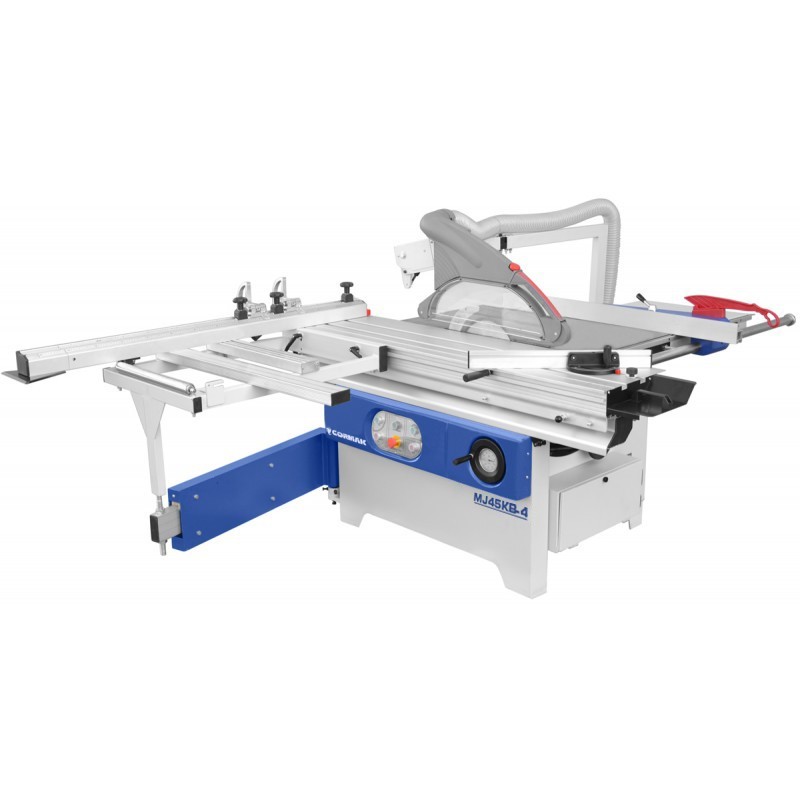
Sliding table saw 2000 or 3200 mm for furniture production?
A sliding table saw is one of the key machines in a woodworking shop, furniture workshop or custom cabinet production facility. Its parameters affect cutting speed, dimensional accuracy, operator comfort and the quality of finished parts. When choosing a machine, motor power, frame rigidity, carriage quality, guides, fences and the scoring unit all matter. One of the most important parameters, however, is the length of the sliding table.
The most common choice is between 2000 mm and 3200 mm tables. Both versions can support furniture production effectively, but they are intended for different workloads. A shorter table takes up less space and is convenient in a smaller workshop. A longer table makes it easier to handle full-size boards, gives the material better support and improves comfort during panel cutting. The right choice depends on board format, type of jobs, number of cuts per day and available workshop space.
Why does sliding table length matter?
The sliding table supports and guides the material during cutting. The longer the workpiece, the more important stable support becomes along the entire cutting path. With a table that is too short, the operator must control the board more carefully, use additional support tables more often or work with another person.
In furniture production, the ability to cut the board is only one part of the process. Comfort and repeatability are just as important. The board should travel smoothly, without twisting or accidental movement. This matters when cutting cabinets, fronts, worktops, shelves, wardrobe parts and built-in furniture components. Even a small dimensional error can make edging, drilling, assembly or final fitting more difficult.
2000 mm sliding table saw – for smaller workshops
A saw with a 2000 mm sliding table is a practical choice for a small woodworking shop, service workshop or custom furniture business working in shorter batches. It is suitable for shelves, drawers, fronts, shorter worktops, strips, smaller cabinet parts and panels that have already been divided into smaller formats.
The main advantage of the shorter table is space saving. A 2000 mm sliding table saw is easier to fit into a limited workspace. It also leaves more room for an edge bander, dust extractor, assembly tables and storage for cut parts. This is important in workshops where every square metre of working space matters.
However, standard furniture boards are often around 2800 mm long. Cutting them along the long side on a 2000 mm table may be possible, depending on the model, but it is less comfortable. The material has shorter support, so longer panels may require an auxiliary table, roller stands or a second operator. If full boards are cut every day, this can slow down production and increase operator fatigue.
The 2000 mm version is a reasonable choice when a company mainly handles shorter batches, smaller panels, limited floor space or does not process full-size boards for most of the working day. It is a good entry point for a workshop that needs an accurate machine but does not yet require the productivity of a larger station.
3200 mm sliding table saw – for full board cutting
A 3200 mm table is designed for regular work with full-size laminated boards, MDF, plywood, veneered boards and other materials used in furniture production. Its length makes it easier to guide a board of around 2800 mm, which is especially important when producing kitchens, wardrobes, fitted furniture, office furniture and repeatable components.
The longer table gives the material better support. The operator can guide the board more confidently without excessive balancing of its weight. This reduces the risk of shifting during cutting, improves repeatability and reduces the need for corrections. When many boards are cut each day, this can shorten lead times and reduce material waste.
Sliding table saws with a 3200 mm table are a strong choice for workshops that cut full board formats every day. In this type of production, guide quality, frame stability, accurate fences and precise adjustment are just as important as table length. A well-built machine helps maintain consistent dimensions and a clean cut edge.
A larger model requires sufficient space. It is necessary to consider not only the dimensions of the machine, but also the area in front of and behind the workstation. The operator needs enough room to feed the board, complete the cut and remove the finished parts. A cramped layout reduces ergonomics and can limit the benefits of a longer table.
What else should be checked before purchase?
Sliding table length should not be the only selection criterion. Before buying, it is worth defining maximum cutting length and width, material thickness and the number of boards cut per day. Motor power is also important. With heavier boards, harder materials and intensive use, an undersized drive may limit the pace of work.
It is also worth checking the quality of the sliding carriage, smoothness of movement, fence stability, angle adjustment and ease of dimension setting. A scoring unit is very important for laminated boards, because it helps reduce chipping on the underside of the material. In furniture production, this directly affects edge appearance and reduces the need for corrections.
The saw should also be evaluated as part of the whole production system. It works together with an edge bander, drilling machine, router, dust extraction system and assembly tables. An efficient panel saw should not become limited by poor part handling, inadequate dust extraction or an unergonomic workshop layout.
When to choose 2000 mm and when to choose 3200 mm?
A 2000 mm table is suitable when short formats, smaller components, custom jobs and limited floor space dominate. It is a good solution for workshops that need accurate cutting but do not work with full-size boards every day.
A 3200 mm table is the better choice when a workshop regularly cuts full-size boards, produces kitchens, wardrobes, fitted furniture or larger batches of components. It provides better operator comfort, more stable material guidance and higher repeatability. In larger production environments, it is often the safer long-term investment.
FAQ
Can a 2000 mm table cut a 2800 mm board?
It may be possible if the specific model offers a suitable maximum cutting length. In practice, working with such a large board on a shorter table is less comfortable. The material requires good support, and for daily full-board cutting a longer table is usually the better choice.
Does a 3200 mm table always mean higher accuracy?
Not by itself. A longer sliding table improves stability with large boards, but machine adjustment, blade condition, scoring unit, fence quality and operator experience are also essential. A long table improves comfort when handling large formats, but the machine still needs correct setup.
Summary
A 2000 mm sliding table saw saves space and works well with smaller parts. A 3200 mm model provides a clear advantage when cutting full-size boards, producing furniture at a larger scale and handling longer formats. When selecting a machine, consider not only table length, but also material format, workshop layout, workload, scoring unit, guide quality and available space around the machine.
A properly selected sliding table saw improves production speed, supports cutting accuracy and helps maintain consistent quality in finished furniture.
Latest blog postsAll articles →