Ride-On Sweeper – Common Selection Mistakes and How to Avoid Them
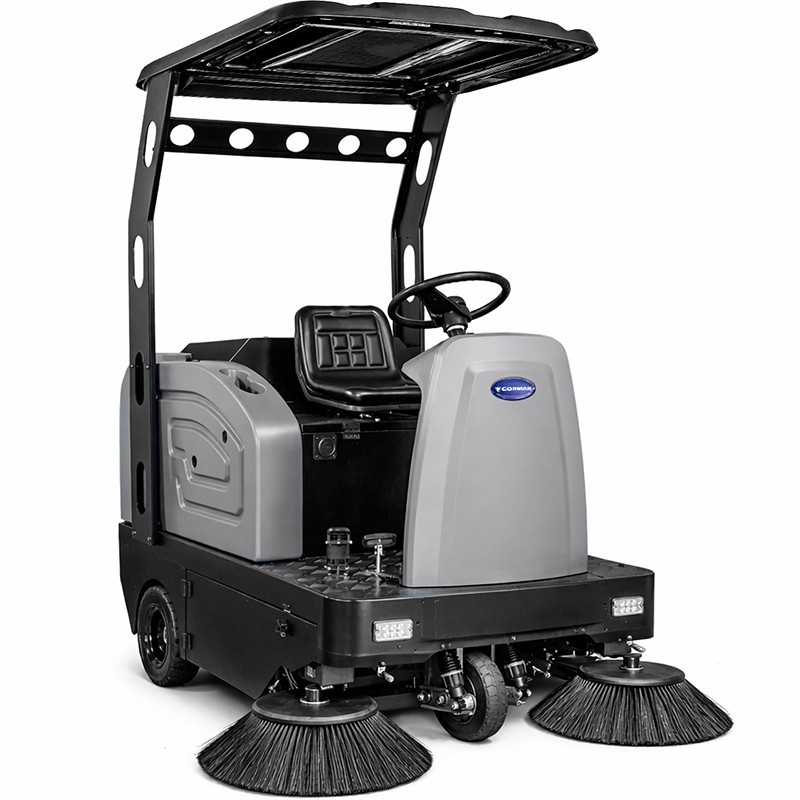
Ride-On Sweeper – Common Selection Mistakes and How to Avoid Them
A ride-on sweeper can significantly improve cleaning in warehouses, production halls, car parks and industrial sites. The result, however, depends on selecting a machine that matches the surface, type of debris and working routine.
Many purchasing mistakes come from comparing only the price or a single specification. Below are the most common issues and practical tips that can help you choose a sweeper suited to the real needs of your site.
Mistake 1: Mismatching the Sweeper to the Surface
One of the most common problems is purchasing a machine that looks suitable on paper but does not match the actual conditions at the site. An oversized sweeper may struggle in narrow aisles, while a compact machine can be inefficient on a large car park or yard.
What does the mistake involve?
Buyers often overlook the actual working area, traffic routes, number of obstacles, aisle widths, surface type and level of contamination. These factors can matter more than the machine's stated productivity alone.
How can it be avoided?
- measure not only the total area, but also aisles, gates and access routes;
- identify whether the machine will operate mainly on concrete, asphalt, block paving or uneven surfaces;
- assess the type of debris: dust, sand, leaves, packaging waste or light production residue;
- on uneven surfaces, check ground clearance, brush-pressure adjustment and the durability of working components;
- for open yards, analyse working width; for tight spaces, prioritise manoeuvrability and compact dimensions.
Mistake 2: Choosing the Wrong Drive Type
Drive type affects where the sweeper can be used, how work is organised, servicing needs and operator comfort. There is no single solution that is right for every facility.
What does the mistake involve?
Typical mistakes include selecting an engine-powered sweeper for an enclosed, poorly ventilated facility, or buying a battery-powered model without confirming that battery runtime and charging infrastructure match planned working shifts.
How can it be avoided?
- for halls, warehouses and other indoor areas, battery-powered models are typically the appropriate choice because they have no local exhaust emissions;
- consider engine-powered models primarily for outdoor sites or well-ventilated spaces;
- compare real operating time per charge, charging time and battery service arrangements;
- for engine-powered models, consider access to fuel, engine maintenance, noise level and ventilation requirements;
- match the drive type to the cleaning schedule, not solely to the purchase price.
Mistake 3: Ignoring Real Productivity
Productivity expressed in m²/h is an important specification, but it usually represents theoretical capability. In real work, turns, obstacles, manoeuvring, hopper emptying and the level of contamination affect the final result.
What does the mistake involve?
A company buys a machine with insufficient working width or hopper capacity, then discovers that cleaning takes too long and interferes with warehouse or production activity.
How can it be avoided?
- compare stated productivity with the real cleaning route at the site;
- check main-brush width and total working width with side brushes deployed;
- allow for travel time, turns, hopper emptying and daily servicing;
- select a machine with a sensible capacity margin rather than operating continually at its limit;
- ask for a demonstration at your facility or on a similar surface.
Mistake 4: Overlooking Operating Costs
The purchase price is only part of the cost of owning a sweeper. Brushes, filters, running-gear components and batteries wear during daily use. Scheduled servicing and downtime also matter.
What does the mistake involve?
Choosing the cheapest model without checking parts prices and service availability can lead to higher lifecycle costs and difficulty keeping the machine ready for use.
How can it be avoided?
- compare the price and availability of brushes, filters, batteries, tyres and other consumables;
- check warranty coverage, service location and typical parts lead times;
- ask which maintenance tasks are required daily, weekly and periodically;
- include energy or fuel costs, charging time and servicing time in the evaluation;
- assess total cost of ownership, not only the initial purchase price.
Mistake 5: Ignoring Operator Comfort and Safety
A ride-on sweeper may be used for many hours each day. Ergonomics and visibility directly influence pace, consistency and safe operation.
What does the mistake involve?
A decision based only on technical specifications may overlook seat quality, control layout, visibility of the working area, ease of entry and exit, or access to daily service points.
How can it be avoided?
- check the operator position, seat adjustment and access to all controls;
- assess visibility ahead of the machine, to the sides and while reversing;
- compare turning radius and ease of manoeuvring in busy areas;
- verify brakes, warning signals and safety functions;
- provide operator training and a daily pre-use inspection routine.
Mistake 6: Selecting the Wrong Hopper Capacity
The waste hopper should match both the size of the area and the quantity of debris collected. Too small a hopper causes frequent interruptions, while an oversized hopper can unnecessarily increase machine size, weight and cost.
What does the mistake involve?
The choice is based only on floor area, without considering the debris type. Fine dust and sand have very different volume and weight characteristics from leaves, packaging waste or mixed debris found outdoors.
How can it be avoided?
- determine how often the machine will be used and where the hopper can be emptied safely;
- consider the type and volume of debris present at the site;
- check the emptying method: manual, mechanical or high-dump;
- evaluate hopper capacity together with working width and planned travel route.
Mistake 7: Overlooking Features That Matter at the Site
Not every optional feature is necessary, but some can make a substantial difference to safety and productivity in specific operating conditions.
What does the mistake involve?
Choosing a basic configuration without assessing dust control, filtration, brush adjustment, slope operation or warning equipment can limit the machine’s usefulness once it is delivered.
How can it be avoided?
- in dusty halls, review dust-control systems, filtration specifications and ease of filter cleaning;
- on uneven surfaces, check brush adjustment and the durability of working components;
- in high-traffic areas, consider work lights, warning signals and visibility-enhancing equipment;
- for outdoor use, assess weather conditions, surface type and service access;
- choose filters and optional equipment only as specified by the manufacturer for the relevant model and application.
Mistake 8: Focusing Only on the Purchase Price
The lowest purchase price does not always mean the lowest operating cost. Differences in durability, component quality, service availability and practical operating specifications can matter more than the initial saving.
What does the mistake involve?
A company buys a machine without comparing warranty terms, spare parts, standard equipment, real productivity and suitability for the site. Over time, this can result in repair costs, downtime or the need to buy a second machine.
How can it be avoided?
- compare machines with similar working width, drive type and intended use;
- check precisely what is included in the standard specification;
- assess build quality, service availability and parts support;
- ask for an operating-cost estimate and a recommendation for the intended area;
- consider purchase price together with operating time, downtime and maintenance costs.
Pre-Purchase Checklist for a Ride-On Sweeper
Before making a decision, it is useful to answer several practical questions:
- What area must be cleaned during one shift?
- Will work take place indoors, outdoors or in both environments?
- What types of surfaces and debris are present?
- How wide are aisles, gates and access routes?
- How often must the hopper be emptied and where will this be done?
- What operating time is required without charging or refuelling?
- Does the site require special dust control, warning equipment or capability for uneven surfaces?
- What service and consumables support is available?
Summary
The best ride-on sweeper is not simply the largest, most powerful or least expensive model. It should be matched to the area, debris type, usage pattern and service capabilities of the business.
A considered analysis before purchase can reduce the risk of insufficient productivity, unnecessary downtime and excessive operating costs. Compare several models, check performance in conditions close to real use and select a solution that will improve cleaning over the long term.
Latest blog postsAll articles →