Plasma Cutting with THC – Why Torch Height Control Is Critical for Quality
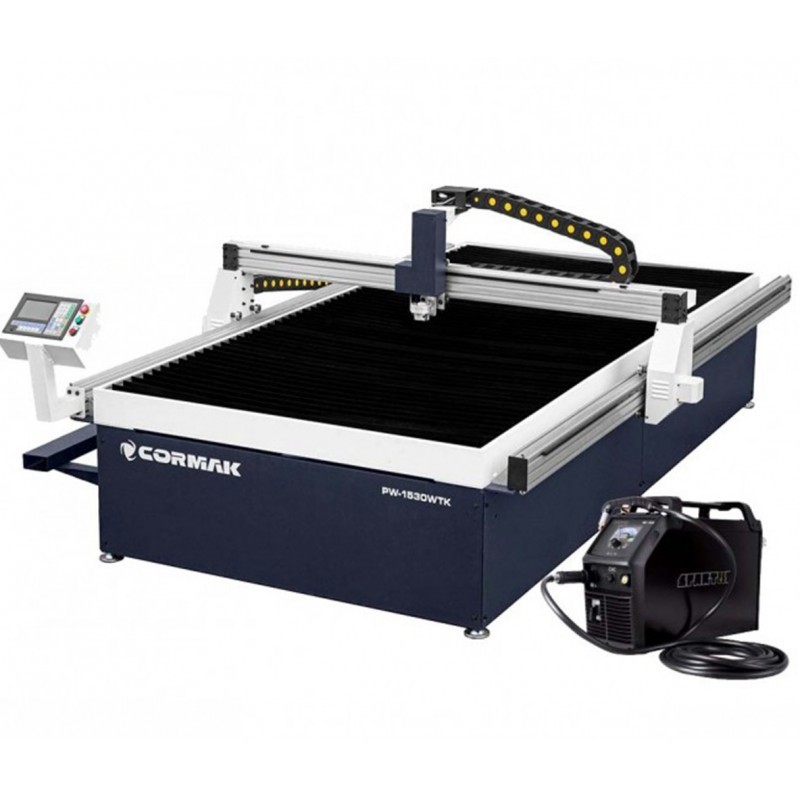
Plasma Cutting with THC – Why Torch Height Control Is Critical for Quality
CNC plasma cutting is a fast method for processing electrically conductive materials such as mild steel, stainless steel and aluminium. Final quality depends not only on the plasma power source, travel speed and gas quality, but also on maintaining the correct torch-to-work distance.
That task is handled by THC, or Torch Height Control. A properly configured system helps compensate for sheet distortion, stabilise cutting conditions and reduce the risk of premature consumable wear.
What Is THC in a CNC Plasma Cutter?
THC is a Z-axis control system that automatically corrects torch height above the material while cutting. In many systems, the controller uses the relationship between arc voltage and plasma-arc length. When the actual torch-to-work distance changes, arc voltage changes as well, allowing the system to raise or lower the torch.
Not every THC system works in the same way. Measurement methods, correction algorithms, corner response, piercing behaviour and protective features depend on the CNC controller, plasma source, torch and machine configuration. Parameters should always be checked against the cutting charts and documentation for the specific system.
The main purpose of THC is to keep cutting height within the range required by the process. This supports arc geometry, process stability and part repeatability across the entire sheet.
THC and IHS – Two Different Height-Control Stages
THC and material-surface detection are often treated as the same function, but they are separate stages. THC primarily corrects height during cutting. Establishing the sheet surface before piercing is usually performed by IHS, or Initial Height Sensing.
IHS may use ohmic sensing, a mechanical sensor or another method specified by the manufacturer. Once the surface is found, the controller establishes a reference point, raises the torch to pierce height and, after piercing, moves to the correct cut height. THC can then take over live height correction along the cutting path.
Keeping these stages distinct is important. Pierce height, cut height and travel height are not the same values. Each should be selected from the correct process data for material, thickness, amperage, gas and consumables.
Why Does Torch Height Affect Cut Quality?
Torch-to-work distance affects arc concentration, kerf width, edge angularity, dross formation and hole quality. It also affects consumable life, especially during piercing and when cutting distorted sheets.
Correct settings can support:
- more consistent kerf width;
- cleaner edges and less dross;
- better control of edge angularity;
- more accurate part dimensions after kerf compensation;
- less risk of torch contact with the plate;
- more predictable consumable wear.
THC does not replace correct cutting speed, amperage, consumables, gas supply or rigid machine mechanics. It is one element of the complete cutting process.
What Happens When the Torch Is Too High?
When torch-to-work distance is excessive, the arc becomes less concentrated. Energy transfer to the cut zone can be reduced and kerf geometry can change.
Common results include:
- greater positive edge bevel;
- a wider kerf;
- reduced dimensional accuracy;
- poorer small-hole quality;
- greater risk of incomplete cutting when speed is also incorrect;
- more finishing work after cutting.
Similar symptoms can also result from a worn nozzle, unsuitable gas, excessive or insufficient speed, or incorrect amperage. Troubleshooting should consider the full parameter set.
What Happens When the Torch Is Too Low?
Insufficient distance increases the risk of contact with the plate, spatter or distorted material. The risk is especially high during piercing, when molten metal and splashback are present around the cut zone.
Possible consequences include:
- accelerated wear of nozzles, electrodes and shields;
- torch damage caused by collision;
- arc instability;
- burn marks and increased dross;
- downtime for consumable replacement;
- damage to the part or interruption of the cut.
Height should be set according to the recommendations for the plasma source and consumable set. Changing material, thickness, speed or amperage may require new settings.
How Does THC Work Step by Step?
- Surface sensing: IHS identifies the plate position and establishes a Z-axis reference.
- Pierce-height setting: the torch moves to a safe height for arc initiation and reduced splashback exposure.
- Material piercing: after the programmed pierce delay, the controller proceeds to the next stage.
- Transition to cut height: the torch moves to the height required for stable cutting.
- Live height regulation: THC analyses a signal, most commonly arc voltage, and adjusts the Z axis according to system settings.
- Travel and next pierce: the torch moves to travel height to reduce the risk of striking parts or cut-outs.
The exact sequence differs by system. Parameters such as pierce height, pierce delay, cut height, arc voltage, THC delay and travel height should come from the relevant process data.
Piercing, Holes and Corners – When THC Needs Special Attention
THC is valuable when sheet material warps, but its response can be counterproductive in some parts of the path. Small holes, sharp corners, short arcs and areas where machine speed is reduced require particular attention.
When travel speed drops, arc conditions change and the control may interpret the voltage change as a height change. Depending on the system, features such as THC lockout, corner lock, anti-dive or temporary Z-axis freeze may be used. They should be applied only in line with the controller’s functions and the manufacturer’s guidance.
Piercing is a separate event from cutting. It is typically performed at a greater height than steady-state cutting to protect consumables from molten splashback. After piercing, the torch moves to cut height before normal height regulation follows the contour.
How THC Affects Cut Quality and Operating Costs
A well-configured height-control system can reduce the number of parts requiring rework and improve production repeatability. Its benefits are particularly relevant for larger sheets, thin material prone to warping, serial production and demanding profiles.
THC can support:
- less consumable wear by limiting incorrect stand-off and collisions;
- less grinding and dross removal;
- more stable quality where sheet position varies;
- better use of operator time;
- fewer unplanned stops.
The real economic outcome depends on production type, setup quality, machine condition, cutting parameters and maintenance discipline. THC does not automatically guarantee a perfect edge, but it helps maintain the conditions required to achieve one.
How to Select and Set Up a THC System
System selection should consider the plasma source, machine torch, CNC controller, Z-axis drive, table type and planned material range. Best results come from a complete solution in which all components are compatible and configured using the manufacturer’s process data.
Before commissioning, check:
- whether the system has a suitable IHS method for the sheets being used;
- whether the plasma source provides the correct arc-voltage signal for CNC operation;
- whether the Z axis moves smoothly and without excessive backlash;
- whether height, speed and amperage settings come from current cutting charts;
- whether consumables are correct for the process and not worn out;
- whether CAM programming accounts for piercing, travel moves, corners and small holes;
- whether operators have a first-part quality-check procedure.
Cutting Without Height Control vs Cutting with THC
| Area | Without active height correction | With properly set THC |
|---|---|---|
| Sheet warping | The torch may keep a fixed Z-axis position despite material-level changes | The system can correct height while cutting according to the arc signal |
| Edge repeatability | More dependent on sheet flatness and manual corrections | Can be more stable with correct process settings |
| Consumable wear | Greater risk of operating at an unsuitable stand-off | Can be more predictable when collisions and incorrect height are limited |
| Small holes and corners | Require correct program and motion settings | Require correct program and, depending on the system, THC lockout features |
Common Symptoms of Incorrect Torch Height
When cut quality varies between parts or deteriorates across the sheet, check not only torch height but the whole process.
- heavy dross formation;
- uneven or changing edge bevel;
- an excessively wide or irregular kerf;
- piercing problems;
- rapid nozzle and electrode wear;
- torch strikes against the plate or cut parts;
- Z-axis oscillation or excessive torch movement in corners.
Before changing THC values, check consumable condition, work lead and cables, gas pressure and quality, cutting speed, CAM settings, table mechanics and sheet flatness. Electrical and plasma-source maintenance should be performed by qualified personnel in accordance with the manufacturer’s instructions.
FAQ
Is THC necessary on every CNC plasma cutter?
Not every simple application needs advanced height control, but THC is a highly valuable part of a system for serial production, large sheets, thin material and repeatable quality requirements.
Does THC detect the sheet surface by itself?
Surface detection is most often performed by IHS. THC primarily controls height while cutting. The exact architecture depends on the system used.
Does THC improve small-hole quality?
It can help maintain correct height on straight sections, but for small holes and short arcs, THC response may need to be reduced or temporarily disabled. Speed, cut height, consumable condition and CAM strategy are also essential.
Why does the torch raise or lower in corners?
Machines usually slow down in a corner, which can change arc voltage. If THC interprets this as a height difference, it may unnecessarily adjust the Z axis. Corner lock or anti-dive functions can help where available.
Summary
THC is one of the key systems in a CNC plasma cutter because it helps maintain the correct torch-to-work distance during cutting. Combined with correct IHS, current cutting charts, sound consumables and a well-prepared CAM program, it supports process stability and edge quality.
The best results come from treating height control as part of the complete process: sheet flatness, pierce settings, cutting speed and strategy for holes and corners all matter. A properly configured CNC plasma system can then reduce rework, consumable use and the risk of unplanned downtime.
Latest blog postsAll articles →