Pallet Wrapping Machine – When Is It Worth Buying One?
Pallet Wrapping Machine – When Is It Worth Buying One?
Manual pallet wrapping with stretch film is common in small warehouses, online stores and production plants. When only a few pallets are shipped per week, it usually does not create a major problem. An employee takes a roll of film, walks around the load several times, secures the base and the upper part of the goods, and then sends the pallet to dispatch. Over time, however, this simple process can begin to generate costs, delays and mistakes.
The moment when it is worth considering a pallet wrapping machine is not determined only by the number of shipments. Working time, film consumption, repeatability of packaging, type of load and risk of transport damage are also important. A properly selected pallet wrapper improves the final stage of logistics and, with regular shipments, can become one of the most practical machines in the warehouse.
When Does Manual Wrapping Stop Being Efficient?
The first signal is time. Manually securing one pallet can take several minutes, especially when the load is tall, irregular or requires additional film layers. With a dozen or several dozen pallets per day, an employee may spend a large part of the shift on this task. During that time, they are not picking orders, receiving deliveries or preparing transport documents.
The second signal is increasing stretch film consumption. During manual wrapping it is difficult to maintain identical film tension and the same number of layers. Operators often secure the load “just in case,” which increases material consumption. This is especially visible with heavy pallets, tall stacks of cartons or irregularly shaped goods.
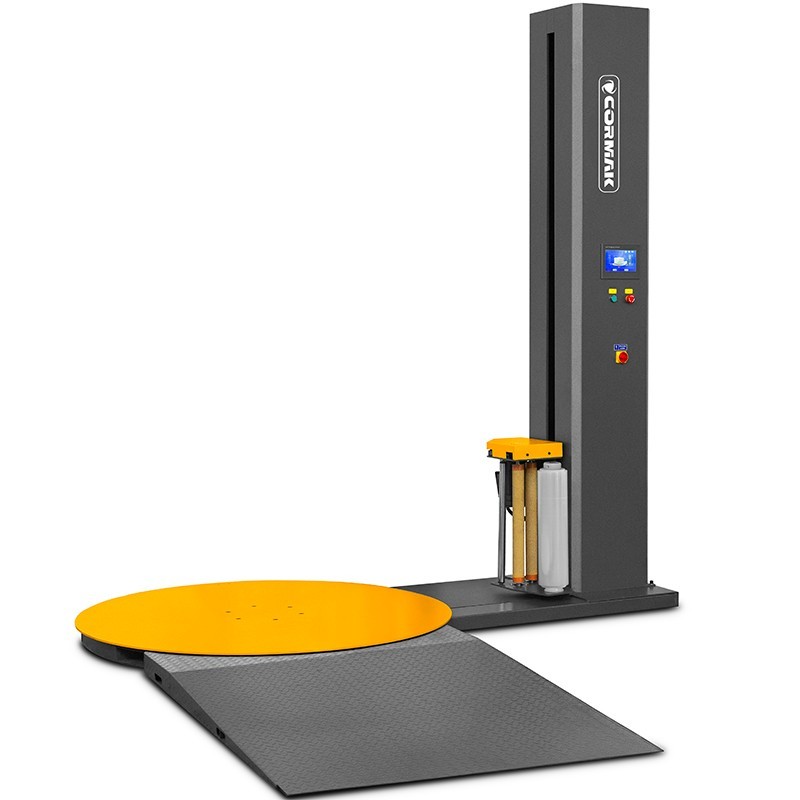
A pallet wrapping machine allows a fixed operating cycle to be set. Depending on the model, the user can control the number of table rotations, wrapping speed, film tension and reinforcement of the lower and upper part of the pallet. As a result, material consumption is easier to predict and packaging becomes more repeatable.
Ergonomics and Workplace Safety
Walking around a pallet with a roll of film puts strain on the back, shoulders and wrists. With high loads, the employee also has to reach above shoulder level or use a platform. During busy shipping periods, this increases fatigue and the risk of incorrectly securing the goods.
A pallet wrapper reduces the number of repetitive movements. The operator mainly focuses on positioning the pallet correctly, attaching the film and starting the program. This matters in companies where pallet packing is a regular part of work, not an occasional task performed once in a while.
Repeatable Load Securing Matters
A pallet must remain stable not only when it leaves the warehouse, but also during loading, transport and unloading. Manual wrapping depends on the experience of a particular employee. One pallet may receive a sufficient number of layers, while the next one may be wrapped too lightly. Differences may also appear in film tension and in the way the bottom and top of the load are reinforced.
A pallet wrapping machine makes it possible to set specific parameters. This means that every pallet is prepared according to the same standard. It is especially important when a company ships high-value goods, products prone to damage or loads that require firm stabilization.
Better repeatability can help reduce transport complaints. Damage is not always caused by the carrier. It often results from shifting cartons, too few film layers or insufficient securing at the pallet base.
Which Companies Benefit from a Pallet Wrapper?
A pallet wrapping machine is suitable for production plants, wholesalers, logistics centres, e-commerce warehouses, distribution companies and businesses shipping heavy components. It is useful wherever pallet packaging is performed regularly rather than occasionally.
A semi-automatic pallet wrapper with a turntable is often a good solution for small and medium-sized companies. The operator places the pallet on the platform, attaches the film and starts the cycle. This type of machine delivers a major improvement compared with manual wrapping without the need for a complex automation system.
For higher shipping volumes, it is worth checking the number of available programs, maximum pallet height, turntable load capacity and compatibility with different types of stretch film. Companies handling unstable, very tall or non-standard loads should also analyse pallet stabilization methods and available additional options.
How to Choose a Pallet Wrapping Machine?
Before purchase, it is necessary to define the maximum pallet weight and dimensions. Key parameters include machine load capacity, turntable diameter and permissible load height. It is also worth calculating the average number of pallets wrapped per day. This helps select capacity based on the real work pace, not only on current minimum needs.
The type of goods also matters. Lightweight cartons, bags, barrels, metal components and irregular products require different wrapping strategies. Before implementing the machine, it is worth preparing a simple packaging instruction: how to arrange the goods, when to use corners or spacers, and how many film layers to apply.
The workspace must also be planned. The pallet wrapper should stand in a location that allows convenient pallet delivery and collection, preferably close to the picking or loading area. Access for a pallet truck or forklift and space for a film stock should also be included in the layout.
Frequently Asked Questions
Does a pallet wrapper replace an employee?
Not completely. The operator still has to position the pallet correctly, select the film and start the right program. The machine automates the most repetitive stage: the wrapping itself.
Is a pallet wrapper useful with a low number of pallets?
Yes, especially when pallets are heavy, tall or require solid securing. Profitability depends not only on shipment volume, but also on labour time, film cost and the risk of transport damage.
Summary
Manual stretch wrapping stops being efficient when it becomes a regular, repetitive and time-consuming stage of shipping. A pallet wrapping machine helps speed up work, reduce employee strain, control film consumption and improve load stability.
The purchase is worth considering not only with very high pallet volumes. Even in a medium-sized warehouse, a pallet wrapper can improve work organization, raise packaging standards and reduce the risk of damage during transport.
Latest blog postsAll articles →