How to Choose Abrasive Media for Metal Sandblasting
How to Choose Abrasive Media for Metal Sandblasting
The choice of abrasive media affects cleaning speed, surface profile and the wear of the nozzle, hoses and blasting machine components. A medium that is too aggressive can damage thin sheet metal, round off edges or leave an excessively deep profile. A medium that is too mild may significantly extend the cleaning process and may not remove heavy rust, scale or multilayer paint coatings effectively.
Before starting work, it is important to define the type of metal, material thickness, type of contamination and the required final result. Removing corrosion from a steel structure requires a different approach than preparing aluminium or cleaning components before applying a paint coating.
What is sandblasting?
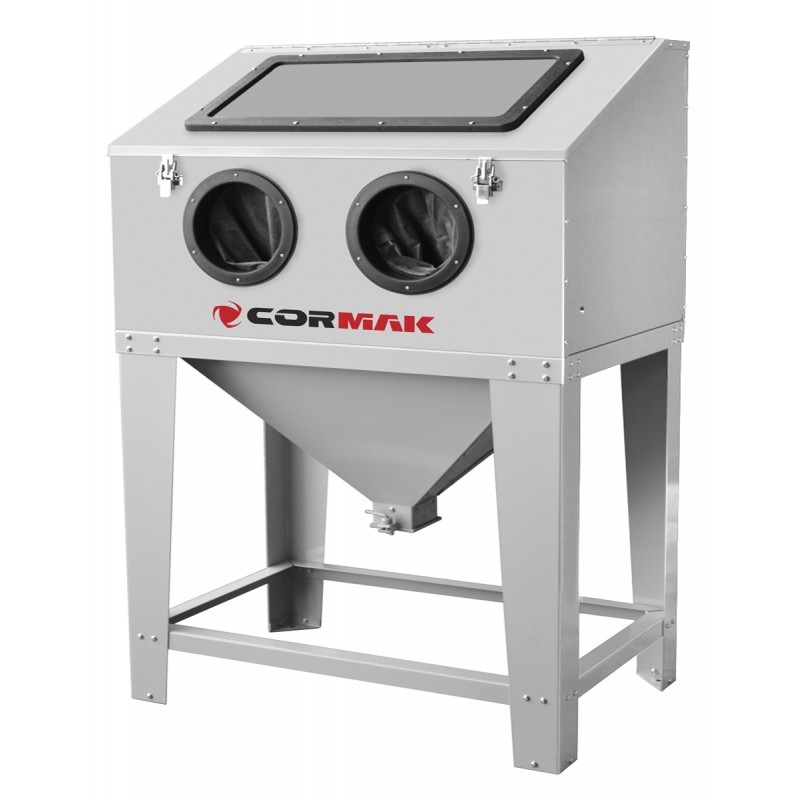
Sandblasting uses a stream of abrasive particles accelerated by compressed air. The particles strike the surface and mechanically remove rust, scale, oxides, deposits and old coatings. In practice, the broader term abrasive blasting is often more accurate, because the process may use aluminium oxide, glass beads, steel shot, garnet and other abrasive materials rather than only sand.
The process is used in production plants, workshops, paint shops, renovation companies and maintenance departments. It helps prepare metal for painting, welding, bonding, galvanising, inspection and further machining. A correctly performed blasting process improves coating adhesion and makes it easier to assess the actual condition of the component.
What determines the choice of abrasive media?
The selection of abrasive media should take into account hardness, grain size, particle shape, dust generation, recyclability and the requirements of the blasting machine. Sharp, angular grains cut the surface intensively. They remove corrosion and paint effectively while leaving a pronounced surface profile for subsequent coatings.
Spherical particles work more gently. They tend to impact and smooth the material rather than cut it aggressively. They are commonly used for satin finishing, cleaning aluminium, stainless steel and components where the final appearance of the surface is important.
Grain size is also important. Coarser abrasive removes difficult contamination faster but leaves a rougher surface. Finer media gives better control and is better suited to thin, precise or decorative components.
Aluminium oxide for rust and hard coatings
Aluminium oxide is a hard, sharp abrasive used to remove rust, scale, paint and residues from heat treatment. It works well on carbon steel, stainless steel and many non-ferrous metals, provided that the process parameters are matched to the component.
It creates a developed surface profile, which is why it is often used before painting, bonding and applying anti-corrosion coatings. It can remove old coatings quickly, even from heavily used machine parts, steel structures and workshop components.
However, the high hardness of aluminium oxide may increase wear on the nozzle, hoses and working elements of the blasting machine. For thin sheet metal, finer grain, lower pressure and a greater nozzle distance should be used to reduce the risk of deformation or excessive surface roughening.
Aluminium oxide is suitable for:
- removing heavy rust and scale,
- preparing steel for painting,
- cleaning welds, castings and structural components,
- removing hard coatings,
- work requiring strong cutting action.
Glass beads for a more delicate finish
Glass beads are less aggressive than aluminium oxide. They allow metal to be cleaned without deeply cutting the surface. They are often used on aluminium, stainless steel, brass and decorative components where aesthetics and an even finish are important.
Glass bead media removes light tarnish, discolouration, thin oxides and process residues. It leaves a satin-like surface. It is not the best choice when heavy corrosion, strong scale or hard multilayer paint coatings must be removed.
Glass media is useful for cleaning moulds, tools, automotive parts and surfaces with complex shapes. Fine grains help reach grooves, recesses and difficult areas, while the gentler action helps reduce the risk of visible damage.
Steel shot and angular steel grit
Steel shot is usually spherical and highly durable. It can be reused many times in machines designed to operate with metallic abrasive media. It is used for cleaning castings, removing scale, strengthening surfaces and processing steel parts.
Angular steel grit is more aggressive. It removes rust and old coatings effectively, creating a rough profile suitable for anti-corrosion coatings. However, it requires a properly selected machine because metallic abrasives have higher mass and different operating requirements than lighter mineral media.
Steel abrasives should not be used in every blasting machine. They require suitable feeding, separation and recovery systems. Caution is also needed when working with stainless steel and aluminium, because iron particles may contaminate the surface and reduce corrosion resistance.
Garnet as a versatile mineral abrasive
Garnet is a mineral abrasive with sharp grains and relatively low dust generation. It can effectively remove paint, rust and protective coatings from steel structures, aluminium and large industrial components.
It offers a good balance between working speed and process control. Garnet is commonly used in open blasting, on larger structures and when preparing metal for powder coating or anti-corrosion protection.
Garnet is worth considering when the goal is:
- an even surface profile on metal,
- fast coating removal,
- lower dust generation,
- cleaning large structures,
- preparing components for anti-corrosion protection.
How to choose the right grain size?
Coarser grain is suitable for heavy contamination, hard deposits and thick rust. It provides high process intensity but may leave a deeper surface profile. If the parameters are too aggressive, it may also increase nozzle wear and the risk of damaging thinner components.
Finer abrasive is better for aluminium, thin sheet metal, precision parts and finishing work. The blasting process may take longer, but the operator has more control over the final result.
Grain size must also be matched to the nozzle diameter and machine capability. Oversized particles can cause blockages, uneven media flow and unstable blasting. Media that is too fine for heavy contamination may extend the process and increase compressed air consumption.
Pressure and nozzle handling
Even correctly selected abrasive media can damage a component if the pressure is too high. Thin sheet metal may deform due to strong particle impact and local heating. Parameters should be selected particularly carefully when working with aluminium, stainless steel and decorative parts.
Before starting the main process, it is worth carrying out a test on a hidden area or a sample of the material. The operator should gradually increase pressure while checking the cleaning rate, surface appearance and resulting surface profile.
The nozzle should be moved evenly, maintaining a consistent distance and angle to the surface. Holding the stream in one place for too long may excessively alter the surface, overheat the material or leave an uneven blasting mark.
The importance of the compressor and air quality
Effective blasting requires a sufficient volume of compressed air. If compressor capacity is too low, pressure drops, operation becomes uneven and the whole process takes longer. In practice, abrasive selection should therefore be considered together with compressor capacity, nozzle diameter and the machine's air demand.
Moisture in the installation can cause abrasive media to clump and block hoses. It is advisable to use a dryer, condensate separator and suitable filters. Stable pressure and dry air improve repeatability, reduce downtime and help maintain an even abrasive stream.
How to select abrasive media in practice
For heavy rust, scale and hard coatings, aluminium oxide or angular steel grit may be appropriate. For aluminium, stainless steel and aesthetic finishing, glass beads are usually a better option. For large structures and open blasting, garnet can be a good choice, especially when a balance between productivity and dust control is required.
However, abrasive media should not be selected based only on the name of the material. Component thickness, surface condition, required roughness, type of subsequent coating and blasting machine capability all matter. The safest approach is to carry out a process test and then select pressure, grain size and nozzle speed based on the result.
Summary
Aluminium oxide is suitable for intensive removal of rust, scale and old coatings. Glass beads are better for delicate cleaning and satin finishing of aluminium or stainless steel. Steel shot is highly durable, while garnet is a versatile choice for preparing larger structures before painting.
When selecting abrasive media, consider the type of metal, component thickness, expected surface profile and the capabilities of the blasting machine. A process test helps determine the right pressure and grain size without damaging the workpiece. This makes blasting faster, more stable and better matched to subsequent processing steps.
Latest blog postsAll articles →