How to Choose a PM Motor Compressor for a Workshop or Production Company
How to Choose a PM Motor Compressor for a Workshop or Production Company
Choosing the right compressor for a workshop or production plant directly affects the stability of pneumatic tools, process continuity and the operating cost of the entire compressed-air system. Compressed air powers impact wrenches, spray guns, grinders, blow-off stations, cylinders, valves, packaging machines, assembly stations and industrial automation equipment.
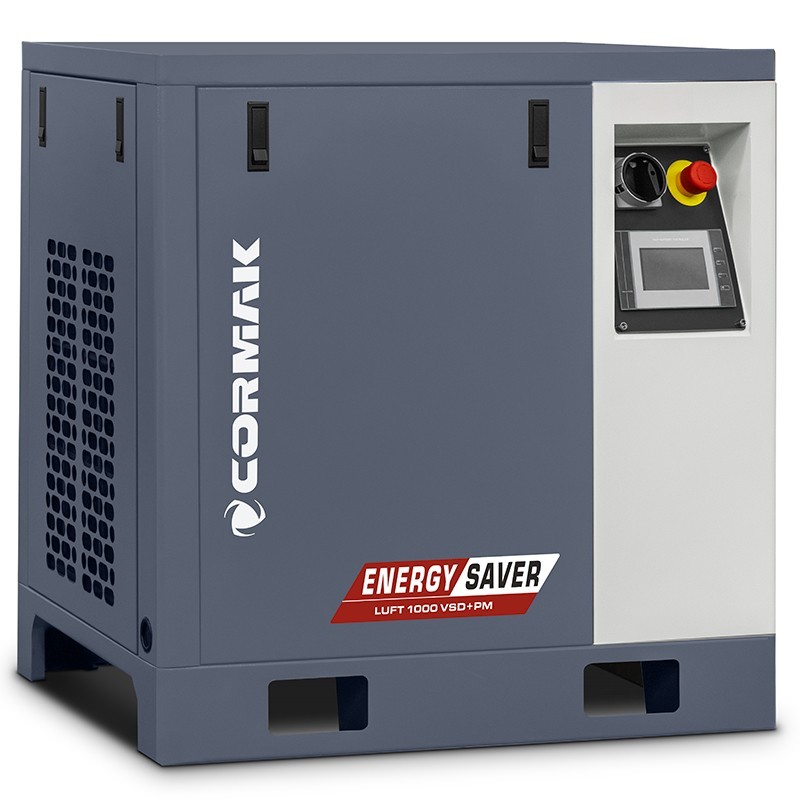
An increasingly common solution is a PM motor compressor, meaning a rotary screw compressor equipped with a permanent magnet motor. This type of drive is well suited to companies that need energy-efficient operation, stable pressure, high output and better control over energy consumption. However, the best compressor is not simply the largest available model. It is the unit that matches the real air demand, working profile and requirements of the connected equipment.
What is a PM motor compressor?
A PM motor compressor is a modern rotary screw compressor using a synchronous permanent magnet motor. It is typically combined with an inverter, allowing smooth speed control. As a result, the compressor can adjust its output to the current air demand in the installation.
When demand decreases, the compressor reduces speed instead of running constantly at full power. When more tools or machines start operating at the same time, the compressor increases output. In practice, this means lower energy losses, more stable working pressure and better operating smoothness than a conventional unit selected without analysing the load profile.
When does a PM compressor make sense in a workshop?
In a workshop, a PM compressor is especially useful when compressed air is used every day for many hours or when several workstations are supplied at once. This applies to automotive workshops, paint shops, machine service departments, metalworking shops, woodworking shops and general maintenance facilities.
If the system supplies impact wrenches, spray guns, grinders, blow guns, lifts or cleaning equipment, maximum pressure alone is not enough. The key figure is effective air delivery at the required working pressure. An undersized compressor will cause pressure drops, interruptions and faster component wear. An oversized unit may increase purchase and energy costs unnecessarily.
PM compressor for production plants
In a production company, the compressor is often one of the most important elements of the technical infrastructure. It supplies machines, automation systems, pneumatic cylinders, valves, packaging systems, blow-off points and assembly stations. Pressure drops can stop a process, reduce product quality or cause line downtime.
In such conditions, PM rotary screw compressors are a good option when the system works intensively and air consumption varies during the day. Variable output makes it possible to match compressor operation more closely to actual demand. Before buying, it is worth analysing not only the current machinery, but also planned expansion, number of shifts and possible growth in the number of air consumers.
How to calculate compressed-air demand
Compressor selection should start with a list of all pneumatic devices. Check their air consumption, required pressure and which consumers can operate at the same time. Only the sum of realistic simultaneous demand makes it possible to select the correct compressor capacity.
For example, if two pneumatic wrenches, a blow-off station and a spray gun can work at the same time, their air consumption should be added together. A reasonable reserve should then be included so the compressor does not constantly operate at its limit. Motor power alone is not enough to determine whether the unit will meet the company’s needs.
The reserve should reflect the actual working profile, not random oversizing. A compressor that is too small will limit the entire installation. A compressor that is too large may raise investment cost and reduce efficiency at low load.
Which working pressure should you choose?
Working pressure is another key parameter. Many workshops and production plants use systems operating at around 8–10 bar, but the requirements of specific tools, machines and processes must always be checked. Choosing much higher pressure “just in case” is usually not economical because it increases energy consumption.
Correctly selected pressure improves pneumatic tool stability, reduces energy losses and helps maintain process repeatability. If different workstations require different parameters, pressure regulation, an air receiver and a properly designed distribution system should be considered.
Is an air receiver necessary?
An air receiver stabilises the system and helps compensate for short-term peaks in demand. It is useful both in workshops and production plants. Thanks to the receiver, the compressor does not have to react sharply to every brief increase in air consumption.
The receiver volume should be selected according to compressor capacity, number of consumers, length of the installation and working profile. In a workshop, a receiver is important for tools with high short-term air consumption. In production, it helps maintain stable pressure, especially when several machines start at the same time.
Air quality: dryer, filters and condensate
Choosing a compressor is not only about capacity and pressure. Compressed-air quality is also essential. Moisture, oil and solid particles can cause corrosion, tool failures, painting defects and lower production quality.
Many applications require a refrigerated air dryer, a condensate separator and filters selected for the process. This is especially important in paint shops, CNC departments, packaging lines, automation and precision pneumatics. A well-designed compressed-air system should include not only the compressor, but also air treatment, condensate drainage and regular filter inspection.
Energy efficiency and total cost of ownership
One of the main advantages of a PM compressor is variable-speed operation. If air demand rises and falls throughout the day, the compressor can reduce energy consumption during lower-load periods. That is why the purchase price should be compared with the total cost of ownership.
Electricity can account for a significant part of compressor operating costs, especially in companies working daily or in shifts. A PM compressor can be particularly beneficial where the unit runs for many hours and compressed-air demand is not constant. For occasional use, savings may be smaller, so the system’s operating profile should always be calculated.
Common mistakes when choosing a PM compressor
- selecting a unit only by motor power, without checking effective air delivery,
- ignoring simultaneous operation of several air consumers,
- choosing excessive working pressure “just in case”,
- omitting the air receiver or selecting the wrong volume,
- ignoring the dryer, filters and condensate drainage,
- leaving no reserve for future system expansion,
- underestimating service access and availability of consumable parts.
How to choose a PM compressor step by step
- List all devices using compressed air.
- Check their air consumption and required working pressure.
- Determine which consumers can operate simultaneously.
- Select compressor capacity with a reasonable reserve.
- Decide whether an air receiver is needed.
- Select the dryer, filters and condensate separator for the process.
- Compare purchase cost with energy, service and operating costs.
Summary
A PM motor compressor should be selected on the basis of real air demand, required pressure, air quality, working profile and energy costs. The best compressor is not always the most powerful one, but the one that provides stable operation, high output and low operating costs in the actual conditions of the plant.
A PM rotary screw compressor is a strong choice for workshops, service companies, paint shops and production plants that use compressed air regularly and want better control over energy consumption. When combined with an air receiver, dryer and filtration, a properly selected compressor improves process stability and helps reduce costly downtime.
Latest blog postsAll articles →