Drill press with automatic feed – when is it worth paying extra?
Drill press with automatic feed – when is it worth paying extra?
A drill press with manual feed works well for single holes, repair work and small batches. The operator controls the pressure on the tool and the rate at which it enters the material. In intensive production, however, especially when many similar holes are made, this solution may limit productivity.
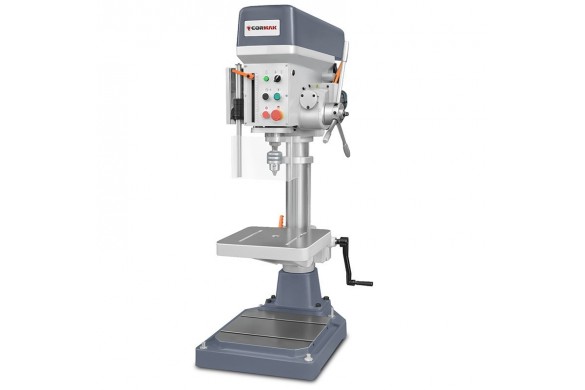
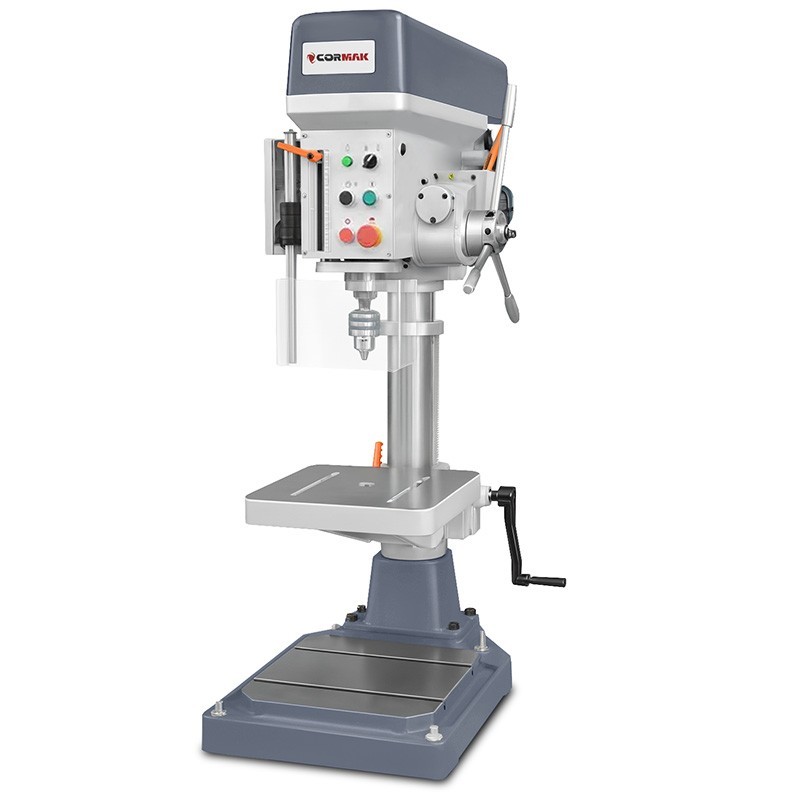
In such conditions, it is worth considering a drill press with automatic feed. The machine moves the spindle at a set feed rate, making the drilling process more repeatable, less dependent on the operator and more comfortable during long production runs.
How does automatic feed work?
In a conventional drill press, the spindle is lowered manually using a lever. In a model with automatic feed, the working movement is performed mechanically according to the selected feed value.
Depending on the machine design, the operator can choose one of several feed rates. This makes it possible to adapt the parameters to the drill diameter, material type, hole depth and required machining quality.
After the workpiece is positioned and the cycle is started, the spindle moves evenly. The operator does not have to control the lever throughout the whole process, which is important when many holes are drilled in series.
When does automatic feed increase productivity?
Automatic feed shows its biggest advantage in serial production. If a workshop makes dozens or hundreds of similar holes, even a small reduction in the time of a single cycle can noticeably improve the efficiency of the whole workstation.
Automatic feed is particularly useful for:
- serial hole drilling,
- thick steel components,
- larger drilling diameters,
- deep holes,
- intensive multi-shift operation,
- production requiring repeatable parameters.
For occasional workshop tasks, the difference may be minor. In repeatable production, however, automation can have a real effect on workflow organization and the pace of completing subsequent parts.
Better drilling repeatability
With manual feed, the pressure depends on the operator. It may change with fatigue, experience or the type of material being machined. Excessive pressure can accelerate tool wear, while insufficient pressure can extend the drilling cycle.
Automatic feed helps maintain more stable cutting conditions. Consecutive holes are made with similar parameters, improving process repeatability and making quality control easier.
This is especially important when many identical parts are produced in one batch and each hole should have similar geometry and surface quality.
Automatic feed for large diameters
The larger the drill diameter, the greater the cutting forces during machining. With manual drilling, the operator must maintain the right pressure throughout the entire cycle, which can be tiring with large diameters and harder materials.
Automatic feed reduces this effort and provides even tool guidance. It helps keep the drilling process stable, especially for deeper holes and thicker steel components.
However, feed alone is not enough for demanding machining. The drill press should also have sufficient motor power, a rigid structure, the correct spindle taper and a wide spindle speed range.
Lower operator workload
During serial drilling, the operator performs hundreds of similar lever movements. After several hours, this may cause fatigue and reduce the pace of work.
Automatic feed takes over the working movement of the spindle. The operator can focus on positioning parts, changing tools, checking quality and safely operating the workstation.
Better ergonomics can therefore support higher productivity throughout the shift, especially in plants where drilling is a regular part of the production process.
When is manual feed enough?
Not every company needs an automatic solution. Manual feed is sufficient for repair work, prototypes, small batches and occasional hole drilling.
If the workpiece type, drilling diameter and material change frequently, manual control may also be more convenient. The operator has more freedom to adjust the pressure to the specific task.
Automatic feed is most cost-effective where the process is repeatable and the machine performs similar operations for a significant part of the working day.
What should be checked before purchase?
Before selecting a drill press, it is worth checking the available feed rates, maximum drilling diameter, spindle travel, motor power and speed range. The spindle type, table stability and the possibility of secure workpiece clamping are also important.
For intensive operation, a cooling system is also a major advantage. It helps remove heat and improves tool working conditions. Cooling may be particularly useful when drilling steel, making deeper holes and working with larger diameters.
It is also worth assessing whether the automatic feed range matches the most common operations in the workshop. The machine should be selected for real production tasks, not only for the highest parameter in the specification.
Summary
A drill press with automatic feed is a good choice mainly for serial and intensive drilling. It provides a more uniform spindle movement, improves repeatability and reduces operator effort.
For single holes, manual feed is often enough. However, if the drill press works every day and performs many similar operations, paying extra for automatic feed may quickly translate into higher productivity, better ergonomics and more stable hole quality.
Latest blog postsAll articles →