Belt Grinder or Disc Sander for Metal – Which One Should You Choose?
Belt Grinder or Disc Sander for Metal – Which One Should You Choose?
Belt grinder or disc sander for metal is a common question when equipping a metalworking workshop, maintenance department or production facility. Both machines are used for surface, edge and component finishing, but they differ in how they work, how much material they can remove and where they perform best.
A belt grinder is usually more versatile for long surfaces, heavier stock removal and preparing components for welding. A disc sander is better suited to precise finishing of ends, edges and smaller workpieces.
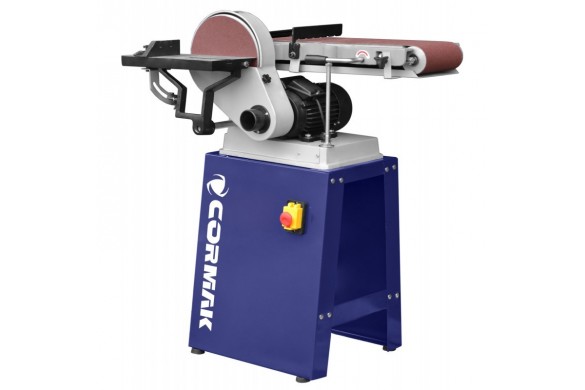
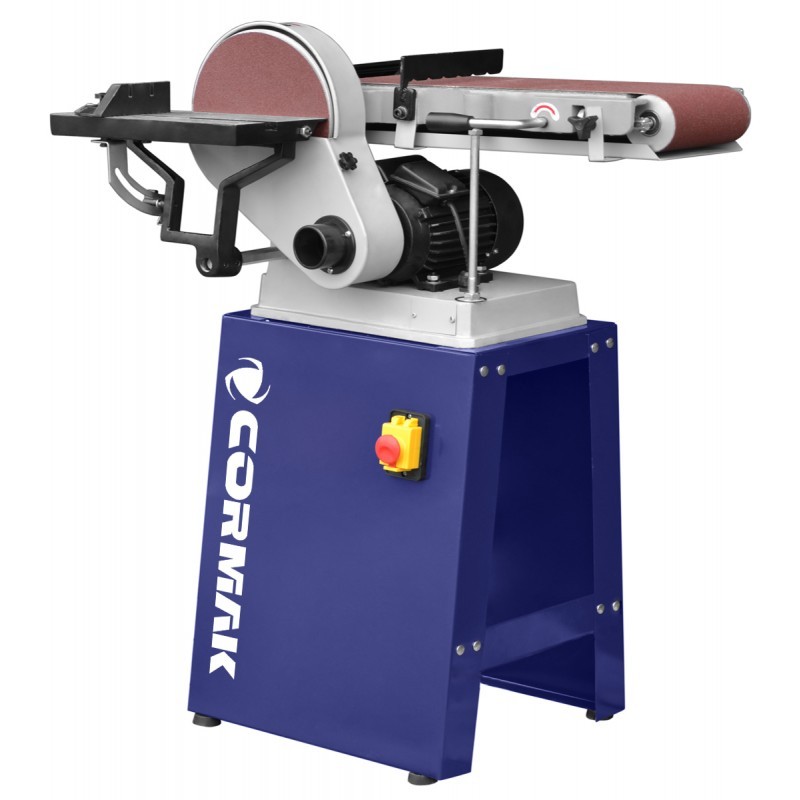
If the workshop handles different types of jobs, a practical option can be a belt and disc sander, combining both functions in one machine.
How does a belt grinder work?
A belt grinder for metal uses a closed abrasive belt running between rollers. The large working surface allows efficient material removal and makes it possible to process flat parts, edges, profiles and welded components.
The machine is commonly used for:
- removing burrs after cutting,
- levelling welds,
- grinding edges,
- preparing surfaces for welding,
- working on profiles and flat bars,
- rounding sharp edges,
- finishing steel components.
An important advantage is the ability to use belts with different grit sizes. Coarser abrasives remove material quickly, while finer grits are used for more accurate surface finishing.
When is a disc sander a better choice?
A disc sander uses a rotating abrasive disc. The workpiece is usually supported on an adjustable work table, which helps guide the part at the required angle.
This type of machine is especially useful for short components and operations that require precise angle control. A disc sander can be used to square profile ends, prepare edges, remove small irregularities and fine-tune parts before assembly.
In many models, the work table can be tilted. This makes it easier to produce repeatable bevels and maintain better control over the geometry of the workpiece.
Which machine removes material faster?
For intensive material removal, the belt grinder usually has the advantage. The long abrasive belt provides a larger working area, so heat is distributed over a greater length of abrasive material.
This helps when working on larger surfaces, long profiles and parts that require quick deburring or removal of cutting marks.
A disc sander is a more point-focused machine. It performs best where shape control, angle accuracy and final fitting are more important than high material removal rates.
Belt grinder for workshop use
If the machine is intended mainly for metal, it is worth checking motor power, belt speed and belt width.
A wider belt makes it easier to process larger surfaces. Higher speed helps remove material quickly, but the parameters should always be matched to the metal, abrasive type and expected finish.
The dust and chip extraction system is also important. Grinding produces a significant amount of fine contamination, so a proper extraction connection helps keep the workstation cleaner and reduces the spread of metal dust.
Belt and disc sander – two functions in one machine
For a small or medium-sized workshop, a belt and disc sander can be a very practical solution. One machine allows fast belt grinding and more precise disc finishing.
The operator does not need to buy two separate machines or move the workpiece between stations. These machines work well for one-off production, locksmith work, repairs and short production runs.
A combined model is particularly useful when workshop space is limited and one machine needs to handle several typical preparation and finishing operations.
How to choose abrasive grit?
Regardless of the machine type, correct abrasive selection is very important. Low grit sizes, such as P40–P60, are suitable for fast material removal, rust removal and heavier surface irregularities.
Medium grits such as P80–P120 can be used for general finishing work. Finer abrasives are chosen when a smoother surface is required or when the part is being prepared for further finishing.
For stainless steel, it is best to use abrasives intended for that material. Belts or discs previously used on carbon steel can contaminate stainless surfaces and reduce the quality of the finish.
What should you check before buying?
When choosing a grinder, do not compare only motor power. Belt or disc dimensions, working speed, table adjustment, machine stability and availability of consumables are also important.
For intensive use, bearing quality and the rigidity of the entire structure also matter. A stable machine reduces vibration and helps achieve a more even surface.
It is also worth checking whether the machine offers convenient belt or disc replacement, belt tracking adjustment and an extraction connection. These features affect everyday comfort and efficiency.
Summary
A belt grinder is the better choice when fast material removal, grinding long surfaces and preparing metal components for further processing are the main priorities.
A disc sander is useful for accurately finishing ends, producing bevels and working on smaller parts.
If the workshop performs both types of operations, the most universal solution may be a belt and disc sander for metal. It combines the efficiency of a belt with the precision of a disc, while taking up less space than two separate machines.
Latest blog postsAll articles →