Conventional lathe or CNC lathe – which one should you choose?
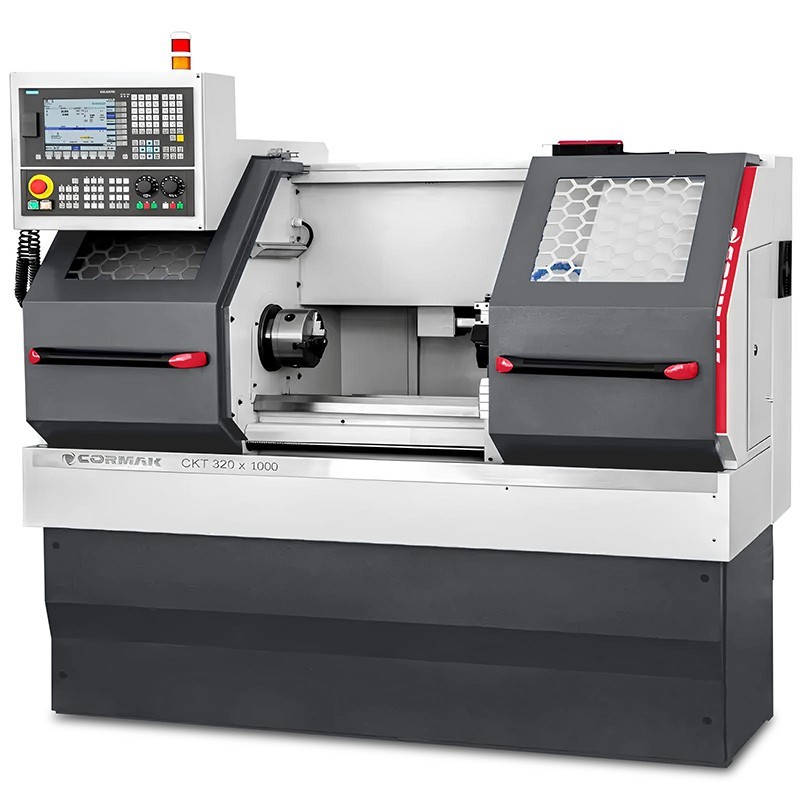
Conventional lathe or CNC lathe – which one should you choose?
The choice between a conventional lathe and a CNC lathe depends mainly on the type of workpieces being produced, the production volume and the expected level of efficiency. Both machines are used for machining rotational parts, but they differ in control method, automation level and production capabilities.
A conventional lathe is best suited to repairs, one-off production and short batches. CNC lathes, on the other hand, provide a higher level of automation, repeatability and efficiency in serial production.
How does a conventional lathe work?
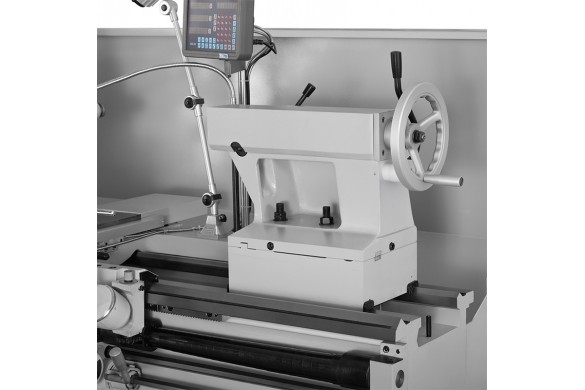
On a conventional lathe, the operator manually controls most machining parameters. The operator sets the tool, selects the spindle speed range, controls the feed and supervises the next stages of turning.
This design offers high flexibility. The machine can be prepared quickly for making a single sleeve, shaft, axle or a part that requires repair or regeneration.
Conventional lathes work well in repair workshops, toolrooms, service departments and companies handling varied machining jobs.
For the machining of a single, simple part, setting up a conventional lathe may be faster than preparing a CNC program.
When is a conventional lathe a good choice?
It is worth choosing a conventional model when the company mainly performs repairs, prototypes and short production runs.
When selecting a machine, it is important to check not only the turning diameter, but also the turning length, spindle bore, motor power and speed range.
The advantage of conventional lathes is their ability to respond quickly to non-standard jobs. The operator can adjust parameters and the tool path during work without preparing a program.
The limitation is that the final result depends more strongly on the operator’s experience. When many identical parts are required, maintaining the same repeatability as on a numerically controlled machine is more difficult.
What does a CNC lathe offer?
A CNC lathe is controlled by a program. Axis movements, feeds and machining parameters are performed automatically according to the prepared process.
Numerically controlled machines can perform external and internal turning, facing, grooving, drilling, threading and parting-off operations.
The main advantage of CNC lathes is repeatability. Once the program is prepared correctly, the machine can produce consecutive parts with high precision and very similar parameters throughout the batch.
This is especially important when producing dozens, hundreds or thousands of identical components.
CNC lathes and production efficiency
In serial production, a CNC lathe can significantly reduce the unit machining time. The operator does not have to perform every tool movement manually because the machine carries out the programmed sequence automatically.
Additional equipment, such as a bar feeder, automatic chuck or driven tools, can further reduce the operator’s involvement.
As a result, CNC lathes are well suited to applications where high efficiency, repeatability and parts made with high surface quality are important.
Precision – CNC or conventional lathe?
An experienced operator can achieve very accurate results on a conventional lathe as well. The difference becomes especially visible in larger batches.
In a CNC machine, axis movements are controlled by the control system. This makes it easier to maintain the dimensions of consecutive parts with high precision.
On a conventional lathe, the operator must take measurements regularly and make manual corrections. This is not a major issue for a single part, but with hundreds of components it affects production time.
Which lathe should you choose for a workshop?
If the workshop mainly handles repairs, regeneration work and individual parts, a conventional lathe will be a practical and cost-effective solution.
If the company plans to develop serial production, machine more complex parts and increase automation, a CNC lathe offers significantly greater capabilities.
In many workshops, the best solution is to use both types of machines. The conventional lathe handles quick and unusual jobs, while the CNC lathe performs repeatable serial production.
Which parameters should be checked?
Before buying a machine, it is worth comparing not only the type of control, but also the real working parameters of the lathe. The most important factors include:
- maximum turning diameter,
- turning length,
- turning diameter over the cross slide,
- spindle bore,
- spindle speed range,
- motor power,
- machine rigidity,
- possibility of using additional equipment.
Only by comparing these data with the actual type of workpieces can you choose a machine that matches the real needs of the workshop.
Summary
The choice between a conventional lathe and a CNC lathe should be based on the nature of production. For one-off parts, repairs and frequent job changes, a conventional lathe is usually the better choice.
For larger batches, high repeatability requirements and increasing automation, numerically controlled CNC lathes provide the advantage.
Before making a purchase, it is also important to compare the turning length, turning diameter, spindle bore, spindle speed range and machine power. Only the combination of these parameters with the real needs of the workshop allows you to select a lathe that provides the right quality and efficiency of work.
Latest blog postsAll articles →