Coolant for a Metal Band Saw – When Is It Necessary?
Coolant for a metal band saw – when is it necessary?
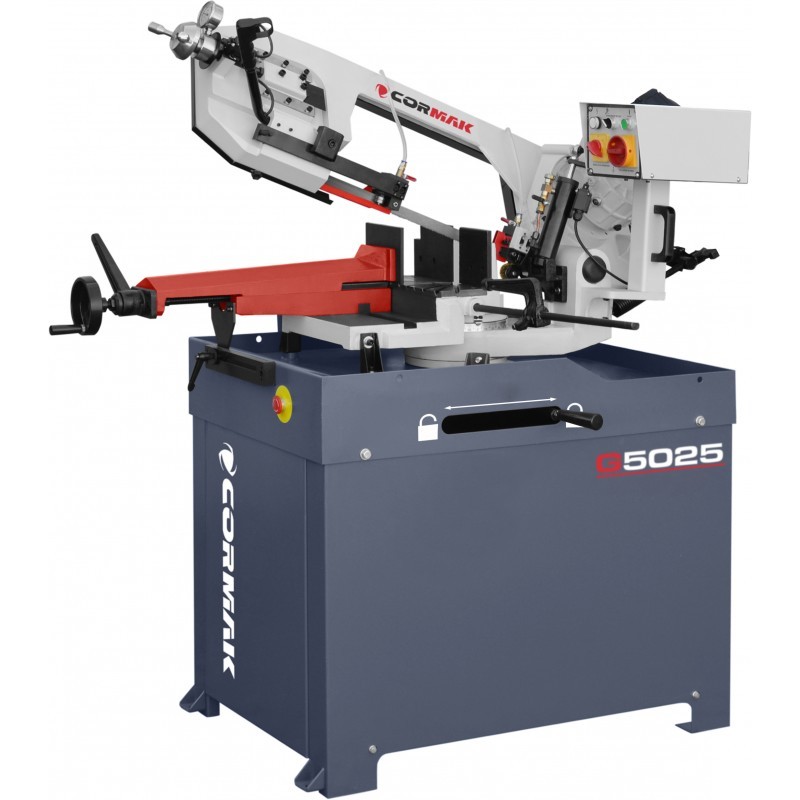
Coolant for a metal band saw is often treated as an accessory, but in practice it has a major impact on cutting quality, blade life and process stability. A properly selected metal band saw can cut accurately and repeatably, but without suitable cooling even a correctly chosen blade may lose its cutting performance much faster.
During cutting, the teeth of the band saw blade work under high load. Friction is generated, temperature increases and chips collect in the cutting zone. Coolant removes heat, lubricates the blade, flushes chips away and reduces the risk of overheating the material. This helps maintain a straight edge, the correct cutting angle and longer tool life.
When is coolant necessary?
Coolant should be used primarily when cutting hard materials, large cross-sections and during repetitive production work. It is especially important for stainless steel, alloy steel, solid bars, thick flat bars and large profiles. In these conditions the blade remains in contact with the material for longer, so temperature rises much faster than during light cutting of thin-walled profiles.
When a company performs many repeated cutting operations, coolant becomes practically essential. This applies to production plants, metalworking shops, service workshops and companies processing steel or non-ferrous metals. Regular cooling helps stabilize the process, limits blade wear and reduces downtime caused by overheating or premature dulling.
Coolant is also recommended for angled cuts. In this setup the blade has a longer contact path through the material, which increases friction and the risk of blade drift. Proper cooling helps maintain a straight cut, reduces burr formation and improves repeatability from one workpiece to the next.
Is coolant always required?
Not always. For single, short cuts in thin profiles, dry cutting can sometimes be acceptable. This mainly applies to light assembly or workshop tasks where the material does not overheat and the contact time between blade and workpiece is short.
The process must still be observed carefully. Blade squealing, burn marks, discoloration, a crooked edge, excessive burrs or fast tooth dulling indicate that the cutting conditions are too demanding for dry operation. In such cases, coolant should be used, the feed should be reduced or the blade selection should be checked.
The machine design also matters. Metal band saws differ in motor power, arm rigidity, blade guidance, coolant pump type and the way coolant is delivered to the cutting zone. Machines equipped with an efficient coolant system make it easier to control temperature, chip removal and blade life.
How does coolant affect cutting quality?
The main function of coolant is to reduce the temperature at the cutting point. An overheated blade loses cutting performance faster, and the teeth may suffer microscopic damage. High temperature can also deteriorate edge quality, especially when cutting materials that require stable parameters.
The second function is lubrication. The coolant film reduces friction between the blade, the chip and the material. This makes cutting smoother and reduces the load on the blade. It is particularly important for solid bars, stainless steels, alloy steels and large cross-sections.
Coolant also helps flush chips out of the kerf. If chips remain between the teeth, the blade may run unevenly, overheat and drift away from the cutting line. Effective chip removal supports accuracy and helps reduce burrs.
Which coolant should be used?
The most common option is a water-miscible cutting fluid, mixed from concentrate and water at the correct ratio. For standard structural steel, a universal coolant intended for metalworking machines is usually sufficient. For stainless steel, alloy materials and more demanding cross-sections, a fluid with better lubricating properties may be required.
Random substitutes such as engine oil, technical fluids not designed for machine tools or mixtures of unknown composition should not be used. They may contaminate the system, reduce cutting quality, damage the pump or make later machine cleaning more difficult.
The concentration of the emulsion is important. If it is too weak, it may not provide enough lubrication or corrosion protection. If it is too strong, operating costs increase and excessive residue may remain on the machine and material. The concentration should be set according to the coolant manufacturer's recommendations and checked during use.
Maintaining the coolant system
Even a good coolant will not work properly if the delivery system is dirty or blocked. Nozzles, hoses, filters, the pump and the fluid level in the tank should be checked regularly. The coolant stream should reach the cutting zone directly, not flow away outside the workpiece.
Chips and deposits can restrict coolant flow. Contaminated emulsion loses its properties, removes heat less effectively and may develop an unpleasant smell. Regular fluid replacement and tank cleaning help maintain stable cutting conditions and reduce the risk of pump failure.
Band saw or circular saw?
Many companies compare metal band saws with circular saws. Band saw machines work well with a broad range of materials and cross-sections. They provide a relatively narrow kerf, good cutting control and economical operation, provided the blade, feed rate and cooling are selected correctly.
Circular saws may be a better choice for other tasks, for example where very fast cutting of specific profiles is required. In practice, the correct machine depends on the material, required accuracy, number of cuts and production organization.
Summary
Coolant is necessary when cutting stainless steel, alloy steels, solid materials, large cross-sections, repetitive production batches and angled cuts. For light, single cuts in thin profiles, dry cutting may sometimes be possible, but only with control of temperature, blade sound and edge quality.
A properly selected coolant, a well-maintained band saw and the right metal cutting blades help improve cutting accuracy, extend blade life and increase work efficiency. In workshops and production plants, cooling should not be treated as an optional extra, but as one of the basic conditions for correct machine operation.
Latest blog postsAll articles →