CNC Metal Milling. Process Description

Milling metal is a machining process that allows precise shaping of metal components using computer-controlled machines. This technology is highly popular in the metal industry because it enables the production of parts with complex shapes and high accuracy. CNC metal milling is used in many industries, such as automotive, aerospace, medical, and energy. It is worth noting that CNC metalworking, and especially metal milling, is one of the most commonly applied processes in modern manufacturing.
In this article:
- Principles of CNC milling machines
- Types of CNC milling cutters for metal
- Metal milling process – step by step
- Applications of CNC metal milling
- Summary
Principles of CNC milling machines
CNC milling machines are industrial machines used for machining metals with rotating tools – cutters. These machines operate based on computer numerical control (CNC), which allows precise setting of operating parameters. Thanks to CNC technology, it is possible to automatically perform complex milling operations with high repeatability and minimal risk of errors.
CNC metal milling involves removing excess material from a workpiece using cutters, which move in three dimensions. This makes it possible to obtain complex shapes such as grooves, threads, or holes that require high precision.
Types of CNC milling cutters for metal
Various types of CNC cutters are used in the metal milling process, chosen depending on the type of material and the requirements for precision and surface quality. The most common types include:
- Edge milling cutter – used for machining flat surfaces and creating grooves.
- Face milling cutter – used for removing large amounts of material and creating openings.
- Ball nose cutter – designed for machining 3D surfaces such as channels or cavities.
- Carbide cutter – used for machining hard materials due to its high wear resistance.
Selecting the right cutter is crucial for CNC metalworking quality, which is why it is worth investing in tools offered by reputable industrial machine manufacturers such as Cormak.
Metal milling process – step by step
Milling metal is a multi-stage process that includes several important steps:
-
Preparing the workpiece – the first step is clamping the material on the worktable of the CNC milling machine. Depending on its shape and size, the right fixture is selected.
-
Setting parameters – based on the computer program, the operator sets the milling parameters, such as spindle speed, feed rate, cutting depth, and tool angle.
-
Milling – at this stage, the machine performs the planned machining, removing excess material and shaping the part according to project requirements.
-
Quality control – after milling, precise inspection of dimensions and surface quality is carried out. If irregularities are found, parts may undergo secondary processing.
-
Final finishing – depending on requirements, parts may undergo grinding, polishing, or painting to achieve the desired aesthetic and functional effect.
Applications of CNC metal milling
Metal milling is widely used in industry, including machine production, automotive parts, aerospace components, tools, and medical devices. Thanks to its precision, this process is ideal for producing parts that must meet high-quality standards.
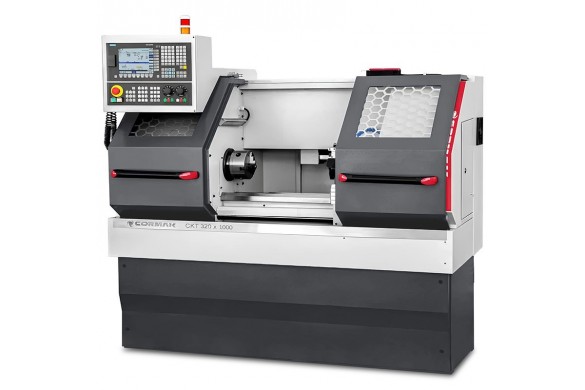
Our available metalworking machines, such as milling machines, allow for both small-series and large-scale production, making this method flexible and efficient. Using modern tools such as CNC cutters ensures excellent machining quality and dimensional accuracy.
Summary
CNC metalworking is an advanced machining process that finds broad applications across many industries. Thanks to precise machines such as CNC milling machines, it is possible to create complex parts with high quality and precise dimensions. Choosing the right tools is essential for achieving desired results in CNC machining. As a renowned manufacturer of industrial machines, we offer a wide range. Check out our available industrial machines and equip your workshop with innovative devices.
Latest blog postsAll articles →