1000–3000 W Laser Welder – How to Choose the Right Power?
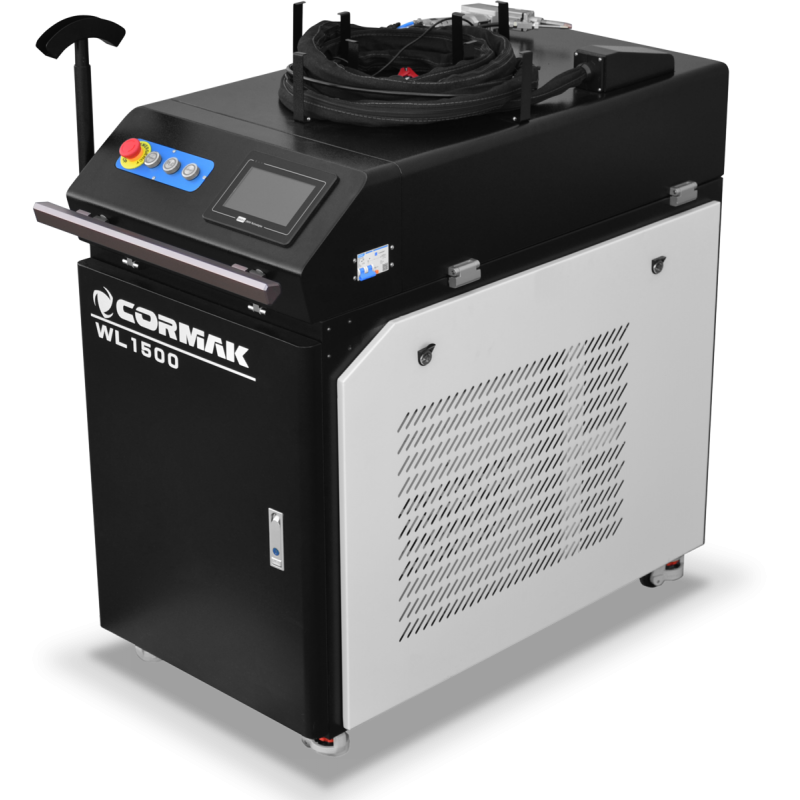
1000–3000 W Laser Welder – How to Choose the Right Power?
Choosing a laser welder should not be reduced to a simple rule: the higher the power, the better. Source power affects penetration depth, working speed and the range of material thicknesses, but the material, joint type, gap between parts, surface preparation and production organisation are just as important. A machine selected only “with extra power” may increase the investment cost without bringing a proportional benefit in everyday work.
The best laser welder is the one whose power matches the parts welded most often, not only the thickest component that appears occasionally. A workshop producing stainless steel railings needs a different configuration than a manufacturer of enclosures, light structures or machine components with larger cross-sections.
What Determines Laser Welder Power Selection?
Power defines how much energy can be delivered to the material within a given time. Higher power enables faster welding, deeper penetration and work with thicker material. This does not mean that every weld should be made at maximum settings.
On thin sheet metal, excessive power may increase the risk of distortion, burn-through or an unnecessarily large heat-affected zone. On thicker parts, a source that is too weak limits speed and may not provide sufficient penetration. For this reason, selection should include not only thickness, but also metal type, weld length, number of parts and the required production pace.
The joint type also matters. Butt welds, fillet welds, corner joints and lap joints may require different settings. Welding position, access to the part and the use of filler wire can also affect the result. In practice, the entire process determines weld quality, not the power value alone.
Indicative Material Thicknesses for 1000–3000 W Laser Welders
The following ranges apply to CORMAK handheld laser welders and should be treated as a starting point for selecting a machine. The actual result depends on edge preparation, material quality, joint gap, head settings, welding speed and shielding gas.
| Material | 1000 W | 1500 W | 2000 W | 3000 W |
|---|---|---|---|---|
| Stainless steel | 0.5–3 mm | 0.5–4 mm | 0.5–5 mm | 0.5–8 mm |
| Carbon steel | 0.5–2.5 mm | 0.5–3.5 mm | 0.5–4.5 mm | 0.5–8 mm |
| Galvanized steel | 0.5–1.2 mm | 1.5–1.8 mm | 1.5–4 mm | 1.5–7 mm |
| Aluminium | 0.5–1.2 mm | 1.5–1.8 mm | 1.5–4 mm | 1.5–7 mm |
| Brass | 0.5–1.2 mm | 1.5–1.8 mm | 1.5–2.5 mm | 1.5–4 mm |
1000 W Laser Welder – For Thin Components
A 1000 W model is well suited to workshops working mainly with thin materials. It is a reasonable choice for metal furniture, railings, light structures, enclosures, decorative parts and stainless steel details.
This type of machine is appropriate when most joints involve sheet metal and profiles around 0.5–2 mm thick. It offers high precision and helps reduce distortion in thin parts. However, it requires proper joint preparation and correct speed selection, because it has less reserve for thicker cross-sections.
Choosing 1000 W makes sense when thicker parts appear rarely and the priority is economical work with thin material. It will not be the best option for a company that regularly welds 3–4 mm steel.
1500 W Laser Welder – A Versatile Workshop Choice
1500 W is often selected by companies handling varied jobs. It allows efficient work with thin steel while providing additional reserve for regular welding of parts around 3 mm thick.
This model is suitable for fabrication workshops, gates, fences, frames, tables, light structures and stainless steel components. It is a good option when a company wants to replace part of MIG/MAG or TIG welding in repeatable production.
Compared with a 1000 W unit, a 1500 W welder provides greater flexibility. That does not mean it is always the better choice. If the company works only with thin parts, the full potential of the higher-power source may not be used.
2000 W Laser Welder – For Higher Productivity
A 2000 W laser welder is the right choice for companies that regularly work with stainless steel, carbon steel or aluminium of greater thickness. Higher power can speed up welding, increase penetration depth and reduce the number of passes on more demanding parts.
This class of machine is suitable for frames, machine components, structures, industrial enclosures, tanks and parts with larger cross-sections. It is also a good choice when a workshop wants to increase station throughput without sacrificing process control.
A 2000 W model makes sense when 3–4 mm material appears regularly, not only occasionally. It is also worth considering when the total length of welds is high and cycle time reduction matters. CORMAK WL2000 parameters include, among others, an automatic wire feeder and water cooling.
3000 W Laser Welder – For Thicker Materials and Intensive Production
3000 W is intended for intensive production and work with larger thicknesses. This option provides the highest power reserve among the discussed machines and makes it easier to weld thicker components made of stainless steel, carbon steel, aluminium and galvanized steel.
It is a solution for manufacturers of heavier structures, machines, industrial components and parts requiring high productivity. CORMAK WL3000 machines offer continuous and modulated operating modes, an automatic wire feeder and water cooling, which helps adapt the process to the joint type.
A 3000 W model is not an automatic choice for every workshop. If daily production mainly involves thin profiles and sheets, a 1500 W or 2000 W machine may be more economically justified.
Material and Joint Preparation Are as Important as Power
Stainless steel and carbon steel usually allow a stable process when parameters are selected correctly. Aluminium and brass require more control because they react differently to heat input and are more sensitive to poor surface preparation.
Before welding, rust, paint, oil, scale and other contamination should be removed. Parts should fit accurately. An excessive gap may require filler wire and parameter changes. In practice, part preparation often affects the result more than a difference of several hundred watts in source power.
Shielding gas, wire diameter, travel speed, wobble width and focus position are also important. Technological tests on real parts are the best way to confirm settings before starting serial production.
Which Laser Welder Power Should You Choose?
A 1000 W welder is suitable for thin components and light production. A 1500 W model works well as a universal machine for many workshops. A 2000 W version is worth choosing for regular work with materials around 3–4 mm and when higher productivity is needed.
A 3000 W laser welder is a good choice for companies working with larger thicknesses, requiring deeper penetration and high throughput. Before purchasing, it is worth preparing a simple list: material types, typical thicknesses, most common joints and planned working hours.
Summary
Laser welder power should be selected according to real tasks performed in the company. The highest power is not always the best choice, especially if most production involves thin sheets, profiles and decorative elements.
This analysis helps choose a power level that will not limit the workstation and will not become an unnecessary investment cost. A well-selected laser welder speeds up work, improves repeatability and gives the company a practical reserve for future development.
Latest blog postsAll articles →