What is a thicknesser used for and how does it work?
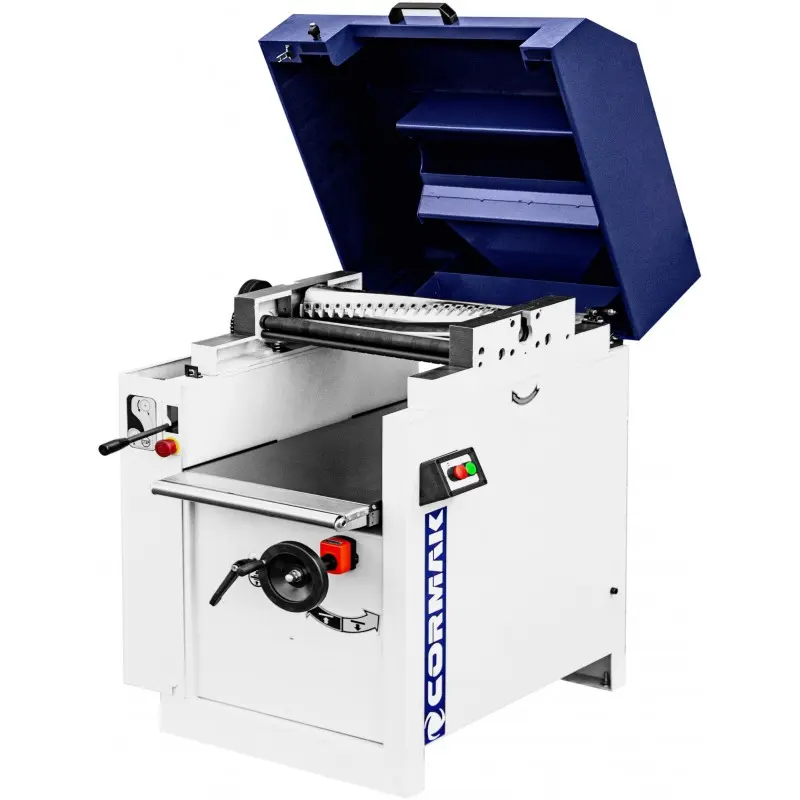
Wondering how to set the rollers in a thickness planer? A thickness planer is one of the basic tools used in woodworking. It is a machine that allows for precise leveling and processing of wood surfaces, enabling the achievement of perfectly smooth, even elements with exact thickness. Thickness planers are especially valued in carpentry workshops, as well as in furniture production and other wooden products. Before deciding to purchase such a machine, it's worth understanding its function, operating principle, and the key aspects to consider when choosing one.
What is a thickness planer used for?
A thickness planer, also known as a jointer-planer, is primarily used for woodworking, allowing the removal of irregularities and excess material from the surfaces of wooden elements. Thanks to it, it's possible to obtain wood of uniform thickness along its entire length, which is particularly important in the production of carpentry elements such as boards, slats, or beams. The thickness planer is also used for smoothing wood surfaces, improving the quality and aesthetics of final products.
What is a thickness planer used for?
- Removing irregularities from the wood surface,
- Reducing the thickness of the material,
- Smoothing the surface, ensuring an aesthetic appearance of elements.
A thickness planer is also a device that allows for precise setting of the thickness of processed elements, which is crucial in the production of products with exact dimensions.
How does a thickness planer work?
The operation of a thickness planer is based on the use of a rotating cutting shaft that removes excess material from the wood. Wooden elements are fed into the machine and then pass through working rollers that evenly remove excess material from the wood surface. This process is based on cutting, where cutting and pressing rollers enable precise processing of the material.
A thickness planer can be equipped with various types of cutting shafts, including spiral rollers that provide better processing quality and lower tool wear. Jointer-planers with a spiral shaft allow for more precise and even material removal, as well as reducing the risk of damaging the wood surface. You can find more about such devices in the offer of industrial machine manufacturers like Cormak.
Jointer-planer - which one to buy?
Choosing the right thickness planer depends on many factors, such as the type of material being processed, precision requirements, or available budget. The market offers various machine models that differ in technical parameters and intended use. It's advisable to choose a machine with appropriate motor power and functionality, such as the ability to adjust material thickness or the availability of additional features, e.g., spiral shafts in jointer-planers. Which one to buy? It's worth exploring the offer of wood jointer-planers, which offer a wide selection of devices for professional woodworking.
What motor power for a thickness planer?
What motor power should you choose for a thickness planer? The motor power in a thickness planer is crucial for its efficiency. The more powerful the motor, the more effectively the machine can handle processing harder materials and thicker wood elements. Typically, thickness planers use motors ranging from 1.5 to 5 kW, depending on the type of machine and its intended use. It's advisable to select motor power based on the machine's workload— for intensive production or processing hard wood, devices with more powerful motors are a better choice. If you're interested in machines with higher power, check out the offer of woodworking machines.
If you're looking for woodworking devices, check out our offer of wood thickness planers and wood jointer-planers and choose a machine tailored to your needs. Remember that selecting the right parameters, such as motor power, spiral rollers, and thickness adjustment, is crucial for effective wood processing.
Latest blog postsAll articles →