The Best Drill Sharpener as an Alternative to External Sharpening Services
The Best Drill Sharpener as an Alternative to External Sharpening Services
Drill bits are basic tools used in workshops, production plants, toolrooms, service departments and maintenance teams. Their condition directly affects hole quality, work speed, operator safety and tooling costs. A dull drill slows the process, overheats the material, increases machine load and may damage the workpiece.
Many companies rely on external drill-sharpening services. This can be convenient, but it is not always fast or cost-effective. A drill sharpener offers an alternative: tools can be regenerated on site without sending them outside the plant. A properly selected machine can improve daily workflow, reduce downtime and lower tool-maintenance costs.
Why Sharpen Drill Bits Regularly?
During use, a drill gradually loses its cutting geometry. The cutting edges, point and guiding surfaces wear down. Signs of dullness include slower drilling, higher feed force, squealing, vibration, overheating and poorer hole quality.
Working with a dull tool is inefficient and expensive. It can accelerate wear on a bench drill, drilling-milling machine or other equipment and increase the risk of machining errors. Regular drill sharpening restores working properties and extends tool life.
- lower cutting resistance;
- better hole quality and repeatability;
- less risk of overheating;
- lower drill-bit consumption;
- better control of the drilling process.
External Sharpening Services – Advantages and Limits
External services have clear advantages. There is no need to invest in additional equipment, and sharpening is performed by a specialised provider. This may be suitable when a company sharpens only a small number of drills, uses special tools occasionally or does not want employees to operate another machine.
In practice, outsourcing also has limitations. Waiting time is often the main issue. Drill bits need to be collected, described, sent out and returned. In a busy plant this may cause downtime or require a larger tool inventory.
Recurring cost is another factor. One sharpening job may seem inexpensive, but costs rise quickly when many drill bits are involved. Transport, logistics, tool tracking and employee time also need to be considered. The company has less control over when tools return to production.
In-House Drill Sharpening – Independence and Fast Response
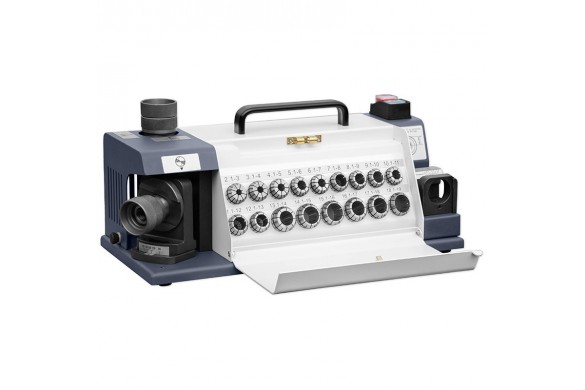
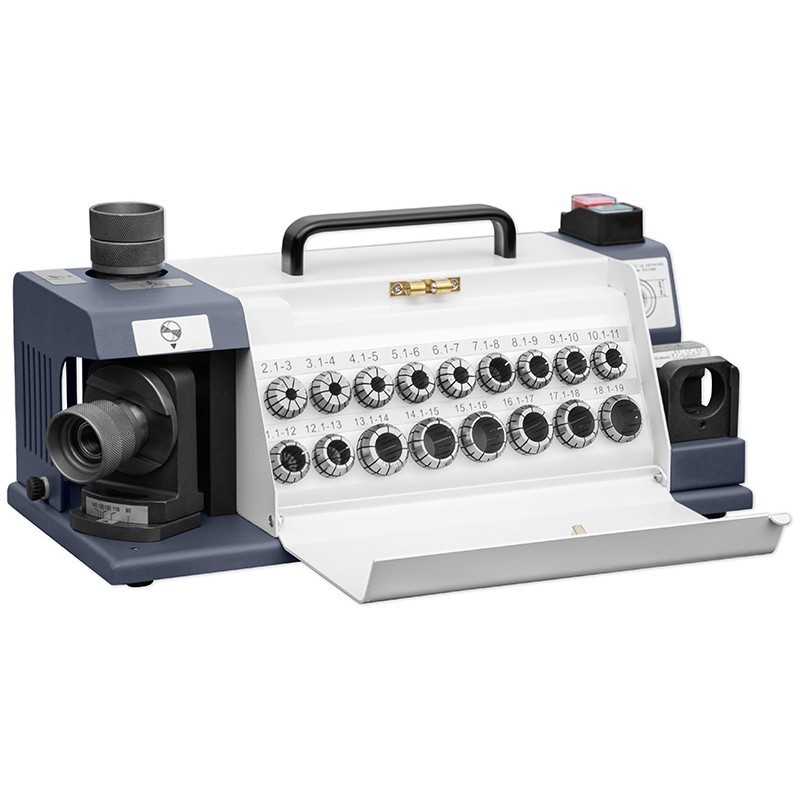
A drill sharpener is designed to renew the geometry of cutting edges. It allows a tool to be sharpened without using an external service. This means sharpening can be carried out on site and the drill can return to work almost immediately.
Modern sharpeners are designed for simple and repeatable operation. Many models guide the process through a defined sequence, making it easier to obtain the correct angle, edge symmetry and consistent quality. This matters especially when several operators use the same tools.
An in-house sharpener does not replace technical knowledge. The operator still needs to know when a drill is suitable for regeneration, how to set the machine and when a tool is too worn or damaged to continue. A well-adjusted machine, however, makes it much easier to keep standard drills ready for use.
Key Benefits of Owning a Drill Sharpener
Lower tooling costs
The main advantage is the ability to reuse the same drill bits many times. Instead of discarding a dull tool or sending it to a service provider, the cutting edges can be renewed directly in the workshop. Savings are especially visible with larger drill diameters, which are more expensive than common small sizes.
Less downtime
Not having a sharp drill in the required size can stop the job. An in-house sharpener allows an immediate response instead of waiting for a new tool or the return of a serviced one. This is important in maintenance, one-off production, short runs and repair work.
Greater quality control
The company decides when to sharpen and what tool condition to maintain. This helps avoid situations where an operator continues drilling with an excessively dull tool. Regular regeneration supports better hole quality and more predictable machine operation.
Better toolroom organisation
An in-house sharpener simplifies tool circulation. Drill bits do not need to wait for shipment, and maintenance teams can prepare tool sets faster for specific tasks. This is useful when several workstations use the same drill sizes.
Lower machine load
A properly sharpened drill requires less force and works more steadily. This can reduce vibration, overheating and unnecessary machine load. Drilling becomes more predictable and safer for both operator and workpiece.
When Is a Drill Sharpener Especially Cost-Effective?
A drill sharpener is useful wherever drill bits are used frequently and in larger quantities. Typical users include metalworking workshops, production plants, toolrooms, maintenance departments, technical services, technical schools, installation companies and mechanical workshops.
Cost-effectiveness depends on several factors:
- number of drills sharpened per month;
- diameter and value of the tools used;
- cost of external sharpening services;
- downtime and logistics costs;
- required hole quality and repeatability;
- availability of an operator to run the sharpener.
The more frequently a company uses drill bits and the higher the cost of replacement or outsourced sharpening, the stronger the case for buying its own machine.
How to Choose the Best Drill Sharpener
The best drill sharpener is not always the largest or most advanced model. The best choice is the machine that matches real workshop tasks. For one user, a wide diameter range may matter most; for another, quick setup, simple operation or repeatable cutting geometry will be more important.
Diameter range
The machine should cover the drill sizes most often used in the company. Before purchase, check whether it handles both common sizes and larger drills used for more demanding work.
Type of drills
Not every sharpener is suitable for every tool. Check whether the machine is intended for HSS drills, cobalt drills, metalworking drills and the geometry required in the workshop.
Repeatable settings
The machine should help maintain angle, edge symmetry and alignment. Repeatability is important when several operators use the sharpener or when many drills of the same type are sharpened.
Grinding wheel quality
The grinding wheel affects sharpening quality and process stability. Consider its type, availability of consumables and ease of replacement.
Stable construction
A rigid construction helps maintain settings and reduce vibration. This is especially important for larger diameters and intensive workshop use.
Ease of operation
The easier the setup and sharpening sequence, the more likely the machine will be used daily. The sharpener should allow quick drill preparation and repeatable sharpening without lengthy changeovers.
Drill Sharpener or External Service?
| Criterion | In-house drill sharpener | External sharpening service |
|---|---|---|
| Response time | Sharpening available immediately on site | Depends on service schedule and transport |
| Cost with frequent use | May be lower when many drills are sharpened regularly | Cost increases with the number of tools |
| Process control | Full control over timing and tool condition | Less influence on schedule and availability |
| Requirements | Machine purchase and operator training | No machine investment, but logistics are needed |
| Best suited to | Workshops and plants using drills frequently | Occasional sharpening or specialist tools |
Common In-House Sharpening Mistakes
- sharpening tools that are too worn – not every drill is worth regenerating;
- failing to check symmetry – uneven edges can cause runout and oversize holes;
- overheating the drill – may reduce tool-material properties;
- using the wrong point angle – affects cutting action, tool life and hole quality;
- skipping cleaning – contamination makes edge condition harder to assess;
- not sorting drill bits – cracked, excessively shortened or damaged tools may no longer be suitable.
FAQ
Can a drill sharpener replace external sharpening?
In many everyday applications, yes, especially for standard drills used regularly. Specialist tools or unusual geometries may still require a dedicated service provider.
How can you tell that a drill needs sharpening?
Typical signs include slower drilling, overheating, higher feed force, vibration, squealing, burrs around the hole and poorer surface quality.
Is in-house sharpening difficult?
It depends on the machine and quality requirements. Good sharpeners guide the operator through the process, but basic technical knowledge, correct setup and result inspection are still important.
Who benefits most from buying a drill sharpener?
Companies that drill frequently, use many drill bits, pay regular external sharpening costs or cannot afford downtime caused by a lack of sharp tools.
Summary
A drill sharpener is a practical alternative to external sharpening services. It can reduce tooling costs, limit downtime, improve control over tool quality and extend drill-bit life. For companies that use drills regularly, buying such a machine can generate measurable savings.
The best drill sharpener is one matched to daily workshop tasks: it handles the right diameters, is easy to operate, provides repeatable cutting geometry and has available consumables. In-house sharpening gives the company greater independence and faster response when a tool loses its edge.
Latest blog postsAll articles →