Slotting machine or milling machine for keyways?
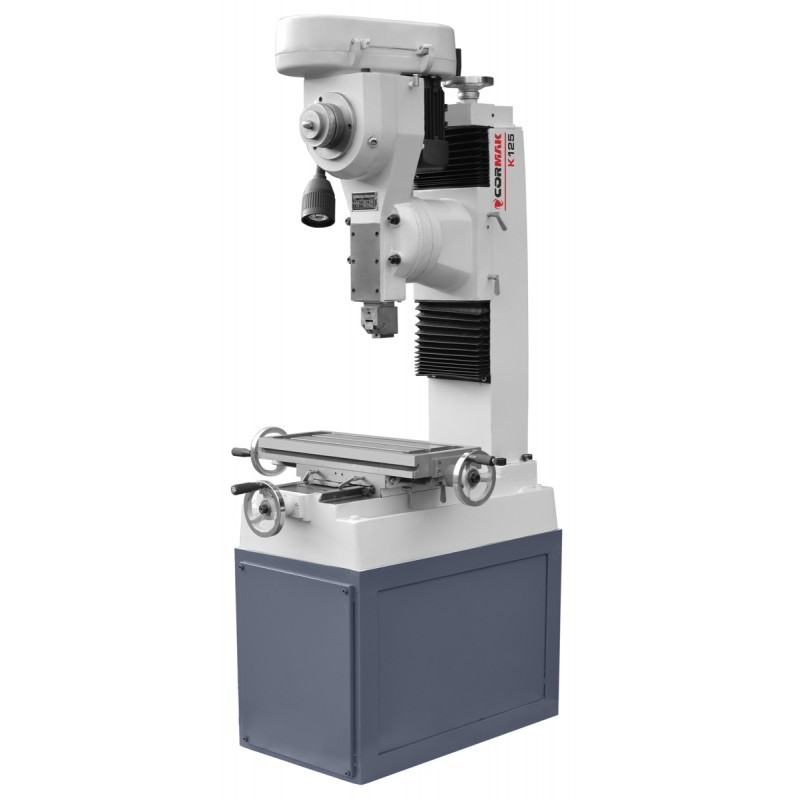
Slotting machine or milling machine for keyways?
Keyways transfer torque between a shaft and a mounted gear, pulley, coupling or hub. Their accuracy affects the fit of the key, the alignment of the connection and the durability of the entire mechanism.
Keyways are most often produced with a slotting machine or a milling machine. Both machines can perform this type of work, but they are best suited to different parts. A slotting machine is especially useful for internal keyways, while a milling machine offers higher productivity when machining external keyways on shafts and flat components.
How does a slotting machine work?
A slotting machine uses a tool that moves in a reciprocating motion. During each working stroke, the tool removes a small layer of material. Consecutive passes gradually increase the depth of the keyway until the required dimension is reached.
The main advantage of a slotting machine is access to internal surfaces that are difficult to machine by other methods. The tool can be inserted into the bore of a hub, gear, bushing or pulley to produce a straight keyway without splitting the part.
Slotting machines are used in the production and repair of:
- gears and pulleys,
- bushings and hubs,
- couplings,
- transmission components,
- machine parts with internal keyways,
- splines and internal profiles.
This type of machine is particularly useful in repair workshops, toolrooms and plants that produce short runs of non-standard parts.
Why is a slotting machine better for internal keyways?
Machining a keyway inside a bore is a major limitation for a milling machine. A standard milling cutter does not always have sufficient access to the surface, especially when the bore is long, closed or small in diameter.
A slotting machine can cut along the full length of the bore. The operator selects a tool width that matches the key, sets the workpiece and gradually increases the depth of cut. This allows keyways to be made in finished hubs without specialised milling, broaching or EDM.
Flexibility is another advantage. Changing the keyway width mainly requires a different slotting tool. There is no need to prepare an expensive broach dedicated to only one size.
Slotting is slower than typical milling, but for one-off work, part repair and short runs it can offer a practical balance between cost and capability.
When is a milling machine the better choice?
A milling machine works best for keyways on the external surface of shafts, axles and other parts where the cutter has clear access. A rotating cutter removes material continuously, so the process is usually faster than slotting.
End mills and side-and-face cutters can be used to produce keyways. A milling machine enables accurate control of the width, length and depth of the slot. With stops, an indexing device or CNC control, it is easier to maintain repeatability across multiple parts.
A milling machine is a good choice for:
- keyways on shafts,
- machining open surfaces,
- serial production,
- keyways of different lengths,
- T-slots and guide slots,
- parts that require several operations in one setup.
The biggest advantage of a milling machine is versatility. After producing the keyway, the same machine can mill planes, holes, pockets, steps and other surfaces of the part.
Accuracy and keyway quality
Both technologies can produce an accurate keyway if the machine, tool and workpiece are set correctly. In practice, the result depends on machine rigidity, tool sharpness, cutting parameters and the way the workpiece is clamped.
On a slotting machine, the tool must be aligned correctly with the axis of the bore. Incorrect referencing can shift the keyway or cause dimensional variation. The depth of each pass is also important, because overly aggressive cutting can create vibration and reduce surface quality.
During milling, tool runout, rigid clamping of the shaft and correct axis alignment are critical. Excessive play or an incorrectly selected cutter can widen the keyway, preventing the key from fitting properly.
Slotting machine or broaching?
Internal keyways can also be made by broaching. This method offers high productivity and repeatability, so it works well in serial production. However, it requires a tool matched to a specific keyway width and bore diameter.
A slotting machine is more flexible. It can machine different keyways with interchangeable tools and does not require a set of dedicated broaches. It is therefore a practical choice for short runs, repair work and frequently changing jobs.
Which machine should you choose?
A slotting machine is worth choosing when a workshop regularly produces internal keyways in hubs, bushings and wheels. It is also useful for part repair, one-off production and machining non-standard components.
A milling machine is better for external keyways on shafts. It offers faster cutting, broad versatility and the ability to perform several operations without moving the part to another machine.
In a well-equipped workshop, both machines complement each other. The milling machine handles shafts and open surfaces, while the slotting machine takes over internal keyways that cannot be conveniently produced with a milling cutter.
Summary
A slotting machine is best suited to internal keyways in hubs, bushings, couplings and gears. It provides access to surfaces inside a bore and offers high flexibility for short runs.
A milling machine is more efficient for external keyways on shafts and other accessible surfaces. The choice should depend on the keyway location, batch size, required accuracy and the other operations performed on the part.
Latest blog postsAll articles →