Laser Welding Aluminium and Stainless Steel: Settings, Preparation and Common Problems
Laser Welding Aluminium and Stainless Steel: Settings, Preparation and Common Problems
Laser welding of aluminium and stainless steel can produce narrow, aesthetic and repeatable welds with controlled heat input. The outcome does not depend on laser power alone. Surface preparation, fit-up, shielding gas, torch movement and properly validated process settings are equally important.
This guide explains how aluminium differs from stainless steel in laser welding, how to prepare both materials and which symptoms indicate that settings need adjustment. The guidance is technological in nature. Working parameters must be established by trials for the specific material, joint and machine, in accordance with the manufacturer’s instructions and site procedures.
How Does Laser Welding Work?
Laser welding uses a focused beam of energy to heat the joint area until a weld is formed. Compared with many arc-welding methods, laser welding can create a narrow heat-affected zone and allow high travel speeds. This can reduce distortion, but it does not eliminate it automatically: part geometry, clamping, line energy and welding sequence all affect the final result.
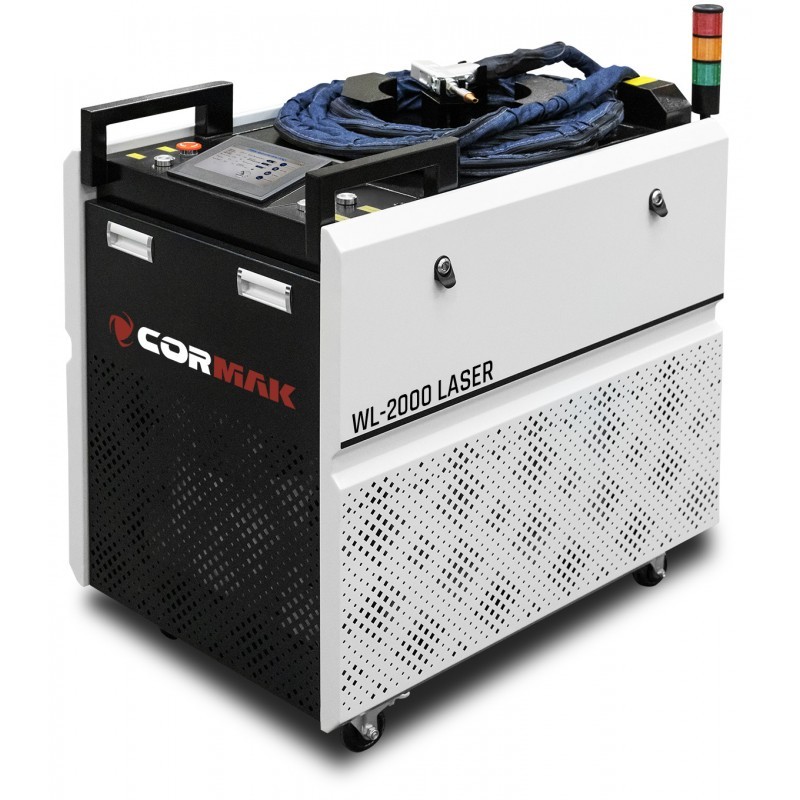
A handheld laser welder typically allows control of power, travel speed, beam-wobble width, focal position, shielding-gas settings and, depending on the equipment, filler-wire feeding. These settings are interdependent. Changing one parameter usually affects penetration, bead width, temperature and gap tolerance.
Safety When Using a Handheld Laser Welder
Laser welding requires an engineered workstation and clear safety procedures. Where the beam is accessible, hazards can include direct and reflected laser radiation, eye and skin injury, ignition of flammable materials, welding fumes, hot metal and spatter.
- use laser-safety eyewear selected for the wavelength and specification of the actual machine;
- establish and mark a controlled laser area and restrict access by unauthorised persons;
- use guards, interlocks, emergency stop functions and safety features provided by the manufacturer;
- provide effective fume extraction and general ventilation;
- remove or protect combustible material in the hazard area;
- allow operation only by trained personnel following the equipment manual.
Process settings should only be developed after the workstation has been made safe. Good settings never replace operator protection or risk assessment.
Laser Welding Aluminium – Material Preparation
Aluminium conducts heat rapidly and forms a natural oxide layer. This oxide behaves differently from the base material, so contamination and residual oxides can reduce process stability and increase porosity risk. Joint cleanliness is particularly important.
Before welding
- remove oil, grease, moisture, dust and machining residue;
- prepare edges with a method appropriate to the alloy and approved process documentation;
- use brushes and tools dedicated to aluminium to avoid transferring contamination;
- keep filler wire clean when it is used;
- set components so the joint gap stays within the process capability.
Laser welding benefits from precise fit-up. An excessive or inconsistent gap can cause collapse, lack of continuity or the need for filler wire and a different beam strategy.
Laser Welding Stainless Steel – Material Preparation
Stainless steel can deliver highly aesthetic laser welds, especially in thin sheet and profiles. It still requires protection against iron contamination, appropriate gas shielding and heat-input control to limit heat tint and preserve the required surface corrosion performance.
Good preparation practice
- degrease the surface and remove dust, fingerprints and protective-film residue;
- use abrasive tools and brushes dedicated solely to stainless steel;
- avoid contact with contaminated tables, clamps and tools previously used for carbon steel;
- provide stable clamping, especially with thin sheet susceptible to distortion;
- after welding, assess the need for cleaning, pickling or passivation according to part requirements.
How to Select Laser-Welding Settings
There is no single parameter set for aluminium or stainless steel. Settings depend on material grade and thickness, joint design, gap, welding position, source power, weld-head characteristics, focusing, wobble, filler use and shielding gas.
| Parameter | Why it matters | Symptoms of an insufficient setting | Symptoms of an excessive setting |
|---|---|---|---|
| Laser power | Controls the energy delivered to the joint | Lack of fusion, unstable bead, incomplete joining | Excess melt, collapse, heat tint or distortion |
| Travel speed | Contributes to line energy | When too high: insufficient penetration | When too low: excessive heating and wide bead |
| Wobble width | Affects weld-track width and gap tolerance | Insufficient gap coverage or edge wetting | Overly wide bead and energy outside the joint axis |
| Focal position | Changes the energy distribution at the weld | Insufficient concentration of energy where needed | Excessive focus or process instability, depending on setup |
| Shielding gas | Protects the molten pool and surrounding weld area | Oxidation, porosity, heat tint and an unstable weld surface | Turbulence can disturb shielding and entrain air |
The safest approach is to start from the machine manufacturer’s data or an approved procedure and run trials on the same grade and thickness of material. Change one parameter at a time, record results and assess penetration, bead appearance, root, distortion and repeatability.
Aluminium versus stainless steel
Aluminium often requires a different energy balance than stainless steel of the same thickness because it conducts heat more intensely. Stainless steel is more sensitive to visible overheating and heat tint, so line energy and shielding quality are particularly important. Do not transfer a program from one material to another without process trials.
Common Laser-Welding Problems With Aluminium
Porosity
Porosity can be associated with moisture, oil, contamination, oxides, inadequate shielding or properties of the specific alloy. Start by re-cleaning the material, checking filler materials and verifying gas-delivery conditions.
Lack of penetration or edge fusion
Possible causes include insufficient line energy, excessive speed, incorrect focus, excessive gap or poor torch movement. Make changes gradually after checking joint fit-up.
Excess melt and weld collapse
This may indicate too much energy input, overly slow travel or an unsuitable wobble strategy. Also assess whether joint geometry requires filler wire or a different edge preparation.
Cracking
Some alloys and joint designs are more prone to hot cracking. In these cases, changing laser power alone is insufficient. Review the material grade, material condition, joint design, filler material and welding procedure.
Common Laser-Welding Problems With Stainless Steel
Heat tint
Dark, blue or violet tint can indicate excessive heat input, inadequate shielding or incorrect gas delivery relative to the weld. Depending on the component requirements, subsequent chemical, mechanical cleaning or passivation may be needed under the applicable procedure.
Distortion of thin sheet
Laser welding commonly limits heat input, yet thin parts can still distort. Suitable clamping, a correct welding sequence, lower line energy and trials on representative geometry can help.
Uneven or intermittent weld bead
Typical causes include contamination, variable gap, unstable torch movement, worn consumables or unsuitable focus and gas settings. Check joint preparation first before making large parameter changes.
Iron contamination
Tools previously used on carbon steel can transfer iron particles to stainless steel. In corrosive environments, this may affect appearance and surface performance, so tool segregation is a sound workshop practice.
Shielding Gas and Weld Quality
Shielding gas helps limit contact between hot metal and the atmosphere. Argon is used in many applications, but selection of gas, nozzle, gas direction and flow should follow the machine documentation and trial results.
Too little flow can degrade shielding, but too much does not automatically improve the result: it can create turbulence and draw air into the weld area. Gas purity, system tightness, hose condition and nozzle position are as important as the indicated flow value.
Process Trials and Quality Control
Before starting production, run a series of trials on material representative of the actual part. Evaluation should not stop at the visible face of the weld. Depending on requirements, assess penetration, cross-section geometry, possible porosity, distortion and joint performance.
- Prepare samples from the same grade and thickness as the production part.
- Clean and prepare surfaces using the same method planned for production.
- Set a starting point from the machine manual or approved procedure.
- Change one parameter at a time and record the result.
- Assess the weld visually and with methods appropriate to the required quality.
- Approve settings only after repeatable results are achieved.
Where quality requirements are high, use the relevant welding instructions and process-qualification rules required by the industry, customer or product design.
When Is a Laser Welder a Good Choice?
Laser welding is well suited to production where weld appearance, limited distortion, repeatability and short cycle time matter. It can be particularly useful for thin and medium thicknesses, well-prepared joints and series parts with stable geometry.
It does not always replace TIG, MIG or MAG. For large gaps, very thick sections, specific material demands or conditions that are difficult to control, arc welding may be more suitable or may complement the process. Selection should be based on a process trial and required quality, not only declared source power.
FAQ
Does aluminium require higher power than stainless steel?
It often requires a different energy balance because of its high thermal conductivity, but settings cannot be determined from the material name alone. Thickness, alloy, gap, weld head, speed and welding strategy also matter.
Is filler wire always needed for aluminium laser welding?
No. It depends on joint design, gap, desired bead geometry, thickness and quality requirements. Wire may be needed to fill a gap or create the required weld profile.
Why does stainless steel change colour after laser welding?
Heat tint is usually related to heat input and shielding. Check cleanliness, gas delivery, torch movement and settings. Depending on the final use of the part, subsequent cleaning or passivation may be required.
Can settings be copied from another laser welder?
Not without trials. Differences in source, weld head, optics, software, consumable condition, gas and joint geometry can significantly change the result.
Summary
Laser welding of aluminium and stainless steel can deliver attractive, repeatable welds, but it requires control of the full process. Aluminium demands particular attention to contamination and oxide removal, while stainless steel requires control of overheating, heat tint and iron contamination.
The essentials are a safe workstation, clean material, stable fit-up, properly selected shielding gas, process trials and documented approved settings. Together, these conditions allow a laser welder to be used effectively in production.
Latest blog postsAll articles →