Compressor filters – how to choose them?
Compressor filters – how to choose them?
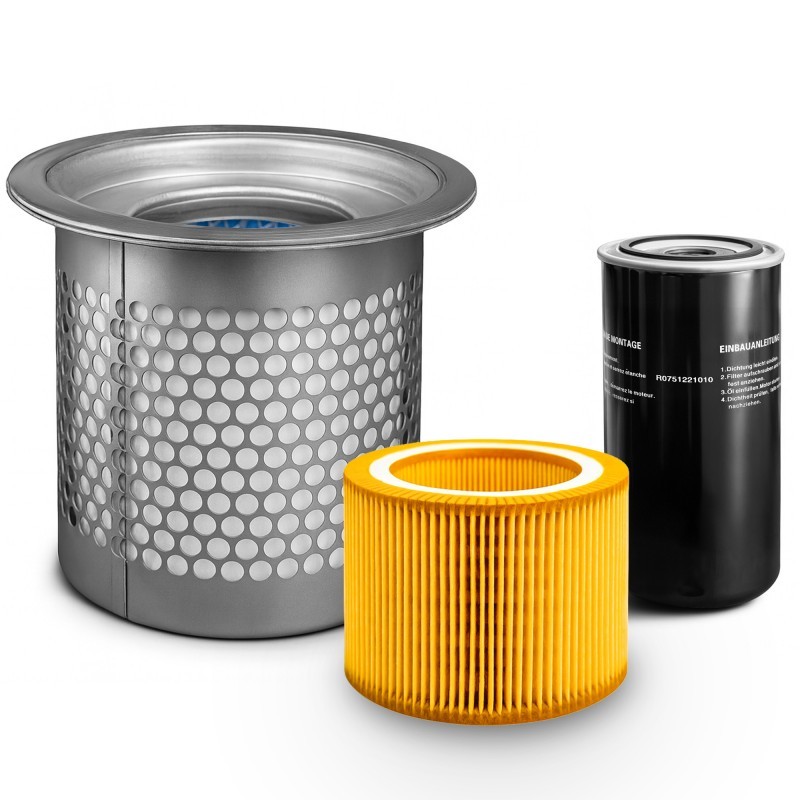
Compressed air can contain dust, water, rust, oil aerosol and hydrocarbon vapours. These contaminants accelerate the wear of pneumatic tools, cause problems with valves, cylinders and automation systems, and in paint shops they can directly affect coating quality. Properly selected compressor filters protect the installation and end users, but one filter element does not always remove every type of contamination.
The filtration system should be selected according to the application. An impact wrench, a CNC machine and a paint booth all require different compressed air quality. For this reason, filtration is usually built in stages: from separating larger particles and condensate, through removing oil aerosol, to filtering oil vapours and odours in the most demanding processes.
Pre-filter
A pre-filter removes larger solid particles such as dust, rust, chips and contamination from the pipework. Its purpose is to protect finer filter elements from rapid clogging and help maintain stable air flow.
In simple workshop installations, a pre-filter can work together with a condensate separator. This setup is suitable for blowing, supplying less demanding pneumatic tools and basic service tasks. However, it will not provide air quality suitable for painting, precision automation or processes where oil and moisture cannot be tolerated.
Coalescing filter
A coalescing filter removes fine droplets of water and oil. It combines them into larger particles that flow to the bottom of the housing and are discharged through the condensate drain. This reduces the amount of oil aerosol and moisture entering the next part of the compressed air system.
This type of filter is used before CNC machines, cylinders, valves, pneumatic tools and equipment that require stable air quality. It is important to remember, however, that a coalescing filter does not replace a dryer. Water vapour can pass through the element and condense later in a cooler section of the system.
If the process requires dry air, the coalescing filter should work with a refrigeration or adsorption dryer. Only such a combination allows better control of moisture and oil contamination.
Activated carbon filter
An activated carbon filter is used to remove oil vapours, odours and hydrocarbons. It is used in paint shops, electronics, finishing processes and wherever even a small amount of oil can reduce product quality.
A coalescing filter should be installed before the activated carbon element. Liquid oil would quickly saturate the carbon and shorten its service life. In more demanding applications, a final dust filter may also be useful to remove fine particles remaining after the previous filtration stages.
How to select a filter set?
For basic workshop work, a pre-filter and condensate separator are usually sufficient. For CNC machines, pneumatic automation and more sensitive air users, it is worth using a pre-filter, a coalescing filter and a dryer. A paint shop requires a more developed system, which may include a fine filter, coalescing filter, dryer and activated carbon filter.
The required air purity is the key factor. High-quality filters should remove contaminants effectively while keeping pressure drop as low as possible. The number of filtration stages alone is not enough if the elements are not matched to the flow rate or contamination type.
Flow rate and pressure drop
The filter must have a capacity at least equal to the maximum flow of the installation. When selecting it, simultaneous operation of several air users and planned expansion of the compressed air system should be considered.
An undersized filter increases flow resistance. The compressor then has to operate at a higher pressure to maintain the required parameters at the end of the system. This may increase energy consumption, reduce tool performance and cause unstable machine operation.
Before purchasing, check the nominal flow rate, working pressure, air temperature, connection diameter, filter element type and condensate drain method. It is worth leaving a moderate capacity reserve, but components should not be selected completely at random or excessively oversized for the installation.
Where should filters be installed?
Main filters are usually installed downstream of the receiver and cooler, where the air has already been partially cooled. The exact order depends on the type of dryer, installation design and the equipment manufacturer's recommendations.
An additional filter can be installed directly before a particularly demanding air user. This is useful in long pipe runs where corrosion particles, condensate or installation contamination may occur.
When should filter elements be replaced?
A dirty element increases pressure drop and reduces filtration efficiency. Filters should be checked according to the manufacturer's service schedule and the differential pressure indication, if the housing is equipped with such an indicator.
Replacement may be required more often in dusty rooms, with large amounts of condensate, intensive compressor operation or poor installation condition. Filter elements should not be used until they are completely blocked, as this causes energy losses and may reduce air quality at the end of the system.
Summary
Correct selection of compressor filters starts with defining the required compressed air quality. A pre-filter removes larger particles, a coalescing filter reduces water and oil aerosol, and an activated carbon filter removes oil vapours and odours.
Filters should be matched to the flow rate, pressure, temperature and type of air users. A well-designed filtration system protects equipment, reduces failures and provides high-quality compressed air without excessive energy losses.
Latest blog postsAll articles →