CNC Lathe vs Conventional Lathe – Key Differences
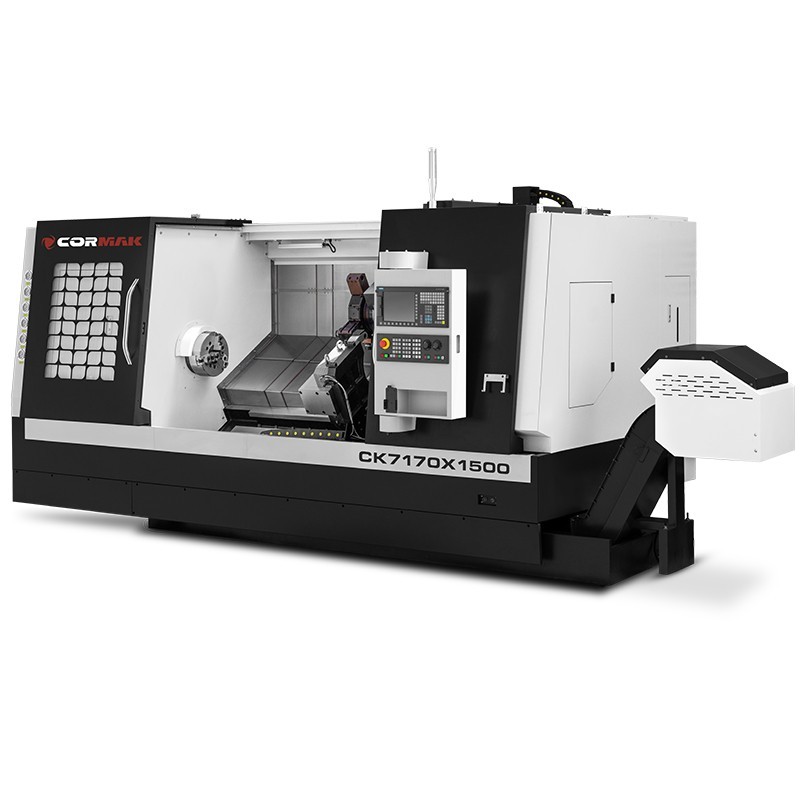
Table of contents:
- Conventional lathe – what is it?
- CNC lathe – how is it different?
- CNC lathe vs conventional lathe – comparison
- Which lathe to choose?
- Summary
Conventional lathe – what is it?
A conventional lathe is a traditional metalworking machine where all operations are controlled manually by the operator. It is characterized by simple construction, lower purchase cost, and ease of use. It is ideal for hobby workshops and small craft shops where flexibility and low operating costs are important.
CNC lathe – how is it different?
A CNC lathe is a modern, computer-controlled machine. Machining is carried out according to a pre-programmed cycle, which allows for high accuracy and repeatability. CNC lathes are mainly used in industrial production where efficiency, automation, and the ability to perform complex operations matter most.
CNC lathe vs conventional lathe – comparison
-
Control: conventional – manual by operator; CNC – computer-controlled program.
-
Precision: CNC achieves accuracy to hundredths of a millimeter; conventional lathes are less repeatable.
-
Efficiency: CNC is much faster and suitable for serial production; conventional – for single-piece work.
-
Cost: conventional is cheaper to buy and maintain; CNC requires higher investment.
-
Operation: CNC requires programming skills; conventional – manual skills.
Which lathe to choose?
The choice depends on your needs: a conventional lathe is perfect for hobby workshops and small repairs, while a CNC lathe is the best option for industry, where repeatability, speed, and automation are crucial. CORMAK provides both types of machines for different applications.
Summary
The main difference between CNC and conventional lathes lies in control and purpose. CNC guarantees precision and automation, while conventional offers simplicity and lower cost. The choice should depend on the type of work, budget, and production scale. CORMAK offers a wide range of machines for both hobbyists and industrial use.
Latest blog postsAll articles →