Which laser plotter should you choose for cutting plywood?

Are you wondering, which laser plotter to choose for cutting dry plywood? This question is appearing more and more often among carpenters, manufacturers of decorative, advertising and utility elements, and users who expect precision, repeatability and a clean edge. Plywood, as a layered material, poses specific technological requirements, which is why choosing the right device has a direct impact on detail quality, work efficiency and operating costs. Below are practical criteria worth considering when analysing which laser plotter to choose for plywood in a production context.
Table of contents:
- Specifics of cutting dry plywood with a laser
- Laser power and source type in plotters for dry plywood
- Working area and design of a plotter for cutting plywood
- Additional equipment and work safety with a plotter for dry plywood
- CO2 laser plotters vs CNC – what to choose for cutting dry plywood?
- Summary
Specifics of cutting dry plywood with a laser
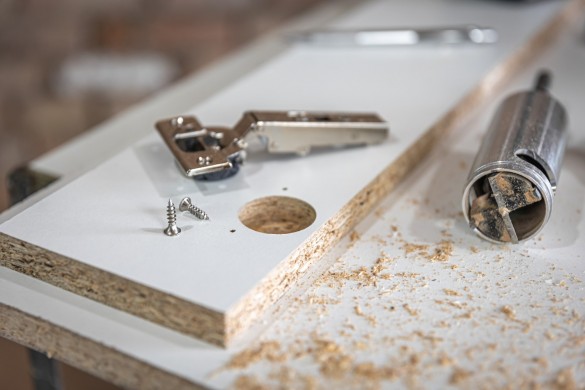
Dry plywood differs from solid wood not only in its structure, but also in its reaction to temperature. The adhesives used to bond the layers can cause scorching or uneven edges if the operating parameters are not properly selected. Therefore, a plywood cutting plotter should offer stable power adjustment, precise speed control and an effective extraction system. A well-configured laser plotter for cutting plywood makes it possible to achieve smooth edges without the need for additional finishing, which significantly shortens order completion times.
Laser power and source type in plotters for dry plywood
One of the most important technical parameters is the power of the laser tube. In the case of plywood with a thickness of 3 to 6 mm, devices with a power of 80–130 W are most often used, while thicker formats require a greater power reserve or several passes. A laser plotter for plywood with appropriately selected power ensures not only efficient cutting, but also process stability in serial production. A plotter for cutting plywood that is too weak can cause excessive scorching and reduce detail quality.
Working area and design of a plotter for cutting plywood
Another important issue is the working area and the rigidity of the structure. A plotter for cutting plywood should allow comfortable work with popular sheet formats without the need to divide them in advance. A stable frame, precise guides and high-class drives translate into positioning accuracy and repeatability. In the offer of CORMAK, as a industrial machinery manufacturer, plotters are available designed with intensive, production operation in mind.
Additional equipment and work safety with a plotter for dry plywood
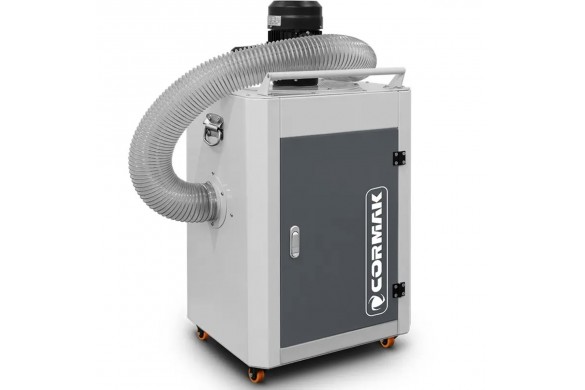
Work comfort and safety are also influenced by the machine’s additional equipment. A fume extraction system, a honeycomb worktable or efficient water cooling realistically improve cutting quality. A plotter for dry plywood equipped with an effective exhaust system minimises soot deposition and protects optical components. In industrial applications, easy access to service and consumable parts is also crucial.
CO2 laser plotters vs CNC – what to choose for cutting dry plywood?
In practice, the most commonly chosen solution is CO2 laser plotters, which provide very good edge quality and high precision. In more extensive machine parks, however, it is also worth considering milling plotters and other woodworking machines, especially when the scope of work also includes milling, drilling or 3D machining. The final choice of device should be matched to the plywood thickness, the type of projects carried out and the planned scale of production.
Summary
Choosing the right laser plotter for cutting dry plywood should result from real production needs, the type of processed material and the planned work intensity. Plywood as a layered material requires stable cutting parameters, precise power control and effective fume extraction, therefore a plotter for plywood must combine appropriate laser source power with a solid structure and refined equipment.
In applications where a clean edge, repeatability and high detail aesthetics matter, CO2 laser plotters work best, while in more complex machining processes it is worth supplementing the machine park with CNC solutions. A well-chosen laser plotter for dry plywood is an investment that directly translates into product quality, production efficiency and the possibility of further development of the offer.
Latest blog postsAll articles →