Sheet metal rolling process – what does rolling involve?
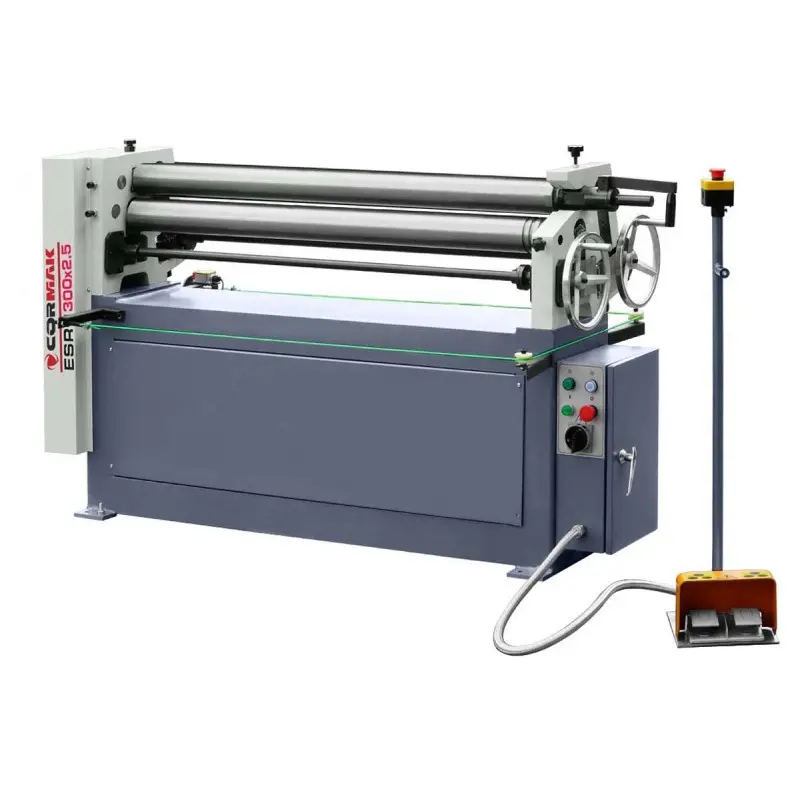
Modern metalworking could not function without the sheet metal rolling process. This technology is used both in heavy industry and in the production of precision structural components. Understanding what rolling involves makes it possible to correctly select technological parameters and suitable machines that ensure repeatability and high quality of finished parts.
- What does sheet metal rolling involve?
- Sheet metal rolling process – basic stages
- Hot sheet metal rolling
- Cold sheet metal rolling
- Rolling thin and thick sheet metal
- Machines used for sheet metal rolling
What does sheet metal rolling involve?
Sheet metal rolling is a plastic forming process that involves deforming the material between rotating rolls. Under pressure, the thickness of the material is reduced, while its length increases or the bending radius is changed. The sheet metal rolling process makes it possible to obtain components with a defined shape, radius and repeatable geometric parameters.
Sheet metal rolling process – basic stages
Each sheet metal rolling process includes several key stages: material preparation, machine parameter setting, the actual deformation process and inspection of the final result. Depending on the applied technology and material type, both thin sheet metal rolling and thick sheet metal rolling are possible, the latter requiring significantly greater pressing forces.
Hot sheet metal rolling
Hot sheet metal rolling is carried out at a temperature exceeding the recrystallisation temperature of the metal. This method allows for a significant reduction in material thickness with relatively low deformation resistance. The process is commonly used in heavy industry, where efficiency and the ability to process thick steel sheets are essential.
Cold sheet metal rolling
Much higher precision is provided by cold sheet metal rolling, which is performed at ambient temperature. This makes it possible to achieve very tight tolerances, a smooth surface and increased material strength. Cold sheet metal rolling is used, among others, in the production of housings, structural elements and components requiring high aesthetic quality.
Rolling thin and thick sheet metal
Rolling thin sheet metal requires precise pressure control and a stable roll structure, while rolling thick sheet metal involves the use of machines with high power and rigidity. The choice of technology depends on the type of material, its thickness and the expected final result.
Machines used for sheet metal rolling
Modern sheet metal rolling is carried out using specialised equipment. As an experienced industrial machinery manufacturer, Cormak offers comprehensive sheet metal processing machines, including reliable sheet metal rolling machines. Depending on technological requirements, both mechanical sheet metal rolling machines and advanced hydraulic sheet metal rolling machines are available, designed for working with thicker and more demanding materials.
Properly selected technology and high-class machines ensure that sheet metal rolling remains one of the most important processes in modern metalworking, guaranteeing efficiency, precision and production repeatability.
Latest blog postsAll articles →