Drilling holes for concealed cabinet hinges
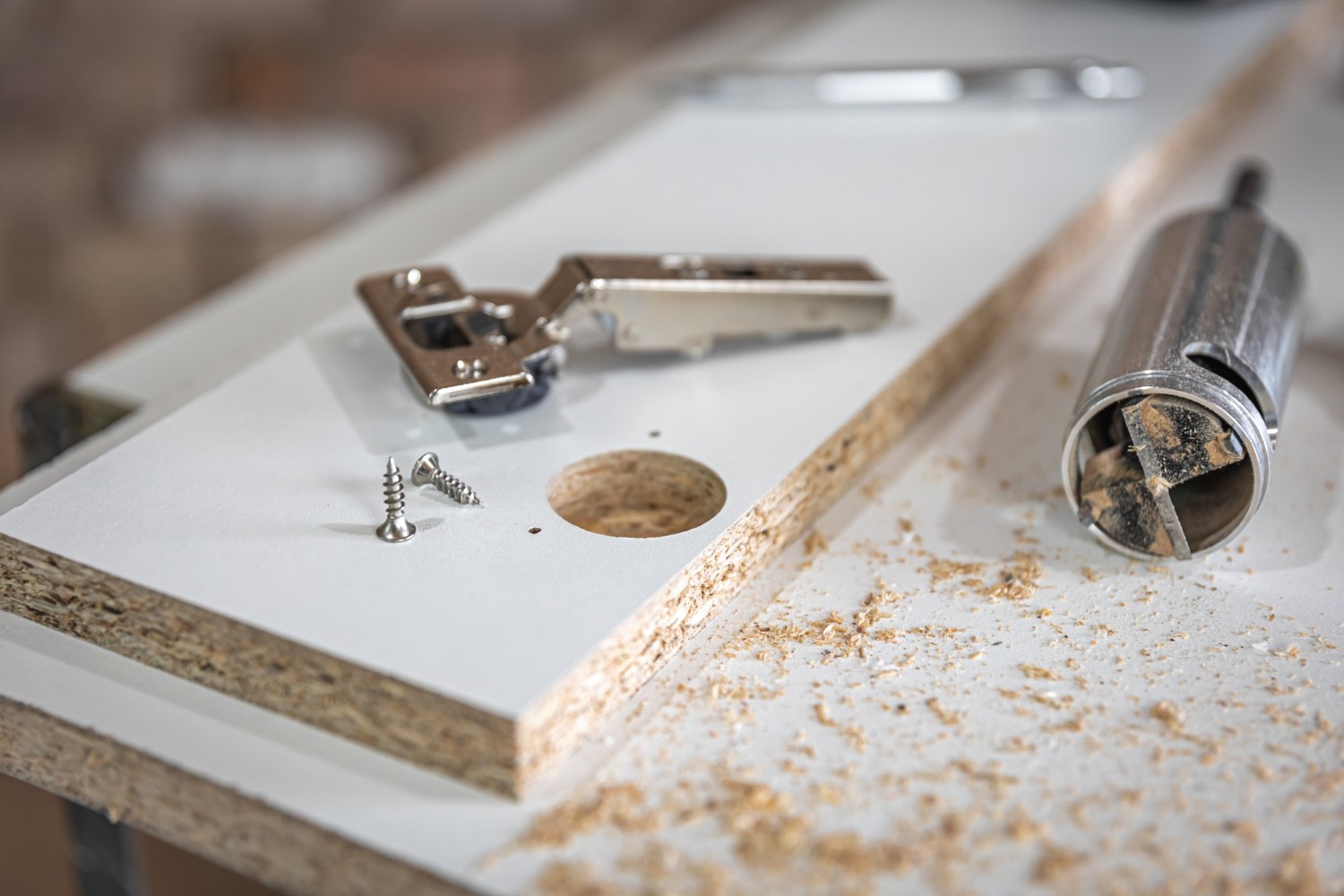
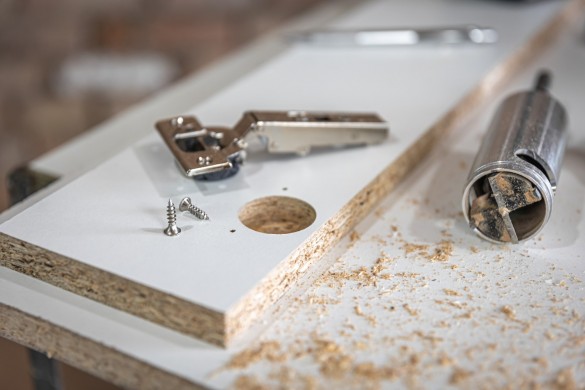
Drilling holes for concealed hinges – dimensions are among the most important parameters during the production of furniture fronts, which directly affect the aesthetics, durability and functionality of finished furniture. Already at this stage it is decided whether the hinge will operate smoothly, whether the front will maintain correct geometry and whether full adjustment after installation will be possible. Even small errors in the hole axis or its depth can result in closing problems, uneven gaps or accelerated wear of the hardware. Therefore drilling holes for concealed hinges should be treated as a technological process requiring parameter control, and not a simple workshop activity.
Table of contents:
- Drilling holes for concealed hinges – dimensions and standards
- Technique for drilling holes for concealed hinges
- Machines and tools for drilling holes for cabinet hinges
- Automation of drilling holes for concealed hinges in furniture production – summary
Drilling holes for concealed hinges – dimensions and standards
The basis for correct installation is knowledge of the technical parameters that apply when drilling holes for concealed hinges. The most commonly used standard is a 35 mm diameter cup, which corresponds to the vast majority of cabinet hinges available on the market. The hole depth usually ranges from 11 to 13 mm and should be adjusted to the thickness of the front and the hinge design. Also crucial is the distance of the drilling axis from the edge of the board, which in practice is most often from 3 to 6 mm. It is precisely correct drilling of holes for concealed hinges and the dimensions that determine whether the hinge will have a full adjustment range and whether the front will be seated stably.
Technique for drilling holes for concealed hinges
Drilling holes for concealed hinges itself requires perfect perpendicularity and depth control so as not to drill through the front and not to weaken its structure. In practice, this means the need to use depth stops or precise guides. Drilling for a concealed hinge performed without stabilizing the material often leads to shifts of the hole axis or chipping of the surface, especially in the case of laminated boards. Also important are an even working pace and appropriate tool speed, which allow a smooth hole bottom and clean edges without scorching.
Machines and tools for drilling holes for cabinet hinges
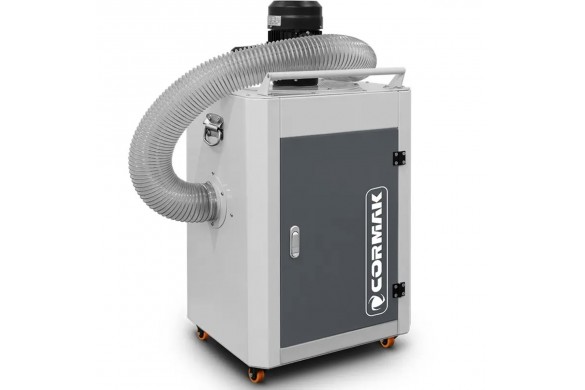
In one-off production, drilling holes for cabinet hinges can be carried out using classic bench drills and Forstner bits, however, as the scale of production grows, dedicated solutions become increasingly important. As an experienced industrial machinery manufacturer, CORMAK offers advanced woodworking machines, which ensure repeatability and high accuracy of the process. The offer also includes wood drilling machines, adapted to intensive workshop work, as well as specialist horizontal wood drilling machines, enabling fast and precise drilling in fronts, sides and carcass elements. A particularly important role in modern woodworking plants is played by drilling machines for concealed and cabinet hinges, which allow serial drilling of holes with identical parameters.
Automation of drilling holes for concealed hinges in furniture production – summary
Automation of the process of drilling holes for concealed hinges is a step that has a real impact on the efficiency and quality of furniture production. The use of dedicated machines makes it possible to shorten the processing time of a single element, reduce the number of errors and minimize material losses. Precise factory settings, stable tool guidance and the possibility of quickly changing parameters make drilling holes for concealed hinges a fully controlled and repeatable process. As a result, every front leaving the production line meets the same high quality standards, which is crucial when fulfilling serial orders and contract projects.
Latest blog postsAll articles →