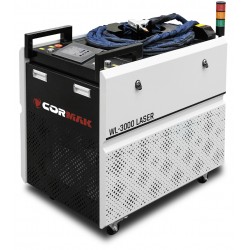
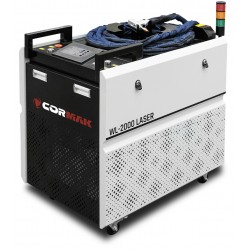
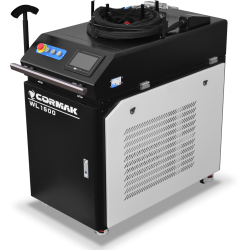
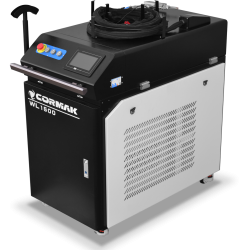
Laser welding machines – applications
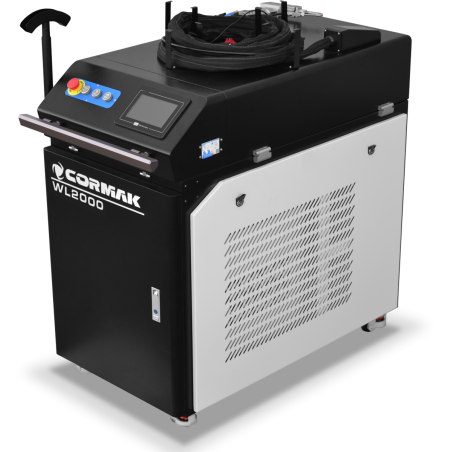
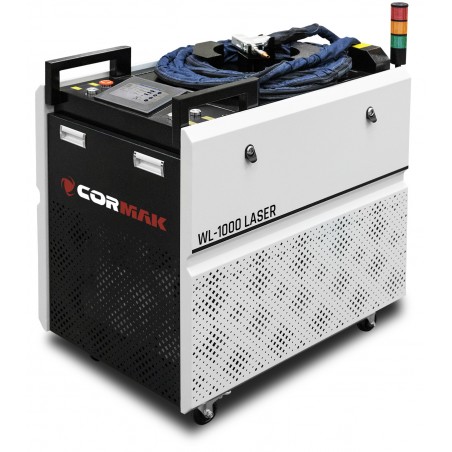
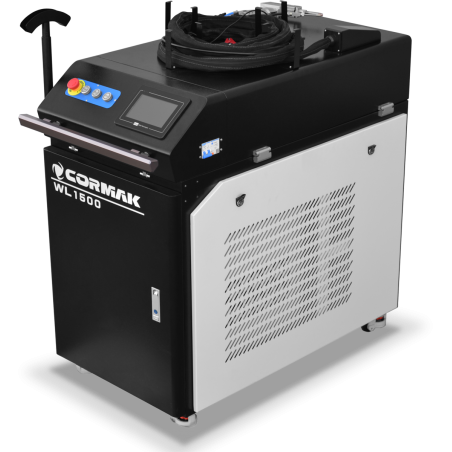
Handheld laser welding machines are an invaluable tool in many branches of industry, including sectors that require precision joining of materials where traditional welding methods are unable to deliver the expected quality. They operate by focusing laser light energy into a narrow beam directed at the surface of the material to be joined. This process is carried out in a controlled manner, helping to avoid distortions or imperfections that can occur with conventional welding methods.
Laser welding machines are used across a range of industries and applications due to their precision, speed and ability to control the welding process. This makes these machines indispensable wherever both production efficiency and the quality of the finished product matter. They are well suited, among others, for:
- the automotive industry – laser welding machines are used, among other things, for welding body panels, frames, exhaust systems and other metal components. Thanks to high precision and welding speed, they enable high-quality, durable joints that are crucial for vehicle safety and longevity;
- the aerospace and space industry – laser welding machines are often used for welding metal alloys such as aluminium or titanium. They enable precise, durable joints that meet stringent safety and quality standards. In these industries, weld accuracy is extremely important, because even the smallest imperfections can affect structural safety;
- the food, ventilation and district heating industries – laser welding machines are used in manufacturing infrastructure for these sectors, where precision and hygiene are particularly important. Thanks to the ability to control the welding process, they are an ideal solution for producing high-quality and reliable components and subassemblies.
Such versatile machines also prove useful in many other industries, such as electronics, where welding thin sheet metal and delicate parts requires advanced technologies. It is worth testing their performance and exceptionally precise operation yourself, which finds application even in the most demanding uses.
CORMAK handheld laser welders – why choose them?
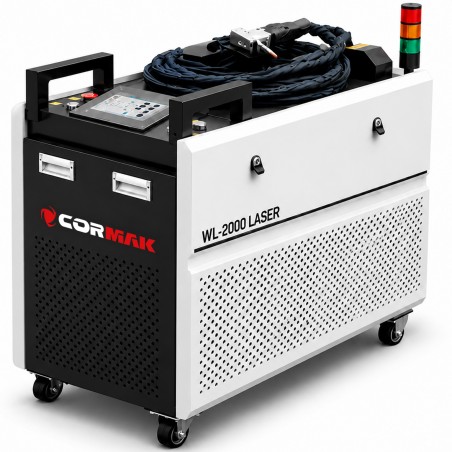
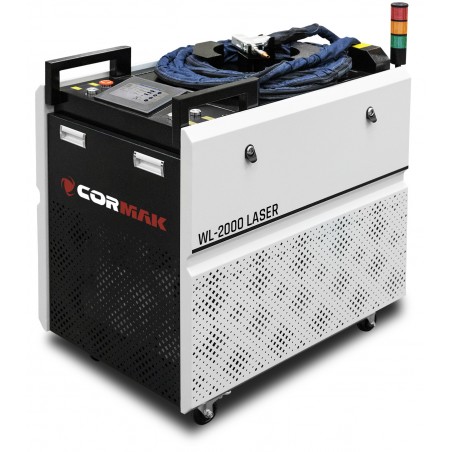
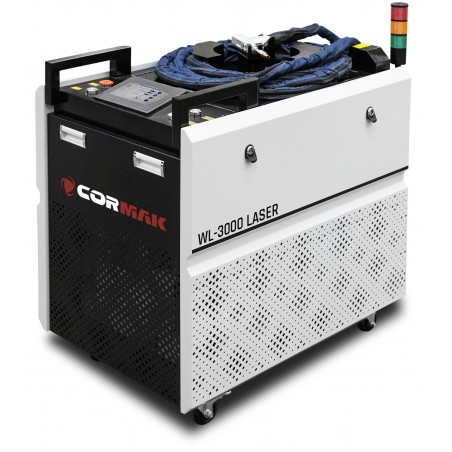
CORMAK laser welding machines are designed for fast, precise and durable joining of various metals, including structural steel, stainless or galvanised steel, as well as aluminium and copper. They feature modern solutions that make the machines easier to operate and ensure better welding results. For example:
- an automatic wire feeder synchronised with the software, which reduces the range of tasks performed by the operator,
- intuitive adjustment of operating parameters, which increases efficiency
- intelligent controllers that guarantee repeatable production.
As a manufacturer of industrial machinery, CORMAK uses innovative technological solutions in its equipment, which significantly streamlines work. Thanks to precise control and advanced welding algorithms, it is possible to achieve durable and aesthetic joints without the need for additional surface treatment. Industrial machinery from CORMAK makes welding simpler, faster and more efficient, which translates into lower production costs.
Welding workstation
Also explore other welding equipment and machines from our range. A fully equipped welding workstation is not only a handheld laser welder, but also additional equipment that directly affects quality and working speed. Properly selected accessories increase weld guidance precision, improve operating ergonomics and raise the safety level of the entire process, which results in higher productivity and stable output.
Welding positioners and rotators
- Enable stable and accurate positioning of workpieces in the optimum welding position.
- Increase repeatability and reduce preparation time.
- Improve workstation ergonomics by reducing the need to manually rotate heavy components.
- They work well in series production and with irregularly shaped parts.
Welding fume extractors
- Remove fumes and contaminants generated during welding, improving air quality.
- Protect the operator and surroundings from harmful substances.
- Increase working comfort and meet H&S requirements in production plants.
- Available in mobile and stationary versions, making it easier to match the workstation’s needs.
The machine models we offer provide not only high performance, but also a long service life, which translates into economical operation.
Industrial laser welding machines from CORMAK
The industrial laser welding machines we offer are designed for work in demanding conditions, ensuring high-quality, repeatable welds. Thanks to the use of a laser beam, the equipment guarantees high efficiency – up to 10 times higher compared to traditional machines. A major advantage of this type of equipment is producing a strong yet aesthetic weld – during operation there is no risk of surface distortion, which is a common issue with conventional welding methods.
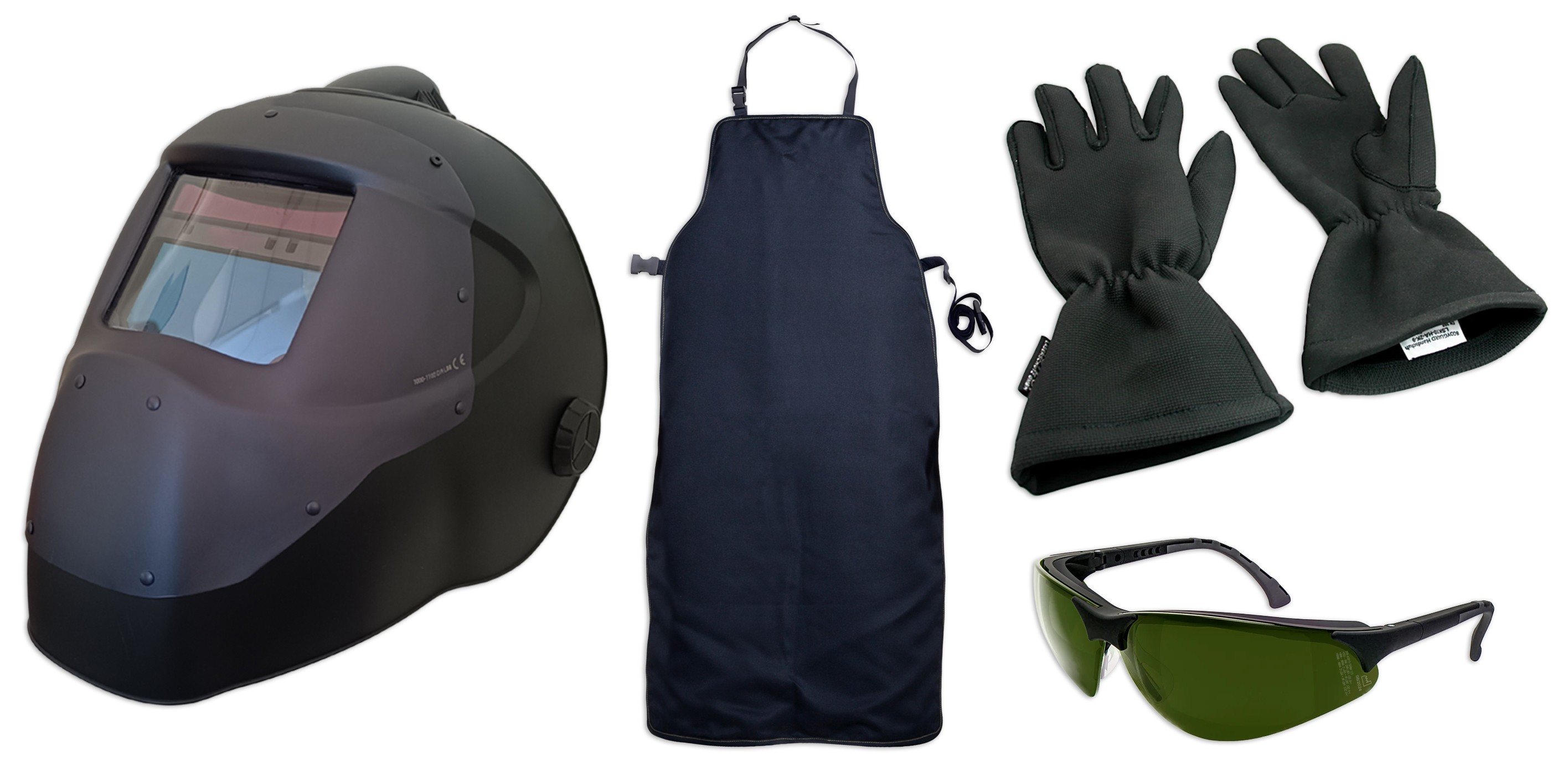
CORMAK laser welding machines, after selecting the appropriate welding mode, allow you to weld even very thin materials and, thanks to the low level of secondary radiation they emit, it is sufficient to wear safety glasses during use, which increases working comfort. The ergonomic, compact handle design allows access to hard-to-reach areas, making it easier to weld complex components.
We invite you to explore our full range of laser welding machines on our website and to contact our specialists, who will be happy to answer any questions and help you choose the right model. We believe our laser welding machine will meet all your expectations. We stand for quality, innovation and reliability – something you can see for yourself. Working with us always means complete satisfaction!
How does a laser welder work?
A laser welding machine uses a focused light beam to melt materials with exceptional precision and minimal impact on the heat-affected zone. This technology is ideal wherever speed, accuracy and repeatability matter. More about the operating principle and advantages of this method can be found in the article: How does a laser welder work?
Welding stainless steel – how and with what?
For welding stainless steel, TIG or MIG methods are most commonly used, depending on the material thickness and the required aesthetics. Increasingly, laser welding is also used, offering exceptional precision and minimal thermal impact, which is particularly important for thin-walled components. Selecting suitable filler materials and controlling temperature remain key to maintaining the weld’s anti-corrosion properties. Learn more in the article: Welding stainless steel – how and with what?
How and with what to weld aluminium? What does laser welding aluminium look like?
Aluminium is best welded using TIG or MIG, using pure argon and suitable wires. Laser welding of this metal can offer higher precision, but requires proper surface preparation and careful control of welding parameters. More information can be found here: How and with what to weld aluminium? What does laser welding aluminium look like?
How to protect welds against corrosion?
Protecting welds against corrosion is not only about aesthetics, but above all durability of the structure. The most common methods include passivation, painting, and proper surface preparation before welding. See which methods are most effective: How to protect welds against corrosion?
Types of welds and joints – what are they and how are they marked?
These include, among others, butt welds, fillet welds and edge welds. Each weld type has its designation in line with technical standards, which is essential for design and quality inspection of structures. A detailed overview can be found in the article: Types of welds and welding joints and their markings